|
Contributions à l'étude du gisement Miocène supérieur de Montredon (Hérault). Les grands mammifères. 9 - Une tentative de magnétostratigraphie
Published online: 15/11/1988
Keywords:
France; magnetostratigraphy; Montredon; Upper Miocene
https://doi.org/10.18563/pv.18.ext.187-188
Abstract
Afin d'étudier la magnétostratigraphie de la colline de Montredon, j'ai prélevé en Avril 1982, 93 carottes orientées réparties sur 29 sites. J.-P. Aguilar et I. Loridant m'ont aidé durant cette opération. Pour la stratigraphie de la coupe échantillonnée et pour le contenu faunique des deux gisements de mammifères de cette colline, voir J.-P. Aguilar & J.-Y. Crochet (1982).
[...]
PV article infos
Published in Vol. 18, Ext (1988)
|
PDF
|

|
Nouvelles faunes de rongeurs de la fin Miocène inférieur en Provence. Implications géologiques et Paléogéographiques.
Published online: 01/09/1986
Keywords:
Biogeographic province; Biozonation; Correlation; Miocene; Palaeogeography; Rodentia
https://doi.org/10.18563/pv.16.2.77-126
Abstract
Rodents from the new localities of Châteauredon (Alpes-de-Haute-Provence) and La Denise (Bouches-du-Rhône) show more similarities with the rodents known from the Czecho-Slovak locality of Franzenbad than with the species found in contemporaneous Lower Miocene faunas located westward of the present Rhône Valley. This is another data wich support the existance of several biogeographical provinces in Southern France during Lower Miocene. The correlations which have been settled down allow new datations of several formations in Provence and give new information on the Aquitanian and Burdigalian paleogeographies of this region. More precise stratigraphical allocations are given to some other localities of Central Europe.
PV article infos
Published in Vol. 16, Fasc. 2 (1986)
|
PDF
|

|
Cricetid rodents from Siwalik deposits near Chinji village. Part I: Megacricetodontinae, Myocricetodontinae and Dendromurinae.
Published online: 15/10/1988
Keywords:
Dendromurinae; Megacricetodontinae; Middle Miocene; Myocricetodontinae; Rodents; Siwalik
https://doi.org/10.18563/pv.18.2.95-154
Abstract
Seventeen species of cricetid rodent are recognized and described from lower and middle Siwalik deposits in the Potwar Plateau of Pakistan. These species are grouped in three categories, characterized as subfamilies (e. g., Megacricetodontinae, Myocricetodontinae, and Dendromurinae); an additional and more abundant category of rodents from these deposits, the Democricetodontinae, is excluded from this study, and will be described in a later study. Fifteen of the species are new, and four new genera are described. The Siwalik cricetid taxa are : Megacricetodon aquilari, n. sp.; Megacricetodon sivalensis, n. sp.; Megacricetodon daamsi, n. sp.; Megacricetodon mythikos, n. sp.; Punjabemys downsi, n. gen. & n. sp.; Punjabemys leptos, n. gen. & n. sp.; Punjabemys mikros, n. gen. & n. sp.; Myocricetodon sivalensis, n. sp.; Myocricetodon sp.; Dakkamyoides lavocati, n. gen. & n. sp.; Dakkamyoides perplexus, n. gen. & n. sp.; Dakkamys asiaticus, n. sp.; Dakkamys barryi, n. sp.; Dakkamys sp.; Paradakkamys chinjiensis, n. gen. & n. sp.; Potwarmus primitivus, n. gen.; and Potwarmus minimus, n. gen. & n. sp. This diverse record of middle Miocene small mammals illuminates a profound radiation of cricetid rodents in southem Asia, the effects of which were felt in Europe and Africa as well as the rest of Asia.
PV article infos
Published in Vol. 18, Fasc. 2 (1988)
|
PDF
|

|
La poche à phosphate de Ste-Néboule (Lot) et sa faune de vertébres du Ludien Supérieur. 2- Amphibiens. Etude Preliminaire
Published online: 25/09/1978
Keywords:
Eocene; Quercy Phosphorites
https://doi.org/10.18563/pv.8.2-4.175-179
Abstract
The Caudata are known by two Salamandridae ; one of them is attributed to the genus Megalotriton. The Pelobatidae form the major part of the Anura ; a few bones indicate also the presence of Neobatrachia.
PV article infos
Published in Vol. 08, Fasc. 2-4 (1978)
|
PDF
|

|
La Poche à phosphate de Ste-Neboule (Lot) et sa faune de vertébres du Ludien Supérieur. 3- Chéloniens
Published online: 25/09/1978
Keywords:
Eocene; Quercy Phosphorites
https://doi.org/10.18563/pv.8.2-4.181-184
Abstract
The few remains recently collected at Ste Néboule (upper Eocene) belong to three genera: the Testudinid Ergilemys, of which it is the oldest occurence in Western Europa, probably Palaeochelys and an unpublished genus, which is peculiar to the Phosphorites du Quercy. Some statements are made on the chelonian fauna as a whole in that région. After the study of some characters proper to the genus Ergilemys, some remarks are made concerning its antecedents and descendants.
PV article infos
Published in Vol. 08, Fasc. 2-4 (1978)
|
PDF
|

|
La poche à phosphate de Ste-Néboule (Lot) et sa faune de vertebres du Ludien superieur. 14 - Conclusions générales
Published online: 25/09/1978
Keywords:
Eocene; Quercy Phosphorites
https://doi.org/10.18563/pv.8.2-4.319-326
Abstract
Le matériel provenant de nouvelles fouilles dans les phosphorites du Quercy, soumis aux divers spécialistes, a conduit à la soutenance de plusieurs thèses d'état: sur les rongeurs (Hartenberger, Vianey-Liaud), les Chiroptères et Insectivores (Sigé), les Artiodactyles (Sudre), les Squamates (Rage) et, en partie, les Chéloniens (De Broin). Chacun dans son domaine, à côté des conclusions d'ordre évolutif, paléogéographique ou paléoécologique, a pu établir des successions stratigraphiques des gisements du Quercy qui se sont révélées largement concordantes. Ainsi la succession des faunes du Quercy est actuellement l'une des mieux établies. Dans ce contexte, les différents spécialistes ont décidé de conjuguer leurs efforts dans l'étude monographique de plusieurs gisements repérés le long de cette échelle, afin de rassembler l'information paléontologique sur des faunes bien précises et de tenter d'obtenir des indications d'ordre taphonomique.
PV article infos
Published in Vol. 08, Fasc. 2-4 (1978)
|
PDF
|

|
Analyse d'ouvrage: “A.G. SMITH, D.G. SMITH & B.M. FUNNELL: Atlas of Mesozoic and Cenozoic coastlines (1995)”
Published online: 18/03/1996
Keywords:
Atlas; Book review; Cenozoic; Coastlines; Mesozoic
https://doi.org/10.18563/pv.25.1.56
Abstract
ATLAS OF MESOZOIC AND CENOZOIC COASTLINES, par Alan G. SMITH, David G. SMITH & Brian M. FUNNELL, 1995. Cambridge University Press, 99 p., 31 cartes, 3 tab!., 2 fig. ISBN 0-521-45155-8.
L' "Atlas of Mesozoic and Cenozoic coastlines" succède avec bonheur aux "Mesozoic and Cenozoic paleocontinental maps" de Smith & Briden, publié en 1977.
PV article infos
Published in Vol. 25, Fasc. 1 (1996)
|
PDF
|

|
La morphologie dentaire des Thalattosuchia (Crocodylia, Mesosuchia).
Published online: 15/12/1997
Keywords:
Dental morphology; Dental types; feeding habits.; Jurassic; Metriorhynchidae; Systematics; Teleosauridae; Thalattosuchia
https://doi.org/10.18563/pv.26.1-4.35-59
Abstract
The tooth morphology of the Thalattosuchia (marine crocodilians from the Jurassic and the Early Cretaceous) is analysed. The Callovian from Poitou and the Kimmeridgian from Quercy have yielded many remains of Metriorhynchus, Steneosaurus and Machimosaurus. These remains allow us to study the variations of tooth morphology during ontogenic growth, tooth replacement and the location of the teeth. We have defined different tooth types for these genera. In Metriorhynchus, the two tooth types defined do not coincide with the two groups recognized in the Callovian (broad-skulled and narrow-skulled metriorhynchids) but reflect the prey preferences of these forms. In Steneosaurus and Machimosaurus the five tooth types deñned are in agreement with the main taxa known from the Bathonian to the Early Cretaceous. This study allows to precise the function and the prey preference of the Thalattosuchia during the Jurassic and the Early Cretaceous.
PV article infos
Published in Vol. 26, Fasc. 1-4 (1997)
|
PDF
|

|
Second international symposium on Dinosaur, Eggs and Babies (Montpellier-Aix-en-Provence, 25-29 Août 2003).
Published online: 15/12/2003
Keywords:
amniotic eggshells; dinosaurs
https://doi.org/10.18563/pv.32.2-4.71-76
Abstract
Le premier Symposium International sur les ceufs de dinosaures et leurs petits a connu un francs succès, à Isona, en Catalogne (Espagne) en 1999. I1 faisait suite à la publication en 1994 d'un premier ouvrage "Dinosaurs eggs and babies" édité par K. Carpenter, K. Hirsch et J. Homer. Entre 1994 et 1999, les nouvelles découvertes ont augmenté significativement, notamment celles d'ceufs embryonnés, et le nombre de chercheurs impliqués dans ce domaine a accompagné cet accroissement. Jusque là, l'étude de ces objets, les coquilles d'ceufs, est restée longtemps marginale, faute d'une méthodologie scientifique appropriée.
PV article infos
Published in Vol. 32, Fasc. 2-4 (2003)
|
PDF
|

|
New late Paleocene rodents (Mammalia) from Big Multi Quarry, Washakie Basin,Wyoming.
Published online: 16/12/1996
Keywords:
Clarkforkian; North America; Paleocene; Rodentia
https://doi.org/10.18563/pv.25.2-4.301-321
Abstract
The earliest North American rodents occur in basal Clarkforkian beds of the Fort Union Formation at Big Multi Quarry near Bitter Creek, northern Washakie Basin, Sweetwater County, Wyoming, and in closely correlative Fort Union beds formerly accessible in the Eagle Coal Mine near Bear Creek, northern Clark's Fork Basin, Carbon County, Montana. Two new species of early Clarkforkian rodents, Paramys adamus and Alagomys russelli, are described from Big Multi Quarry. Paramys adamus is represented by virtually complete upper and lower dentitions, which demonstrate that this species is one of the most primitive North American paramyids yet discovered. These specimens form the basis for a reevaluation of the content and stratigraphic range of P. atavus, which is known with certainty only from Bear Creek. Alagomys russelli is the first North American record for the enigmatic rodent family Alagomyidae, otherwise known from ?late Paleocene-early Eocene localities in Mongolia and China. Phylogenetic analysis of dental and gnathic traits suggests that Alagomyidae form the sister group of all other undoubted rodents. At least two rodent clades, alagomyids and basal paramyids, seem to have invaded North America from Asia at the beginning of Clarkforkian time, but only the paramyids persisted to undergo a significant evolutionary radiation in North America.
PV article infos
Published in Vol. 25, Fasc. 2-4 (1996)
|
PDF
|

|
New murids and gerbillids (Rodentia, Mammalia) from Pliocene Siwalik sediments of India.
Published online: 15/12/1997
Keywords:
Dental morphology; evolution; new species of murids and gerbillids; phylogenetic relationships; Systematics
https://doi.org/10.18563/pv.26.1-4.129-165
Abstract
Murids and gerbillids (Rodentia, Mammalia) recovered from four Upper Siwalik localities; Moginand (around 3.5-4.5 m.y.), Kanthro (around 2.5 m.y.), Ghaggar (around 2 m.y.) and Nadah (around 1.8-2 m.y.) are described herein. A comparison of Mus linnaeusi sp. nov. reveals its close relationship towards the house mouse Mus musculus. In contradiction to earlier proposals that Golunda migrated to the Indian subcontinent from Africa sometime during Late Pliocene, it is suggested here that Golunda (in the form of Golunda tatroticus sp. nov.) evolved from Parapelomys robertsí of Late Miocene deposits of Siwaliks. Golunda tatroticus sp. nov. exhibits a progressive relationship to the extant Indian Bush Rat Golunda ellioti through Golunda kelleri and Golunda sp. Tatera pinjoricus sp. nov. is considered here to be a link between the extinct Abudhabia kabulense and the extant Tatera indica.
PV article infos
Published in Vol. 26, Fasc. 1-4 (1997)
|
PDF
|

|
La poche à phosphate de Ste-Néboule (Lot) et sa faune de vertebres du Ludien supérieur. 11- Créodontes
Published online: 25/09/1978
Keywords:
Creodonta; Eocene; Quercy Phosphorites
https://doi.org/10.18563/pv.8.2-4.295-299
Abstract
The teeth and the astragale of the Creodonta from Ste-Néboule (Lot) are referred to Hyaenodon brachyrhynchus. Isolated teeth fit morphologically the material from La Débruge (Middle Ludian). However, biometric analysis suggests an Upper Ludian age.
PV article infos
Published in Vol. 08, Fasc. 2-4 (1978)
|
PDF
|

|
Les mammifères post-glaciaires de Corse. Etude Archéozoologique.
Published online: 15/09/1989
Keywords:
Book review
https://doi.org/10.18563/pv.19.1.45-46
Abstract
Les Mammifères post-glaciaires de Corse de Jean-Denis Vigne, étudie l'évolution des mammifères en Corse depuis 7000 av. J.-C. jusqu'à aujourd'hui, en explorant leur adaptation insulaire, l'impact de l'homme sur leur extinction ou leur introduction, et les pratiques de chasse et d'élevage à travers l'analyse des ossements.
PV article infos
Published in Vol. 19, Fasc. 1 (1989)
|
PDF
|

|
Rates of evolution in divergent species lineages as a test of character displacement in the fossil record : tooth size in Paleocene Plesiadapis (Mammalia, Proprimates)
Published online: 16/12/1996
Keywords:
character displacement; character divergence; fractal time series; Plesiadapis; Rates of evolution
https://doi.org/10.18563/pv.25.2-4.193-204
Abstract
Two species lineages of North American late Paleocene Plesiadapis exhibit a pattern of size divergence from a common ancestral lineage. Time series of fossils in each of these lineages are analyzed to test the idea that size divergence represents competitive character displacement. The critical factor in a test of character divergence is showing that divergent lineages evolved directionally rather than randomly (multifactorially). Analysis of evolutionary rates and their temporal scaling in Plesiadapis shows that both divergent species lineages have the scaling slope expected for lineages evolving randomly rather than directionally, and size divergence in Plesíadapis does not represent character displacement. Rates of evolution commonly observed on a per-generation time scale are high enough to produce character displacement within a few generations. Thus character displacement is not likely to be visible on scales of time that can be studied in the fossil record.
PV article infos
Published in Vol. 25, Fasc. 2-4 (1996)
|
PDF
|

|
The lower Miocene artiodactyls of Tagai bay, Olhon island, lake Baikal (Russia)
Published online: 20/05/1994
Keywords:
Artiodactyls; Mammals; Miocene; Siberia
https://doi.org/10.18563/pv.23.1-4.177-197
Abstract
The mammalian fauna of the Tagai locality of Olhon Island in Lake Baikal contains six artiodactyls:
Amphitragulus boulangeri, Lagomeryx parvulus, Stephanocemas sp., Palaeomeryx kaupi, Orygotherium aff. escheri, and Brachyodus intermedius. They are reported from Eastern Siberia for the first time. A description of teeth and limb-bones are given. An analysis of the systematic composition of the Tagai fauna allows it to be correlated with European faunas of the second part of the Early Miocene (Orleanian, MN 3-4) and permit suggestion of the existance of a united European-Siberian zoogeographical sub-area in the middle latitudes of Eurasia at that time.
PV article infos
Published in Vol. 23, Fasc. 1-4 (1994)
|
PDF
|

|
La poche à phosphate de Ste-Néboule (Lot) et sa faune de vertebres du Ludien supérieur. 10 - Paléothérides (Perissodactyles).
Published online: 25/09/1978
Keywords:
Eocene; Quercy Phosphorites
https://doi.org/10.18563/pv.8.2-4.291-293
Abstract
La poche à phosphorite de Sainte-Néboule (Lot) a livré au cours des récentes campagnes de fouilles effectuées dans le cadre de la RCP 311 une douzaine de dents ou fragments de dents de paléothéridés à rapporter à 3 taxons.
PV article infos
Published in Vol. 08, Fasc. 2-4 (1978)
|
PDF
|
|
A classic in the making : VERTEBRATE PALAEONTOLOGY (4th edition). By Michael J. Benton.
Published online: 27/01/2016
Keywords:
Book review; Vertebrate Palaeontology
https://doi.org/10.18563/pv.40.1.e1
Abstract
When the first edition of Mike Benton’s Vertebrate Palaeontology came out in 1990, sauropods still dragged their tails on the ground, the closest relatives of whales were mesonychids, and Mesozoic birds consisted essentially of Archaeopteryx, Ichthyornis and Hesperornis. Twenty-five years later, the book, now in its fourth edition, is a third longer, in a larger format and sports fine colour plates – in addition to a companion website.
PV article infos
Published in Vol.40-1 (2016)
|
PDF
|
|
L’assemblage mammalien de l’Eocène continental du Complexe de Gour Lazib (Algérie) : structure écologique et implications paléoenvironnementales
Published online: 01/01/1970
Keywords:
Afrique du Nord; Cénogramme; Paléogène; Vertébrés
https://doi.org/10.18563/pv.49.2.e2
Abstract
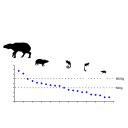
Des prospections géologiques et paléontologiques sur les affleurements continentaux paléogènes du Complexe de Gour Lazib (Hammada du Dra, Algérie) nous ont permis de mettre en évidence plusieurs sites à vertébrés, sur une superficie de plus de cinq cents kilomètres carrés. La faune est constituée de nombreux vertébrés fossiles associant mammifères placentaires, poissons actinoptérygiens et protoptères, squamates, amphibiens, chéloniens, crocodiles et oiseaux. La flore de charophytes est également diversifiée. Les données bio-magnétostratigraphiques indiquent un âge compris entre l’Yprésien terminal et le Lutétien basal pour cet assemblage unique en Afrique. Les nombreux restes de mammifères récoltés ont une préservation exceptionnelle pour le Paléogène ancien arabo-africain et permettent une reconstitution paléoenvironnementale réalisée via une méthode couplant cénogramme et distribution pondérale des taxons arboricoles. Le profil du cénogramme, caractérisé par l’abondance des espèces de petite taille (insectivores, primates et rongeurs), la présence d’espèces de taille intermédiaire (hyracoïdes) et la rareté des grandes espèces (uniquement représentées par les hyracoïdes ; absence notable des proboscidiens et embrithopodes), met en évidence un milieu forestier assez fermé sous climat tropical. Par ailleurs, les données lithologiques et sédimentologiques indiquent un milieu fluviatile méandriforme où ont proliféré les charophytes. Plus hypothétique reste l’existence d’une saisonnalité dans les Gour Lazib, avec de possibles périodes temporaires modérément arides.
PV article infos
Article state: in_press
|
PDF
S.I. Data
|

|
Mammifères nouveaux de l'Ilerdien des Corbières et du Minervois (Bas-Languedoc, France)
Published online: 04/12/1989
Keywords:
Bas-Languedoc; Early Eocene; France; Ilerdian; Mammals; New taxa
https://doi.org/10.18563/pv.19.3.161-167
Abstract
Four new taxa (two genera, one subgenus, and four species) conceming the orders Condylarthra, Rodentia, Pantolesta, and an undetermined order from middle and middle/upper Ilerdian localities (lower Ypresian) of the Corbières and Minervois regions (Bas-Languedoc, Southem France) are presented in this short paper
PV article infos
Published in Vol. 19, Fasc. 3 (1989)
|
PDF
|
|
There were giants upon the earth in those days
Published online: 16/07/2014
Keywords:
Eurasia; history of science; Indricotheriinae; Paléogène; Rhinocerotoidea
https://doi.org/10.18563/pv.38.1.e4
Abstract
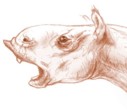
Rhinoceros Giants: the Paleobiology of Indricotheres. Donald R. Prothero. Life of the Past Collection, Indiana University Press; 160 pp. (66 b&w illustrations). Hardback (7x10”): USD 42.00 plus shipping. ISBN: 978-0-253-00819-0. E-book: USD 34.99. ISBN: 978-0-253-00826-8.
PV article infos
Published in Vol.38-1 (2014)
|
PDF
|