|
L’assemblage mammalien de l’Eocène continental du Complexe de Gour Lazib (Algérie) : structure écologique et implications paléoenvironnementales
Published online: 01/01/1970
Keywords:
Afrique du Nord; Cénogramme; Paléogène; Vertébrés
https://doi.org/10.18563/pv.49.2.e2
Abstract
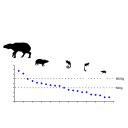
Des prospections géologiques et paléontologiques sur les affleurements continentaux paléogènes du Complexe de Gour Lazib (Hammada du Dra, Algérie) nous ont permis de mettre en évidence plusieurs sites à vertébrés, sur une superficie de plus de cinq cents kilomètres carrés. La faune est constituée de nombreux vertébrés fossiles associant mammifères placentaires, poissons actinoptérygiens et protoptères, squamates, amphibiens, chéloniens, crocodiles et oiseaux. La flore de charophytes est également diversifiée. Les données bio-magnétostratigraphiques indiquent un âge compris entre l’Yprésien terminal et le Lutétien basal pour cet assemblage unique en Afrique. Les nombreux restes de mammifères récoltés ont une préservation exceptionnelle pour le Paléogène ancien arabo-africain et permettent une reconstitution paléoenvironnementale réalisée via une méthode couplant cénogramme et distribution pondérale des taxons arboricoles. Le profil du cénogramme, caractérisé par l’abondance des espèces de petite taille (insectivores, primates et rongeurs), la présence d’espèces de taille intermédiaire (hyracoïdes) et la rareté des grandes espèces (uniquement représentées par les hyracoïdes ; absence notable des proboscidiens et embrithopodes), met en évidence un milieu forestier assez fermé sous climat tropical. Par ailleurs, les données lithologiques et sédimentologiques indiquent un milieu fluviatile méandriforme où ont proliféré les charophytes. Plus hypothétique reste l’existence d’une saisonnalité dans les Gour Lazib, avec de possibles périodes temporaires modérément arides.
PV article infos
Article state: in_press
|
PDF
S.I. Data
|
|
FIRST OCCURRENCE OF PAMPATHERIUM (XENARTHA: PAMPATHERIIDAE) FROM THE EL CEDAZO CREEK, AGUASCALIENTES, MEXICO
Published online: 01/01/1970
Keywords:
Aguascalientes; El Cedazo; Mexico; Pampatherium; Pleistocene
https://doi.org/10.18563/pv.49.2.e3
Abstract
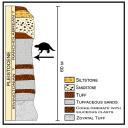
The glyptodontid Pampatherium is currently known from Pleistocene and Pliocene deposits in the State of Mexico, Puebla, Jalisco and Guanajuato. Recently, from the Late Pleistocene locality of El Cedazo creek (Aguascalientes), has revealed fragmentary remains assigned by its anatomical characteristics to the genus Pampatherium. The recovered specimen consists of an articulated anterior left fragment of the carapace comprising 78 osteoderms, which display the diagnostic ornamentation of the genus including a depressed central area, attenuated ornamentation, reduced or absent marginal band, as well as a general rectangular shape. These morphological characteristics clearly support assignment to the genus Pampatherium and distinguish the material from Holmesina, which has been previously reported from the El Cedazo Local Fauna. However, the absence of cranial or dental material and the potential influence of ontogenetic variation preclude a confident species-level identification. Accordingly, the specimen is referred to Pampatherium sp. This finding represents the first confirmed record of the genus in the state of Aguascalientes and provides new evidence of the presence of pampatheriids in the El Cedazo Local Fauna.
PV article infos
Article state: in_press
|
PDF
|
|
Miocene Bovidae (Mammalia) of the Siwaliks Part 2: Antilopinae
Published online: 01/01/1970
Keywords:
Bovidae; Miocene; Siwaliks; horn cores
https://doi.org/10.18563/pv.49.2.e1
Abstract
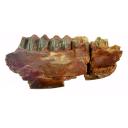
The fluvial sediments of the Siwaliks in northern Pakistan contain a geologic and paleontological record encompassing the Miocene and Pliocene. The sediments, which are thousands of meters thick, have abundant vertebrate and invertebrate fossils from multiple horizons. Fossils were initially discovered in the Siwalik Hills of India in 1832 and there are collections of Siwalik fossils not only in the Museum of the Geological Survey of India, but also in various European, British, and American museums. Renewed collecting in northern Pakistan in collaboration with the Geological Survey of Pakistan has now added over 10,000 bovid fossils to a new collection in Islamabad. The fossils include many isolated horn cores and occasional skulls, as well as teeth and postcranials. Here we discuss material belonging to the Antilopinae, recognizing fifteen species belonging to at least three tribes. Five of the fifteen have previously been named, while an additional two have cranial material suitable for defining a new species. The remaining eight are known from cranial material that allows us to distinguish them from other Siwalik bovids, but in most instances they are of doubtful generic identity and we think may belong to previously recognized taxa from other geographic regions. One (?Protragelaphus sp.) probably belongs to an unnamed species, but because the available material is inadequate for defining a new species, we do not name it at this time. The Antilopini predominate in the fossil collections, both in terms of number of species and number of specimens.
PV article infos
Article state: in_press
|
PDF
S.I. Data
|
|
Pterosaurs (Pterosauria) from the Cerro del Pueblo Formation (Late Campanian) of Coahuila, Mexico
Published online: 21/11/2025
Keywords:
Azhdarchoidea; Coahuila; Mexico; Pterodactyloidea; Pterosauria
https://doi.org/10.18563/pv.48.2.e1
Abstract
The Late Campanian Cerro del Pueblo Formation, located in southeastern Coahuila, Mexico, has produced a diverse array of vertebrate fossils. However, pterosaur remains from this unit are notably scarce. In this study, we describe new pterosaur material from the formation. The specimens include a fragmentary vertebra identified as belonging to an indeterminate, but derived pterodactyloid, along with the distal condyle of a left metacarpal, referable to an azhdarchoid pterosaur, and a left manus print. While these specimens provide additional evidence of pterosaur presence in the region during the Late Cretaceous, their fragmentary nature limits precise taxonomic and ichnotaxonomic identification. Nevertheless, they highlight the potential for future discoveries that could refine our understanding of the diversity and distribution of pterosaurs in Mexico.
PV article infos
Published in 48-2 (2025)
|
PDF
|
|
Miocene Bovidae (Mammalia) of the Siwaliks, Part 1: Hypsodontinae and Bovinae.
Published online: 30/07/2026
Keywords:
Bovidae; horncores; Miocene; Siwaliks
https://doi.org/10.18563/pv.49.1.e1
Abstract
The fluvial sediments of the Siwaliks in northern Pakistan preserve an exceptional geologic and paleontological record encompassing parts of the Oligocene and all of the Miocene and Pliocene. The sediments, which can be thousands of meters thick, have abundant vertebrate and invertebrate fossils from hundreds of different levels. Fossils were first discovered in the Siwaliks in 1832 and there are important collections of them in the Museum of the Geological Survey of India as well as in various European, British, and American museums. Renewed collecting has now added over 10,000 bovid fossils to a new collection held by the Geological Survey of Pakistan. The fossils include rare skulls and many isolated horn cores, as well as teeth and postcranials. Here we discuss material belonging to the hypsodontinae, boselaphini, and bovini. We recognize four hypsodontine and twenty-two bovine species, plus one species of uncertain subfamilial placement. Nineteen of the twenty-seven have previously been named, while another five have cranial material suitable for defining a new species. Two species, referred to as ?Hypsodontinae sp. and Bovidae sp. 1, are distinctive but left unnamed. We are also uncertain about how distinctive what we refer to as Selenoportax aff. vexillarius is from Selenoportax vexillarius. Boselaphinines predominate in the fossil collections, both in terms of number of species and number of specimens. Most of the boselaphine genera are endemic to the Siwaliks, as are the hypsodontine Palaeohypsodontus and the possible bovini Pachyportax. The predominance of boselaphines together with the number of endemic taxa gives the Siwalik bovid fauna a distinctive aspect and collectively comprise the best-known Miocene record of the subfamily.
PV article infos
Article state: in_press
|
PDF
S.I. Data
|
|
Abstract book of the 18th Conference of the European Association of Vertebrate Palaeontologists (EAVP), 5-9 July 2021, Benevento, Italy
Published online: 12/07/2021
Keywords:
2021; Abstracts; Benevento; EAVP
https://doi.org/10.18563/pv.eavp2021
Abstract
Welcome to the 18th conference of the EAVP, the first online meeting of our association. The pandemic emergency made it impossible to organize the in-person meeting in Benevento as we all had hoped. However, we couldn’t miss another EAVP meeting. Therefore, this year we are meeting online, trying to make the experience the closest to the in-person meeting possible, in order to offer the delegates the opportunity to share knowledge, build new networks and reinforce the old ones. We have received 137 communications, with more than 150 delegates from 24 countries. All the abstracts have passed a peer review process and are part of this special volume of Palaeovertebrata, the official journal of the EAVP. This year we are also offering a variety of workshops, roundtables and symposia on different topics. These include the annual “Pride EAVP: An LGBTQ+ Roundtable” and “Women in Palaeontology Roundtable Discussion”, together with the workshops on “Gendered Perspective in Palaeontological Research: from Definition to Action”, “International Palaeontology Education: Virtual Teaching and Real-World Learning”, “Stepping out of Academia: Why, When and How?”, “Introduction to Hypothesis Testing in Statistics”, “The Early-Middle Pleistocene Transition: Marked Mammal Turnover and Ecosystem Dynamic” (included in the early event for the XXI INQUA Congress in Rome 2023, “A Mediterranean Perspective on Quaternary Sciences”). To conclude, we are hosting two symposia on “Palaeoart: Diversity on and behind the Canvas” and “3D fossils, Robotic and Experimental Palaeontology”. We wish you all a happy and productive meeting. And see you in Benevento next year!
PV article infos
Published in Special Volume 1-2021 (2021)
|
PDF
|

|
Book of Abstracts of the XXII Annual Meeting of the European Association of Vertebrate Palaeontologists, 30 June–5 July 2025, Kraków, Poland
Published online: 20/06/2025
Keywords:
Abstracts; EAVP
https://doi.org/10.18563/pv.eavp2025
Abstract
Book of Abstracts of the XXII Annual Meeting of the European Association of Vertebrate Palaeontologists, 30 June–5 July 2025, Kraków, Poland.
PV article infos
Published in 48-1 (2025)
|
PDF
|

|
Reflections on some Russian eotheriodonts (Reptilia, Synapsida, Therapsida)
Published online: 28/02/1972
Keywords:
Reptilia; Russia; Synapsida; Therapsida
https://doi.org/10.18563/pv.5.3.79-109
Abstract
As a result of the enrichment of eotheriodont material by one of us (P.K.T.), these specimens (essentially Biarmosuchur and Eotitanosuchur) are reexamined and refigured. A reevaluation of their particularities supports the distinction of two families, for which new diagnoses are proposed. This leads us to discuss the affinities of these families, with respect to the sphenacodonts on one hand, and to the South African primitive theriodonts on the other (gorgonopsids and ictidorhinids). This study contains inherent paleogeographic consequences which are considered in conclusion.
PV article infos
Published in Vol. 05, Fasc. 3 (1972)
|
PDF
|

|
Observations sur l'anatomie crânienne du genre Palaeotherium (Perissodactyla, Mammalia): mise en évidence d'un nouveau sous-genre, Franzenitherium
Published online: 01/12/1992
Keywords:
Palaeotherium; Paléogène; Perissodactyla; skull anatomy; Systematics
https://doi.org/10.18563/pv.21.3-4.203-224
Abstract
The skull remains referred to the genus Palaeotherium are recorded and described. Biometrical tests are made to elucidate intrageneric allometric relationships and to allow comparisons with various other perissodactyls. Apart from the well known shortness of post canine diastems and deepness of the narial opening, the genus is characterized by a great lengthening of the splanchnocranium, owing to a spreading of the post-orbital facial region, by a reduced area of the eye-socket and by the prevalence of the temporal muscle with regard to the masseter; this original shape of the masticatory apparatus needs to be related to the morphology of the jugal teeth and particularly to their asymmetrical semi-hypsodonty.
These animals, whose running ability was evidently poor, appear to have been adapted to rather closed environments, feeding on relatively soft vegetable matter; olfactory sense was likely to play a leading part in interindividual and environmental relationships. Such evolutionary trends might explain the disappearance of most of them, as clirnatic conditions deteriorated at the end of the Eocene, before the "Grande Coupure" which affected mammalian faunas at that time.
Although the present paper is not directly concemed with phylogenetics, it invalidates the supposed ancestor-descendant relationship between P. castrense and P. magnum, and it suggests a possible emergence of the P. medium lineage from a P. siderolithicum stock. Moreover, the structure of the post-orbital facial area allows the erection of a new sub-genus, Franzenitherium, for the species lautricense and duvali.
PV article infos
Published in Vol. 21, Fasc. 3-4 (1992)
|
PDF
|

|
The Late Cretaceous nesting site of Auca Mahuevo (Patagonia, Argentina): eggs, nests, and embryos of titanosaurian sauropods.
Published online: 15/12/2003
Keywords:
Argentina; Eggs; embryos; Late Cretaceous; nests; Patagonia; titanosaurian sauropods
https://doi.org/10.18563/pv.32.2-4.97-108
Abstract
The late Cretaceous Auca Mahuevo nesting site (Neuquén Province, Argentina) has produced a large number of sauropod eggs, many of them containing the remains of embryos. Research at this site has generated important information about the development of the embryos, the morphology and eggshell microstructure of the eggs, and the reproductive behavior of sauropod dinosaurs. Cranial features present in the embryos have allowed their identification as those of titanosaurian sauropods. Differences in the texture of the sediments that contain some of the egg-clutches have illuminated their nest architecture. Microstructural studies of eggshells have expanded our knowledge of their variability and the incidence of pathologies within a reproductive titanosaurian population. Maps showing the spatial distribution of eggs and clutches. the stratigraphic distribution of the egg-beds, and the sedimentological context in which they are contained, have provided the basis for several inferences about the nesting behavior of these dinosaurs.
PV article infos
Published in Vol. 32, Fasc. 2-4 (2003)
|
PDF
|
|
A New caseid Synapsid from the Permian (Guadalupian) of the Lodève basin (Occitanie, France)
Published online: 18/07/2022
Keywords:
; Caseidae; France; Guadalupian; semi-aquatic lifestyle
https://doi.org/10.18563/pv.45.2.e2
Abstract
Lalieudorhynchus gandi gen. nov. and sp. nov. is a new caseid synapsid from the Permian of the Lodève Basin, Occitanie, France. This new taxon is represented by a partial but well-preserved postcranial skeleton, and is characterized by the following apomorphies: a transverse section of the sacral and anterior caudal neural spines with a very thin keel-like process anteriorly, a slender dorsal tip of the dorsal and caudal spines, a narrow distal end of the first sacral rib, a fossa on triceps process of metacoracoid, and a very large distal tarsal 1 of same width than the astragalus, with nearly all sides being shallowly concave.
The skeleton corresponds to a sub-adult individual that was excavated from the La Lieude Formation dated as Roadian-Capitanian (Guadalupian). A sedimentological and taphonomical analysis of the type locality, together with preliminary osteohistological observations, suggest that this new French caseid was rather aquatic, as already hypothesised for other large forms.
A phylogenetic analysis of caseids is performed to test the position of this new taxon and to better understand the evolution of the clade: interestingly, Lalieudorhynchus gandi gen. nov. et sp. nov. is closer to the NorthAmerican “Cotylorhynchus” hancocki than to the other French caseids Ruthenosaurus and Euromycter from the Artinskian of the geographically closer Rodez Basin. These two last caseids document the Artinskian radiation of the clade, which remained diverse until Olson’s extinction. Caseids survived, as Lalieudorhynchus is one of the youngest representatives of the clade, and may have used novel ecological strategies to access their vegetarian food sources.
PV article infos
Published in 45-2 (2022)
|
PDF
|
|
Autopsie d’une radiation adaptative : Phylogénie des Theridomorpha, rongeurs endémiques du Paléogène d’Europe - histoire, dynamique évolutive et intérêt biochronologique
Published online: 15/12/2016
Keywords:
Diversification; Extinction; Paléoenvironnements; Rodentia; Theridomyoidea
https://doi.org/10.18563/pv.40.3.e1
Abstract
Résumé :
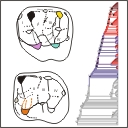
L’étude des rongeurs Theridomorpha permet de suivre le déroulement d’une radiation adaptative pendant toute sa durée (Eocène moyen-Oligocène terminal), sur un territoire restreint à l’extrémité ouest de l’Europe Occidentale. Dans ce papier, la phylogénie de ce groupe est établie à partir d’une analyse cladistique reposant sur l’examen de 315 caractères (310 dentaires). Le groupe d’intérêt comprend 110 des 132 espèces (24 genres) de Theridomyoidea et deux genres encore inclus jusqu’ici dans les Reithroparamyinae qui rejoignent les Theridomorpha. Les groupes externes comprennent des Glires basaux, Cocomys, Tanquammys et 16 Ischyromyiformes. Un cadre phylogénétique robuste est produit, qui permet de clarifier la systématique des Theridomorpha. La position des Remyoidea (nov. sup.fam.) au sein des Ischyromyiformes, extérieure aux Theridomorpha, est confortée. Les Protadelomys et Tardenomys sont à la base des Theridomyoidea, avant la séparation en deux clades correspondant aux familles Pseudosciuridae et Theridomyidae. Les sous-familles sont consolidées : Pseudosciurinae et Sciuroidinae pour les Pseudosciuridae ; Issiodoromyinae, Oltinomyinae, Columbomyinae, Theridomyinae, auxquelles s’ajoute au moins une nouvelle sous-famille (Patriotheridomyinae), pour les Theridomyidae. La topologie des chrono-espèces (sensu Simpson), traitées antérieurement comme lignées évolutives, apparaît dans la plupart des cas sous forme de clades successifs dans lesquels les espèces sont le plus souvent arrangées de manière pectinée, émergeant dans l’ordre stratigraphique. L’analyse des caractères aux principaux nœuds permet de consolider les caractères diagnostiques des taxons et les tendances évolutives, ainsi que de discuter des divers parallélismes et convergences dans l’évolution des structures et patrons dentaires (e.g., émail des incisives unisérié chez les Issiodoromyinae et les Patriotheridomyinae, ou pseudo-multisérié chez les Blainvillimys les plus hypsodontes, les Protechimys et Archaeomys ; patrons dentaires téniodontes ; allongement des dents déciduales chez les Patriotheridomyinae, Issiodoromyinae et Theridomyidae ; sélénodontie ou lophodontie). Les dynamiques évolutives traduites par les changements morphologiques sont mises en relation avec les variations environnementales. Enfin, les implications biochronologiques de l’évolution des Theridomyoidea sont discutées.
Abstract:
The adaptive radiation of the rodents Theridomorpha occurred during a limited time window (middle Eocene to late Oligocene), on an area restricted to Western Europe. In this paper, the phylogeny of this group is established via a cladistic assessment of 315 morphological characters (310 dental). The group of interest encompasses 110 upon 132 species (24 genera) of Theridomyoidea, and two genera formerly included within the Reithroparamyinae, and which are included here within the Theridomorpha. The outgroups include basal Glires, Cocomys, Tanquammys and 16 Ischyromyiformes. A robust phylogenetic frame is produced, which allows clarifying the systematics of the Theridomorpha. Within the Ischyromyiformes, the Remyoidea (nov. supfam.) are set apart from the Theridomorpha. Protadelomys and Tardenomys represent the earliest offshoots of the Theridomyoidea, before the dichotomy between Pseudosciuridae and Theridomyidae. It supports the former subfamilies Pseudosciurinae and Sciuroidinae within the Pseudosciuridae; and for the Theridomyidae: the Issiodoromyinae, Oltinomyinae, Columbomyinae, Theridomyinae, with at least one new subfamily (Patriotheridomyinae). The topologies of the chronospecies (sensu Simpson), formerly considered as evolutionary lineages, appear in most cases as successive clades, in which the species are generally pectinately arranged and emerging in the stratigraphic order. The analysis of characters supporting the main nodes allow consolidating the diagnosic characters of the taxa and their evolutionary trends, as well as discussing the various cases of parallelism and convergence in the evolution of structures and dental patterns (e.g., uniserial incisor enamel for Issiodoromyinae and Patriotheridomyinae, or pseudo-multiserial for the most hypsodont Blainvillimys, Protechimys and Archaeomys; taeniodont dental patterns; lengthening of deciduous premolars for Patriotheridomyinae, Issiodoromyinae and Theridomyidae; selenodonty or lophodonty).
Evolutionary dynamics are analysed with respect to environmental changes. Finally, biochronological implications of the evolution of Theridomyoidea are discussed.
PV article infos
Published in Vol 40-3 (2016)
|
PDF
S.I. Data
|
|
Preliminary report on the fishes (Chondrichthyes & Teleostei) from the lower Oligocene (Rupelian) Red Bluff Clay at site AMo-9, Monroe County, Alabama, USA
Published online: 26/06/2024
Keywords:
Batomorphii; Elasmobranchii; Galeomorphi; Gulf Coastal Plain; Vicksburg Group
https://doi.org/10.18563/pv.47.2.e2
Abstract
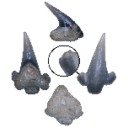
Herein we describe a small but relatively diverse assemblage of fossil fishes derived from the lower Oligocene (Rupelian) Red Bluff Clay at site AMo-9 in Monroe County, Alabama, USA. Identified amongst the remains are 15 unequivocal taxa representing 11 families within five orders, and one additional taxon represents an unknown order and family. Taxa identified include Eostegostoma sp., Otodus (Carcharocles) sp., Mitsukurinidae/Carchariidae indet., Macrorhizodus praecursor, Galeorhinus sp., Negaprion gilmorei, Physogaleus sp., “Sphyrna” sp., Galeocerdo sp., cf. “Aetobatus” sp., Sphyraena sp., Xiphiorhynchus kimblalocki, Xiphiorhynchus sp., Cylindracanthus ornatus, and C. rectus. Several additional fossils could not be identified beyond Lamniformes, Carcharhiniformes, and Teleostei, but they likely belong to one of the identified taxa within this paleofauna. All of the fishes previously reported from the Red Bluff Clay within the entirety of the Gulf Coastal Plain of the USA are otolith-based, and each of the 15 unequivocal taxa reported herein are important new records for this lithostratigraphic unit. In particular, the Eostegostoma sp. and Xiphiorhynchus spp. specimens represent the first occurrences of these taxa in Alabama. The specimens of C. ornatus, Eostegostoma sp., and X. kimblalocki are stratigraphic and temporal range extensions from the middle and late Eocene into the Rupelian Stage of the Oligocene. Other described taxa may represent transitional forms between those described from the late Eocene and late Oligocene within the region. This study provides a tantalizing preliminary view into faunal transitions that occurred amongst marine fishes across the Eocene/Oligocene boundary within the Gulf Coastal Plain of the USA.
PV article infos
Published in 47-2 (2024)
|
PDF
|
|
Reconstruction of the cervical skeleton posture of the recently-extinct litoptern mammal Macrauchenia patachonica Owen, 1838
Published online: 02/05/2023
Keywords:
biomechanics; cervical posture; functional anatomy; Litopterna; Macrauchenia
https://doi.org/10.18563/pv.46.1.e1
Abstract
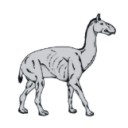
Macrauchenia patachonica was among the largest litopterns. It had a long neck with elongated cervical vertebrae, unique among endemic South American ungulates. We calculated the pattern of stress in the joints between the vertebral centra along the neck of the recently-extinct litoptern mammal M. patachonica for various hypothetical neck postures to determine which one is optimal. We also determined the zygapophyseal alignment positions for the neck, assuming a wide range of values for the thickness of the intervertebral discs. We concluded that a vertical posture is the one that best meets the requirements of nearly constant stress. This upright posture was probably a frequently adopted posture by M. patachonica while feeding or standing. It is also possible that occasionally it could adopt a gerenuk-like posture. In almost any other position, the standard deviations of stress values (SD) divided by mean stress (MS) have values between 0.4 and 0.5. Since it was a mixed feeder, M. patachonica probably used different postures to reach resources at different heights. However, an almost horizontal posture was required for the optimal articulation of the neck vertebrae. It probably represents the posture during fast locomotion, as suggested in a previous biomechanical study of locomotion.
PV article infos
Published in 46-1 (2023)
|
PDF
|

|
Les traces de pas de Dinosaures et autres Archosaures du Lias inférieur des grands Causses, Sud de la France
Published online: 15/12/2002
Keywords:
Dinosauroid footprints; France; Grands-Causses; Hettangian; ichnostratigraphy; paleoenvironments; Sinemurian; statistical results
https://doi.org/10.18563/pv.31.1-4.1-143
Abstract
The Causses" is a near 3400 km2 large plateau located in the south of France. Here the first dinosaur footprints where found in 1935. After this, this area has yielded an ever-increasing number of ichnites now in excess of 500 specimens. These latter, 15 to 50 cm long, tridactyl or tetradactyl footprints of generally biped animals, were discovered at the surface of Hettangian to lower Sinemurian dolomite layers within 4 distinct stratigraphic units. The 35 sites bearing ichnites are located on the plateau margin. For the first time, morphologic characters studied through descriptive statistic methods with the usual parameters and classical Student and Snédecor tests, allowed us, to divide the whole set of biped traces into 6 ichnospecies. Their definitions are further constrained by multivariate statistical results using Principal Component Analysis (PCA), Factor Analysis of correspondances (FAC) and Discriminant Analysis (DA). All have confirmed the morphologic observations. So that now, the following taxa are identified : Grallator variabilis, G. lescurei, G. sauclierensis, G. minusculus, Eubrontes giganteus, Dilophosauripus williamsi, cf. Moraesichnium, Orníthopus fabrei nov ichnosp. The more immediately visible differences relate to the interdigital II-IV divarication and the digit length ratio. To this panel, we must add Batrachopus deweyi and shapes suggesting Trisauropodichnus and/or Anomoepus. Among all ichnite associations described in the lower Liasic, the New England assemblage presents the most affinities with ours. It shows the ichnotaxa Grallator, Dilophosauripus, Eubrontes, Batrachopus without forgetting Ornithopus fabrei nov. ichnosp. which is close to Ornithopus gallinaceus from the Massachusetts and Connecticut basins. On comparing the present early Jurassic ichnofauna of the Causses with the ones of the Middle and Upper Triassic formations of the eastem border of the Massif Central (France), it appears that tridactyl footprints become more and more numerous and large from Triassic to Early Jurassic. In the Causses, these latest are prevalent but in Quercy (France), Poland, Italy, USA, they are also associated with Omithopoda, Thyreophora and Sauropoda ichnites. Footprint areas considered here were generaly under an arid climate. Animals that passed by were heavy and bulky possible Megalosaur trackmakers, and lighter and slender Coelophysids or Ceratosaurs. For all, these areas were pathways as the orientations of the trackways seem point out. The directions followed by these reptiles were without any important variation during the Hettango-Sinemurian stages. These areas were also used from time to time by Crocodilomorpha and may be tetradactyl (I-IV) bipedal avian Theropods. However, the number of such trackways in sites, sometimes substantial, should not lead us to overestimate the trackmakers populations. These last were probably relatively moderately abondant in this inter-supratidal swamp environment. In the Causses, ichnites are connected with former algo-laminated deposits (Algal mats) which were rapidly hardened by means of calcitisation of cyanobacteria. The result has been a moderate depth of footprints; autopodia disturbing only a few cm of the carbonate substrate. Other fossils have been discovered : invertebrates with thin bivalve and gastropod shells, crustaceans tests and plants. These latter suggest the existence of paleomangroves like environments but also continental vegetation periodically overruning the swamp environment during regression/transgression cycles. At these times, wooded parts of it, could become protecting, feeding, resting and nesting places.
PV article infos
Published in Vol. 31, Fasc. 1-4 (2002)
|
PDF
|
|
Revision of the historical collections of Pliocene-Pleistocene large mammals from Le Riège and Saint-Palais localities, near Pézenas (Southern France)
Published online: 23/06/2025
Keywords:
Hérault; Mammalia; Montpellier; Neogene; Quaternary
https://doi.org/10.18563/pv.48.1.e2
Abstract
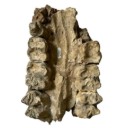
Numerous “Quaternary” large-mammal fossils have been collected since the 1830s along the Le Riège stream, near Pézenas (Southern France). More than 120 specimens are stored in the collections of the Université de Montpellier (UM) under the name “Le Riège”. A major operation aiming at relocating the palaeontological collections of the University has made it possible to group together all the specimens of interest and launch their systematic revision for the first time. The fossils belong to the Reboul (1839; 51 samples) and de Christol (1865; 18 samples) Collections and 17 samples compose the Crochet & Ivorra Collection (1998). The remaining 38 samples have no mention about the exact time and location of their finding. We provide a critical inventory with literal transcription of inscriptions on specimens and historical labels. This revision confirms the presence of two distinct faunal assemblages under the name of “Le Riège”: Saint-Palais (Early Pliocene, MN14–15) and Le Riège sensu stricto (late Early Pleistocene, most likely MNQ19). The former assemblage, with coastal affinities, is composed of the ruminants Alephis sp. and Procapreolus cf. pyrenaicus, the rhinocerotid Pliorhinus megarhinus, the gomphotheriid Anancus arvernensis and marine mammals, all emblematic taxa for the Early Pliocene of Montpellier and Perpignan. The latter assemblage documents a late Early Pleistocene fluvio-volcanic sequence, yielding the bovid Bison (Eobison) spp., the cervid Eucladoceros cf. giulii, the hippopotamid Hippopotamus antiquus, the rhinocerotid Stephanorhinus etruscus, the equid Equus cf. altidens, and the elephantid Mammuthus cf. meridionalis, plus a few specimens of uncertain taxonomic affinities. This revision underscores the interest of revisiting historical collections and further provides a starting point for future research.
PV article infos
Published in 48-1 (2025)
|
PDF
S.I. Data
|
|
Late Campanian theropod trackways from Porvenir de Jalpa, Coahuila, Mexico
Published online: 29/11/2017
Keywords:
Dinosaur tracks; Late Cretaceous; Mexico.; Tetanura; Theropod
https://doi.org/10.18563/pv.41.2.e1
Abstract
Confident attribution of bipedal tridactyl dinosaur tracks to theropods or ornithopods can be challenging. Here we describe trackways produced by tetanuran dinosaurs, previously attributed to hadrosaurs, from Coahuila State, northeastern Mexico. Multiple trackways headed in the same direction suggest gregarious behaviour in these late Campanian theropods.
PV article infos
Published in Vol 41-2 (2018)
|
PDF
|

|
Les Issiodoromyinae (Rodentia, Theridomyidae) de l'Eocène supérieur à l'Oligocène supérieur en Europe occidentale
Published online: 15/05/1976
Keywords:
climate; Faunal turnover; Paléogène
https://doi.org/10.18563/pv.7.1-2.1-115
Abstract
Based on material from 30 localities, morphologic dental, cranial and biometric analyses have permitted the characterization of two parallel Issiodoromyine lineages, and also the definition of diverse species representing several evolutive stages. Thus it is that new lineages complete the contribution made by the Theridomyinae and Cricetidae and permit, for the Quercy in particular, additional precision in the biochronologic succession of the localities. One of the lineages is limited to the genus Pseudoltinomys LAVOCAT; the other evolves from the genus Elfomys HARTENBERGER to the genus Issiodoromys BRAVARD in GERVAIS. The latter is affected by profound anatomical changes due to a functional modification of the mastication apparatus. These changes seem to be able to be put in relation with the aridification and cooling of the climate at the end of the Eocene. At the end of the middle Oligocene, a new chewing structure is achieved. It is found in diverse living rodents that inhabit a rather arid steppe environment (Cavia, Pedetes, Ctenodactylus). To these supposed nearby ecologic conditions, these rodents have responded in a convergent fashion. It is possible to attribute to the extreme specialization of Issiodoromys its incapacity to adapt to the new climatic crisis of the end of the Oligocene. The arrival of immigrants may be considered as another cause of its disappearance at this time, complementary or not with the first.
PV article infos
Published in Vol. 07, Fasc. 1-2 (1976)
|
PDF
|
|
First report of Cylindracanthus (Osteichthyes) from the Eocene of India
Published online: 25/03/2024
Keywords:
Cylindracanthus; Eocene; histology; rostrum; Umarsar mine.
https://doi.org/10.18563/pv.47.1.e2
Abstract
Fossils of the endangered sturgeons and peddlefishes are widely distributed. We here report for the first time the presence of one of the extinct osteichthyes genus Cylindracanthus (Liedy 1856a) from the Early Eocene lignite-bearing successions of the Kutch Basin, India. The present well preserved rostrum is characterised by numerous wedge-shaped components encircling the central canal that runs along its length, paired at the base and each wedge contributing to the formation of a ridge. The rostrum lacks teeth. The present find extends the palaeobiogeographical distribution of Cylindracanthus considerably and supports its Eocene age as dental remnants preserved in Cylindracanthus sp. shows a decrease in remanent dentition and tooth bases from the Cretaceous to the Eocene. Cylindracanthus is an useful palaeoenvironmental indicator as it has been found associated typically with deposits of nearshore marine environments.
PV article infos
Published in 47-1 (2024)
|
PDF
|

|
The late Miocene percrocutas (Carnivora,Mammalia) of Madedonia, Greece.
Published online: 14/06/1995
Keywords:
Biochronology; Carnivora; Comparisons; Dinocrocuta; Greece; Late Miocene; Mammalia
https://doi.org/10.18563/pv.24.1-2.67-84
Abstract
Some new material of percrocutas from the late Miocene of Axios valley (Macedonia, Greece) is studied. They have been found in the locality of "Pentalophos 1" (PNT). The material has been described and compared with the known late Miocene percrocutas of Eurasia. This comparison indicates that it can be identified as Dinocrocuta gigantea (SCHLOSSER, 1903). A maxilla of a percrocuta, named ”Hyaena" salonicae, was found in the same area (Andrews, 1918). "Hyaena" salonicae is smaller than the PNT material. It is also compared with other material from Eurasia while its taxonomic and age problems are discussed. It belongs to Dinocrocuta and shows close relationships with D. robusta and D. senyureki; its age can be considered as late Vallesian-early Turolian. The age of the locality PNT is also discussed and a possible Vallesian age is proposed for it.
PV article infos
Published in Vol. 24, Fasc. 1-2 (1995)
|
PDF
|