
Miocene Bovidae (Mammalia) of the Siwaliks: Hypsodontinae and Bovinae
Pterosaurs from Coahuila
Paléoenvironnement des mammifères des Gour Lazib
Les sélaciens du Miocène de la région de Montpellier
Contribution à l'étude des genres Gliravus et Microparamys.
Muridae du Pliocène supérieur d'Espagne et du midi de la France.
Eocene (57) , Quercy Phosphorites (38) , Systematics (32) , Rodents (29) , Mammalia (27) , Rodentia (25) , Miocene (25)
Page 9 of 19, showing 20 record(s) out of 369 total

|
Morphotypes dentaires actuels et fossiles des Chiroptères Vespertilioninés. 1e partie: Etude des morphologies dentairesHenri MenuPublished online: 30/09/1985Keywords: bats; Dental morphology; fossils; PHYLOGENY; recent; Systematics https://doi.org/10.18563/pv.15.2.71-128 Abstract The classifications of the recent vespertilionine bats were made wihtout taking in account the teeth morphology; this resulted in a reduction of the possibilities of comparison with the available fossils. The generalized use of dental formulae was abusive: this contributed to the admission of artificial genera. These conditions have long delayed the consideration of characters able to frame the phylogeny of the sub-family. In the first part of the study, the teeth morphologies are described and analysed. morphological reference types are established for each upper and lower tooth: they should make an easier elaboration of criteria for the differentiation at generic level. The position of the species in view of these criteria allows one to group them into homogeneous genera, and to appreciate the degree of relationship that the latter have between them. The second part of the study (next publicationà will develop inferences dealing with systematics and phylogeny PV article infos Published in Vol. 15, Fasc. 2 (1985) |
|

|
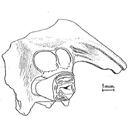
Le genre Mesembriacerus (Bovidae, Artiodactyla, Mammalia) : un Oviboviné primitif du Vallésien (Miocène supérieur) de Macédoine (Grèce)Geneviève Bouvrain and Louis de Bonis
Published online: 15/12/1984 |
|
|
Les Paramyidae (Rodentia) de l'Eocène inférieur du bassin de Paris.Jacques MichauxPublished online: 15/07/1968Keywords: Ailuraviinae; Eocene; Paramyinae; Rodents https://doi.org/10.18563/pv.1.4.135-193 Abstract The exploitation of new early Eocene localities in the Paris Basin has resulted in the collecting of numerous mammalian remains, among which are about 300 isolated teeth representing the rodents. They belong, for the most part, to the paramyid group. Only the latest level of the early Eocene has yielded rodents belonging to the pseudosciurid group. The paramyids, the object of this study, are represented by at least 5 genera and 10 species; they are distributed among 4 clearly dilferentiated subfamilies : Paramyinae Simpson 1945, Pseudoparamyinae Michaux 1964, Ailuraviínae n. subf., Microparamyinae Wood1962. PV article infos Published in Vol. 01, Fasc. 4 (1968) |
|
|
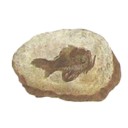
Designating a lectotype for Mesacanthus pusillus (Gnathostomata: Acanthodii)Matthew G. Baron
Published online: 03/03/2021 |
S.I. Data |
|
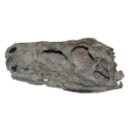
Difficulties with the origin of dinosaurs: a comment on the current debateMatthew G. Baron
Published online: 01/07/2020 |
|

|
Die Ohr-Region der Paulchoffatiidae (Multituberculata, Ober-Jura).Gerhard HahnPublished online: 15/11/1988Keywords: Multituberculata; Ober-Jura; Paulchoffatiidae; Petrosum; Portugal https://doi.org/10.18563/pv.18.3.155-185 Abstract The petrosal of the Paulchoffatiidae HAHN, 1969 is described and compared with that of younger multituberculates and of other Mesozoic mammals. The "Morrison petrosal", described by Prothero (1983), is also discussed; it probably belongs to the multituberculates. The reconstruction of the ventral side of the Paulchoffatiinae-skull, given by Hahn in 1987, is completed by addition of the otic and the occipital region. PV article infos Published in Vol. 18, Fasc. 3 (1988) |
|

|
La poche à Phosphate de Ste-Néboule (Lot) et sa faune de vertébres du Ludien supérieur. 5-SquamatesJean-Claude Rage
Published online: 25/09/1978 |
|

|
The paramyid rodent Ailuravus from the middle and late Eocene of Europe, and its relationshipsAlbert E. WoodPublished online: 15/05/1976Keywords: Ailuravinae; Rodentia https://doi.org/10.18563/pv.7.1-2.117-149 Abstract The complex taxonomic history of the paramyid rodent genus Ailuravus is reviewed. It has been described as Hyracotherium, as a creodont carnivore and as a lemuroid primate - errors at the ordínal level that are most unusual for a rodent. The genus is a member of the poorly known subfamily Ailuravinae, probably derived from some European Early Eocene species of Paramys. Aíluravus was a large arboreal paramyid with highly rugose cheek teeth, very well developed hypocone, and a remarkably weak lower incisor. It was tropical to subtropical. Three named species are recognized, A. macrurus from the Lutetian of Messel; the genotype, A. picteti, from Egerkingen, Buchsweiler and the Geiseltal, slightly later in the Lutetian; and A. stehlinschaubi, new name, from the Bartonian of Mormont-Eclépens and Robiac. One or more unnamed species are present in the Ypresian of Cuis. The species are close to a phyletic sequence. No later representatives of the genus are known. The late Eocene to earliest Oligocene North American paramyid Mytonomys, whose relationships have been obscure, is tentatively referred to the Ailuravinae. PV article infos Published in Vol. 07, Fasc. 1-2 (1976) |
|

|
Mammifères de l'Ilerdien Moyen (Eocène inférieur) des Corbières et du Minervois (Bas-Languedoc, France). Systématique, Biostratigraphie, Corrélations.Bernard MarandatPublished online: 25/01/1991Keywords: Biostratigraphy; Corbières; correlations; Early Eocene; Ilerdian; Mammalia; Minervois; Paleobiogeography; Southern France https://doi.org/10.18563/pv.20.2-3.55-144 Abstract Mammal-bearing localities have been discovered in the marine and lacustrine series of the middle Ilerdian (Lowermost Eocene) from Southem France (Minervois and Corbières). In the localities of Fordones, Monze, Fournès, and La Gasque, thirty mammal species have been identified. Among others, they include ischyromyid rodents (Microparamys and Pseudoparamys), paromomyid and adapid primates (Arcius and Donrussellia), new insectivores, condylarths, and a dyspternine pantolestid. These faunas provide new informations on the early Eocene Mesogean faunas of Rians and Palette. The assemblages of primates and rodents from Fordones support good correlations with Palette which was recently placed near the standard-level of Dormaal (MP 7). In fact, Palette and Fordones could be even older than Dormaal. Consequently, there seems to be a relatively important temporal gap between the late Paleocene of Cernay and the Sparnacian of Dormaal. This gap could be partly filled with the Mesogean faunas of Palette, Fordones, and Silveirinha. On the basis of these new mammal faunas the marine middle Ilerdian is proved to be older than the Cuisian stage of the Paris Basin. With regards to the position of the Fordones fauna at the top of the NP 10 calcareous nannoplankton biozone, the westem European paleomammalogists Paleocene/Eocene boundary could be situated between the NP 9 and NP 10 biozones. PV article infos Published in Vol. 20, Fasc. 2-3 (1991) |
|

|
Ostéologie de la tête de Richardus excavans Lavocat,1988René LavocatPublished online: 30/10/1989Keywords: Africa; anatomy; Bathyergidae; Miocene; Rodents https://doi.org/10.18563/pv.19.2.73-80 Abstract Remarkable association of a small infraorbital foramen, similar to that in recent Heterocephalus, and of a strong muscular print on the dorsal anterior part of the zygomatic plate and on the premaxillary. Several anatomical structures to be compared with those of Heterocephalus suggest relationships with this genus. Richardus supports the ancestrality of the hystricomorph character in the bathyergids PV article infos Published in Vol. 19, Fasc. 2 (1989) |
|

|
First record of the genus Megaderma Geoffroy (Microchiroptera: Megadermatidae) from Australia.Suzanne J. Hand
Published online: 14/06/1995 |
|

|
Dilambodont Molars :a functional interpretation of their evolutionPercy M. ButlerPublished online: 16/12/1996Keywords: Convergent evolution; Dilambdodont; Molar function; Molar teeth https://doi.org/10.18563/pv.25.2-4.205.213 Abstract In dilambdodont molars the primitive crest between paracone and metacone (centrocrista) is represented by a pair of crests that join the mesostyle (postparacrista, premetacrista). The cutting action of these crests against the crests of the hypoconid is described. Dilambdodonty is a derived adaptation for greater cutting efficiency. It has evolved several times and in more than one way. PV article infos Published in Vol. 25, Fasc. 2-4 (1996) |
|

|
Sur le remplissage des "poches à phosphorite" d'Aubrelong (commune de Bach, Lot)Bernard GèzePublished online: 15/11/1974Keywords: Aubrelong; Quercy Phosphorites https://doi.org/10.18563/pv.6.1-2.21-25 Abstract L’article analyse les poches à phosphorite d’Aubrelong (Quercy), comparant les fouilles de 1937 (Éocène supérieur) et celles des années 1967-1970 (Oligocène inférieur), révélant une stratification contrastée : argiles brunes pauvres en fossiles en surface, et argiles rouges riches en phosphates et faune en profondeur. Les analyses géochimiques confirment une origine latéritique sous climat tropical humide, avec des remplissages tantôt stratifiés, tantôt chaotiques, remettant en cause l’hypothèse d’une progression chronologique uniforme des dépôts PV article infos Published in Vol. 06, Fasc. 1-2 (1974) |
|

|
Neolicaphrium recens Frenguelli,1921,the only surviving proterotheriidae (Litopterna, Mammalia) into the south american Pleistocene.Mariano Bond
Published online: 30/07/2001 |
|

|
Mammals and stratigraphy of the continental mammal-bearing Quarternary of South AmericaLarry G. Marshall, Annalisa Berta
Published online: 16/12/1984 |
|

|
Les mammifères Montiens de Hainin (Paléocène moyen de Belgique) Part III : MarsupiauxJean-Yves Crochet and Bernard SigéPublished online: 30/09/1983Keywords: Belgium; Marsupials; Paleobiogeography; Paleocene https://doi.org/10.18563/pv.13.3.51-64 Abstract The oldest european marsupials are described from some specimens (isolated upper molars) recently found from the Hainin sediment (Middle Paleocene of Belgium). These fossils document a new species of the Peradectes genus. They give evidence of a much older occurrence of the marsupials in Europe than it was assumed. They allow us to postulate a didelphid dispersal from South America towards the western-holarctic area operating in two phases : the first one of the Peradectes genus at the end of the Cretaceous; the second one of the Didelphíni tribe at the end of the Paleocene. A central american crossing is likely for the first one, whereas a transafrican way is tentatively argued for the second one. PV article infos Published in Vol. 13, Fasc. 3 (1983) |
|

|
Premier signalement du Monachinae (Phocidae, Mammalia) dans le Sahélien (Miocène supérieur) d'Oran (Algérie)Christian de Muizon
Published online: 15/10/1981 |
|

|
Rongeurs muroidés du Néogène supérieur d'Afghanistan, évolution, biogéographie, corrélationsLouis D. BrandyPublished online: 30/09/1981Keywords: Afghanistan; Muroidea; Neogene https://doi.org/10.18563/pv.11.4.133-179 Abstract The rodent faunas of five afghan localities found in 1976 and 1977 (Sherullah, Ghazgay, Pul-e Charkhi, Dawrankhel 14 and 15) are studied. PV article infos Published in Vol. 11, Fasc. 4 (1981) |
|

|
Contribution à l'étude des genres Gliravus et Microparamys (Rodentia) de l'Eocène d'Europe.Jean-Louis HartenbergerPublished online: 15/03/1971Keywords: Eocene; Gliravus; Microparamys; Rodentia https://doi.org/10.18563/pv.4.4.97-135 Abstract Based on material found in about 15 localities the relationships of the genera Microparamys and Glirarus have been studied. One new genus, two subgenera and three species [Microparamys (Sparnacomys) chandoni n. subgen. and n. sp., Microparamys (Pantrogna) russelli n. subgen., Eoglirarus wildi n. gen. and n. sp., Gliravus meridionalis n. sp.] as well as the publication PV article infos Published in Vol. 04, Fasc. 4 (1971) |
|

|
The eosimiid and amphipithecid primates (Anthropoidea) from the Oligocene of the Bugti hills (Balochistan, Pakistan): new insight into early higher primate evolution in South Asia.Laurent Marivaux
Published online: 15/10/2006 |
|
