|
Neolicaphrium recens Frenguelli,1921,the only surviving proterotheriidae (Litopterna, Mammalia) into the south american Pleistocene.
Published online: 30/07/2001
Keywords:
Litopterna; Neolicaphrium recens; Pleistocene; Proterotheriidae; South America
https://doi.org/10.18563/pv.30.1-2.37-50
Abstract
The litoptem Proterotheriidae are extinct endemic South American ungulates frequently used as an example of evolutionary convergence with the horses. They were considered to be exclusively Tertiary representatives with the youngest record being in the late Pliocene, before the appearence of the equids and cervids during the Great American Interchange. Two undoubted Pleistocene records in Argentina and the specimen here described from Uruguay, confirm the persistence of the proterotherids into that period. In the Quaternary, these ungulates are found outside the typical pampean region and probably were confined to a few northern and warmer more forested relictual microhabitats.
PV article infos
Published in Vol. 30, Fasc. 1-2 (2001)
|
PDF
|

|
Fossil snakes from the Palaeocene of Sao José de Itaborai, Brazil, Part II. Boidae
Published online: 28/12/2001
Keywords:
Boidae; Boinae; Brazil; Erycinae; New taxa; Palaeocene; Snakes
https://doi.org/10.18563/pv.30.3-4.111.150
Abstract
The middle Palaeocene of São José de ltaboraí (State of Rio de Janeiro, Brazil) has produced a rich and diverse fauna of boid snakes. It comprises six or seven species: Hechtophis austrinus gen. et sp. nov., Corallus priscus sp. nov., Waincophís pressulus sp. nov., Waincophis cameratus sp. nov.,"Boinae A", and "Boinae B". Moreover, two dentaries might pertain to either H. austrinus or "Boinae B", or even represent a distinct taxon. Hechtophis austrinus is assigned, with reservation, to the Erycinae. All other taxa are referred to the Boinae. The vertebrae of all taxa have paracotylar foramina, which raises the problem of the apomorphic or plesiomorphic nature of this feature. This fauna also raises the question of the presence of extinct erycine boids in South America, but it does not allow this question to be settled.
PV article infos
Published in Vol. 30, Fasc. 3-4 (2001)
|
PDF
|

|
Fossil snakes from the Palaeocene of Sao José de Itaborai, Brazil.Part 1 Madtsoiidae, Aniliidae.
Published online: 15/12/1998
Keywords:
Aniliidae s.l.; Brazil; Coniophis; Hoffstetterella; Madtsoia; Madtsoiidae; middle Palaeocene; New taxa; Snakes
https://doi.org/10.18563/pv.27.3-4.109-144
Abstract
The middle Palaeocene of São José de Itaboraí (State of Rio de Janeiro, Brazil) has yielded a very rich and diverse snake fauna which includes Madtsoiidae, Aniliidae s.l., Boidae, Tropidophiidae s.l., Booidea incertae sedis, and Russellophiidae. The present article (part I) deals with Madtsoiidae and Aniliidae s.l. Madtsoiidae are represented by many vertebrae and a few skull bones. They comprise one new species assigned to the genus Madtsoia (M. camposi sp. nov.). However, the definition of the genus Madtsoia is unsatisfactory and the generic allocation might be provisional. A few elements, vertebrae only, belong to the Aniliidae s. l. Two taxa are referred to this latter group: Coniophis cf. C. precedens and Hoffstetterella brasiliensis gen. et sp. nov. The forthcoming part II will deal with Boidae.
PV article infos
Published in Vol. 27, Fasc. 3-4 (1998)
|
PDF
|

|
Premier catalogue des specimens-types Paléontologiques déposés dans les collections de l'Université de Montpellier II (Sciences et Techniques du Languedoc)
Published online: 20/12/1994
Keywords:
Collections; Inventory; Type specimens; University Montpelllier II
https://doi.org/10.18563/pv.23.ext.3-113
Abstract
More than 400 paleontological type-specimens housed in the Montpellier University collections have been inventoried in this catalogue which includes charophytes, Paleozoic plants, brachiopodes, molluscs, arthropodes and vertebrates (selachians, amphibians, reptiles, birds and mammals). The vertebrates have been treated exhaustively in the catalogue and one can consider that it includes most of the type specimens deposited in the Montpelier II collections.
PV article infos
Published in Vol. 23, Ext (1994)
|
PDF
|

|
Une faune du niveau d'Egerkinger (MP 14; Bartonien inférieur) dans les phosphorites du Quercy (Sud de la France)
Published online: 18/12/1990
Keywords:
Biochronology; Early Bartonian; Eocene; evolution; Mammals; New taxa; Quercy
https://doi.org/10.18563/pv.20.1.1-32
Abstract
The Laprade fauna is chronologically situated between those from Egerkingen and Lissieu and consequently, is close to the MP 14 reference-level of the European mammalian biochronological scale (Symposium of Mainz, 1987).
This new fauna is presently the oldest known in the Quercy phosphorites, formerly the Le Bretou fauna (MP 16) was considered as the oldest one. The Laprade fauna includes 21 species which belong in 7 mammalian orders (Marsupialia: Amphiperatherium bastbergense, Amphiperatherium goethei; Apatotheria: Heterohyus (Gervaisyus) pygmaeus nov. subgen., nov. sp.; Lipotyphla: Saturninia cf. mamertensis, Saturninia cf. intermedia; Chiroptera: Vespertiliavus lapradei nov. sp.; Rodentia: Protadelomys cf. lugdunensis, Elfomys nov. sp.; Primates: Nannopithex cf. filholi, cf. Pseudoloris or Pivetonia; Perissodactyla: ?Palaeotherium ?castrense, small-sized Palaeotherium sp., Plagiolophus sp., Anchilophus sp.; Artiodactyla: Dichobune cf. robertiana, Mouillacitherium cartieri, Tapirulus cf. depereti, Mixtotherium priscum, Pseudamphimeryx schlosseri, and Artiodactyla indet). Sixteen of these species are mentioned for the first time from the Quercy faunas.
The recognition of a new apatemyid, Heterohyus (Gervaisyus) pygmaeus nov. subgen., nov. sp., attests to an early origin of a lineage known in the Late Eocene. The emballonurid bat Vespertiliavus lapradei nov. sp. is presently the earliest record of this genus and family. This Auversian fauna leads to discuss the age of taxa showing archaic features. These taxa were defined on specimens collected in the Quercy during the last century and have never been found in the Quercy localities recently investigated. This fauna bears also evidence of a karstic filling episode older than those previously dated by fossils in the Quercy Jurassic.
PV article infos
Published in Vol. 20, Fasc. 1 (1990)
|
PDF
|
|
New remains of the giant bird Gargantuavis philoinos from the Late Cretaceous of Provence (south-eastern France)
Published online: 27/08/2015
Keywords:
Aves; Gargantuavis; Late Cretaceous; Pelvis; South-eastern France
https://doi.org/10.18563/pv.39.2.e3
Abstract
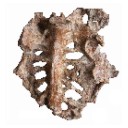
Two incomplete pelves of the giant bird Gargantuavis philoinos are described from Late Cretaceous deposits at Fox-Amphoux (Var, south-eastern France). They consist of synsacra with attached parts of the ilia. One of them has undergone considerable dorsoventral compression, which makes it very similar in appearance to the holotype pelvis of Gargantuavis philoinos from Campagne-sur-Aude (Aude, southern France). The second specimen has suffered some lateral distortion but is uncrushed dorsoventrally. Because of this, its avians characters (including an arched synsacrum and widespread pneumatisation) are especially clear. These new specimens confirm the avian nature of Gargantuavis and reveal new details about its pelvic anatomy, but provide little new evidence about its systematic position within Aves. The geographical distribution and general rarity of Gargantuavis are discussed.
PV article infos
Published in Vol.39-2 (2015)
|
PDF
|

|
La palichnofaune de vertébrés tétrapodes du permien supérieur du Bassin de Lodève (Languedoc-France).
Published online: 15/09/2000
Keywords:
Footprints; France; Languedoc; Lodève basin; new ichnotypus; Saxonian; Upper Permian
https://doi.org/10.18563/pv.29.1.1-82
Abstract
Near "la Lieude", in the Lodève basin, more than a thousand of footprints are distributed in a twenty of trackways which amounts to 220 m length. They have been found on calcareous siltstone level in the B site named also "Réserve Naturelle Volontaire". This last is located in the Saxonian summit dated Upper Permian. "La Lieude" tracks are described by using statistical methods then they are compared with others from the world Permian. What allows to distinguish 4 following ichnotaxa: Lunaepes ollierorum nov.ichnosp., Merifontichnus thalerius nov. ichnogen. and nov. ichnosp., Planipes brachydactylus nov.ichnosp. and Brontopus circagiganteus nov. ichnosp. All these traces are attributed with possibility or probability to Therapsida or to Therosauria, except Brontopus circagiganteus nov. ichnosp. that could be due to Caseamorpha. All these animals whose sizes have been estimated between l and 5 m lived probably in a playa environment.The biological and sedimentological data from "la Lieude" footprints levels compared with informations provided by the tracks orientations, suggest the following scenario. Animals coming from the North have crossed a sandy channel bank with plants zones by directing to the South for the majority. Maybe, they were going to the lacustrine part of the playa, close to "la Lieude" footprints that they have just trampled on.
PV article infos
Published in Vol. 29, Fasc. 1 (2000)
|
PDF
|

|
Les pantolestidés (Mammalia, Pantolesta) de l'Eocène inférieur de Prémontré (Aisne, France).
Published online: 30/07/2001
Keywords:
France; Mammals; Pantolestids; Ypresian
https://doi.org/10.18563/pv.30.1-2.11-35
Abstract
Study of pantolestid mammals from the late Ypresian locality of Prémontré (reference level MP 10) allows the recognition of three genera: Palaeosinopa. Pantolestes and Premontrelestes n. gen. Pantolestes, up to now only recorded from North America, is represented by P. sabatieri n. sp. Premontrelestes n. gen., represented by the type species P. duchaussoisi n. sp., is compared with Pantolestes and Buxolestes. The latter, known from middle Eocene sites in Europe, has not been recognized at Prémontré. Two other taxa, the first of which is close to Pantolestes and the second of Premontrelestes n. gen. are left in open nomenclature.
PV article infos
Published in Vol. 30, Fasc. 1-2 (2001)
|
PDF
|

|
Contributions à l'étude du gisement Miocène supérieur de Montredon (Hérault). Les grands mammifères. 7 - Les proboscidiens Deinotheriidae
Published online: 15/11/1988
Keywords:
allometry; Astaracian; Deinotherium; Montredon; Systematics; taphonomy; Vallesian
https://doi.org/10.18563/pv.18.ext.135-175
Abstract
Some complete tooth rows and about one hundred isolated teeth enabled the identification of the deinothere of the Vallesian site Montredon (Hérault) as Deinotherium giganteum KAUP 1829, mainly by comparisons with the likewise Vallesian sample of the type locality Eppelsheim (Rheinhessen, F.R.G.).
Scatterdiagrams of the teeth show the importance of allometry during the phyletic size increase of the European deinotheres.
Some taphonomic problems of the Montredon deinothere are briefly mentioned.
PV article infos
Published in Vol. 18, Ext (1988)
|
PDF
|

|
Introduction à l'oeuvre scientifique de Donald E. Russell, "gentleman paleontologist"
Published online: 16/12/1996
Keywords:
D.E.Russell; Eocene; Mammals; Paleocene; Paleontology; synthesis
https://doi.org/10.18563/pv.25.2-4.63-74
Abstract
The scientific career of D.E. Russell began with a Pliocene fauna from Oregon, and then turned in the direction of European Paleogene mammals. Field work followed by study of the mammals that were collected, firstly in the Paleocene and later in the early Eocene, greatly rejuvenated learning in this field. Syntheses on the Northwest European Tertiary basin and on European marnmals and stratigraphy came next. Research on the Eocene of Asia was carried out jointly with Gingerich on Pakistan and with Dashzeveg on the faunas of Mongolia. An important synthesis on the entire Paleogene of Asia, joint with Zhai, followed. Field work in Africa with Sigogneau-Russell led to the discovery of Mesozoic mammals there. A synthesis of mammalian paleofaunas of the world was written with Savage, and a similar synthesis of Cenozoic vertebrate faunas is currently being prepared. These achievements reflect the perennial importance of field work, numerous collaborations with both amateurs and professionals, and the human qualities of this author.
PV article infos
Published in Vol. 25, Fasc. 2-4 (1996)
|
PDF
|

|
Nouveaux Mammifères Eocènes du Sahara Occidental
Published online: 01/11/1979
Keywords:
Eocene; Mammals; Occidental Sahara
https://doi.org/10.18563/pv.9.3.83-115
Abstract
The fossil mammals collected from the Eocene of Hammada du Dra (northwest Sahara. Algeria) and two fragmentary teeth from the Lutetian of M'Bodione Dadere (Senegal) are described.
The fossils from the northwest Sahara come from a lacustrian deposit dated by charophytes (Raskyella aff. pecki, Raskyella n. sp.. Maedleriella lavocati, Maedleriella sp. et ? Peckichara sp.) as Middle Eocene or perhaps Lower Eocene (Gevin, Feist and Mongereau, 1974). Several hyracoids (3 or 4) identified from this formation extends the age of the family Pliohyracidae Osborn in Africa. Three forms appear to belong in the genera Megalohyrax, Titanohyrax and perhaps Bunohyrax which have been know until now only from the lower Oligocene of the Fayum (M. gevini n. sp. ; T. mongereaui n. sp.. ? Bunohyrax or Megalohyrax indet.). Another hyracoidof small size is referred to a new genus, Microhyrax (M. lavocati n. sp.).
Helioseus insolitus n. g. n. sp. is described without ordinal assignment. Azibius (Sudre, 1975) which has been the subject of questions and interpretations is reviewed.
Only one tooth from the Lutetian of M'Bodione Dadere is complete enough to interpret. lt probably belongs to a condylarth and demonstrates for the first time, the presence of the order in Africa. The second tooth is too fragmentary for comment.
In conclusion., the paleobiogeographic role of Africa at the end of the cretaceous and the beginning of the Cenozoic is discussed.
PV article infos
Published in Vol. 09, Fasc. 3 (1979)
|
PDF
|

|
Les mammifères Montiens de Hainin (Paléocène moyen de Belgique) Part1: Multituberculés.
Published online: 01/11/1979
Keywords:
Belgium; Hainin; Mammals; multituberculates; Paleocene
https://doi.org/10.18563/pv.9.4.117-131
Abstract
The Montian locality of Hainin (Hainaut, Belgium) yielded about twenty teeth of Multituberculates. They are very peculiar forms, showing no affinities, at the generic level, with those hitherto known from North America, Asia and Europe. They are referred to the new taxa Boffius splendidus nov. gen., nov. sp., Hainina belgica nov. gen., nov. sp., and H. godfriauxi nov. gen., nov. sp. They expose some common features, such as the advanced type of first upper molar. possessing at least three complete rows of cusps. Because of this, and also of the upper premolar reduction, Boffius splendidus appears as the most specialized form within the Ptilodontoidea suborder.
Several other characters of Hainina seem to be less advanced, such as the great number of upper premolars and the simple cusp-formula of the first lower molar.
Till now, only H. godfriauxi has been recovered within the Thanetian fauna from Cemay-les-Reims, where it is very poorly documented.
PV article infos
Published in Vol. 09, Fasc. 4 (1979)
|
PDF
|

|
Un crane de Chalicothere (Mammalia, Perissodactyla) du Miocène supérieur de Macédoine (Grèce) : remarque sur la phylogénie des Chalicotheiinae
Published online: 14/06/1995
Keywords:
Chalicotheriidae; Cladistics; Greece; Miocene; Perissodactyla; PHYLOGENY
https://doi.org/10.18563/pv.24.1-2.135-176
Abstract
The discovery in the Turolian (Late Miocene) of Dytiko 3 (Macedonia, Greece) of a complete skull with mandibles and cervical vertebrae, atlas and epistropheus, is a very important contribution to the knowledge of the subfarnily Chalicotheríinae. After the description, the comparison with other specimens of Miocene chalicotheres permits the revival of the generic name Macrotherium with a new species M. macedonicum. This genus is mainly characterized by a short snout and an inflated cerebral skull. It coexists during the Miocene with Chalicotherium. A cladistic analysis leads to conclusion that the species which has been described from the Early Middle Miocene of Rusinga must be identified as the type-species of a new genus: Butleria.
PV article infos
Published in Vol. 24, Fasc. 1-2 (1995)
|
PDF
|

|
Rongeurs (Mammalia, Rodentia) du Miocène de Beni-Mellal
Published online: 15/02/1977
Keywords:
Morocco; Neogene
https://doi.org/10.18563/pv.7.4.91-125
Abstract
The rodent fauna of Beni-Mellal is characterized by the abundance of ctenodactylids and cricetids. The latter are represented by four distinct species, among which a new form. Dakkamys zaiani nov. gen., nov. sp. is described. A detailed morphological analysis shows that, contrary to that which had been established before, « Cricetodon ›› atlasi Lavocat, 1961, is not closely related to any European form known; this species is attributed, in consequence, to the new genus Mellalomys. A simple biometric analysis has shown that the genus Myocricetodon Lavocat, 1952, is represented in this locality by two distinct species. The systematic homogeneity of the Beni-Mellal cricetids is also demonstrated: they can, as a matter of fact, all be referred to the subfamily Myocricetodontinae. The definition of this subfamily is completed. The sciurids and glirids are also reviewed in the light of new systematic and biogeographic information established ln Europe. A new species of Atlantoxevus from the early Pleistocene of Morocco, A. huvelini nov. sp., is described. It is probably the descendant of A. tadlae from Beni-Mellal. Biogeographic analysis leads one to consider this fauna as the result of geographic isolation in the Maghreb since the late Oligocene or the early Miocene. In particular no direct European influence can be discerned. Stratigraphic considerations resulting from the discovery of new localities in North Africa lead to the confirmation of the ante-Vallesian age of this fauna and to its parallelism with the faunas of La Grive in Western Europe and Fort Ternan in East Africa. The peculiar geologic nature of this locality is discussed.
PV article infos
Published in Vol. 07, Fasc. 4 (1977)
|
PDF
|

|
La poche à phosphate de Ste-Néboule (Lot) et sa faune de vertébres du Ludien Supérieur. Résumé.
Published online: 15/09/1978
Keywords:
Eocene; Quercy Phosphorites
https://doi.org/10.18563/pv.8.2-4.167-170
Abstract
Le Quercy est aujourd 'hui un vaste plateau calcaire, parcouru par un réseau karstique actif, profondément
entaillé par des vallées aux falaises abruptes, comme celles du Lot ou du Célé. Sur un sol peu épais domine la forêt de chênes, accompagnés de cornouillers, érables, genévriers. La faune est pauvre, peu diverse, et les nombreux chasseurs se satisfont de gibier d'élevage ...
Il y a trente cinq millions d'années environ, le paysage était bien différent. La période de l'Eocène supérieur, qui s'achevait, avait été chaude et humide, si l'on se réfère à la fois aux paléotempératures (calculées à partir de sédiments marins extra·européens) et aux restes fossilisés de végétaux typiquement tropicaux.
View editorial
Published in Vol. 08, Fasc. 2-4 (1978)
|
PDF
|

|
An Australian Miocene Brachipposideros (Mammalia, Chiroptera) related to Miocene representatives from France
Published online: 15/12/1982
Keywords:
Australia; bats; Chiroptera; Miocene
https://doi.org/10.18563/pv.12.5.149-172
Abstract
A new middle Miocene hipposiderid bat is described from a limestone deposit on Riversleigh Station in north-western Queensland. Hipposideros (Brachipposideros) nooraleebus n. sp. is the first record of this subgenus from anywhere in the world outside of France. The palaeoecological setting of the fossil bats appears to have been a relatively quiet, sunny lime-enriched tropical pool that contained tortoises, crocodiles and fish. It is possible that the bats were washed into the pool from an adjacent cave.
The Riversleigh bat most closely resembles the French Burdigalian (early middle Miocene) bat H. (B.) aguilari. It is also possible that it may have been closely related to the original Australian hipposiderid stock that ultimately gave rise to the endemic monotÿpic Rhinonycteris aurantius. The disjunct distribution of species of H. (Brachipposideros) suggests that representatives of this subgenus will be found in at least tropical southern Asia.
PV article infos
Published in Vol. 12, Fasc. 5 (1982)
|
PDF
|

|
Le genre Mesembriacerus (Bovidae, Artiodactyla, Mammalia) : un Oviboviné primitif du Vallésien (Miocène supérieur) de Macédoine (Grèce)
Published online: 15/12/1984
Keywords:
Bovidae; Cladistics; Late Miocene; Ovibovinae; Vallesian
https://doi.org/10.18563/pv.14.4.201-223
Abstract
The bovid Mesembriacerus melentisi, the numerous skulls, teeth and limb bones of which are described from the locality Ravin de la Pluie (Macedonia, Greece), bears some features which allow us to put it in the tribe ovibovini (Ovibovinae) with several other Miocene genera and the Recent one Ovibos. A cladogram gives the phyletic relationships within this tribe. It shows that Mesembriacerus which is one of the oldest genera, is also the most primitive. The limb bones are as elongated as those of Recent cursorial bovids and they show, as does the bulk of the fauna, an open environment for the locality.
PV article infos
Published in Vol. 14, Fasc. 4 (1984)
|
PDF
|

|
Morphotypes dentaires actuels et fossiles des Chiroptères Vespertilioninés. 1e partie: Etude des morphologies dentaires
Published online: 30/09/1985
Keywords:
bats; Dental morphology; fossils; PHYLOGENY; recent; Systematics
https://doi.org/10.18563/pv.15.2.71-128
Abstract
The classifications of the recent vespertilionine bats were made wihtout taking in account the teeth morphology; this resulted in a reduction of the possibilities of comparison with the available fossils. The generalized use of dental formulae was abusive: this contributed to the admission of artificial genera. These conditions have long delayed the consideration of characters able to frame the phylogeny of the sub-family. In the first part of the study, the teeth morphologies are described and analysed. morphological reference types are established for each upper and lower tooth: they should make an easier elaboration of criteria for the differentiation at generic level. The position of the species in view of these criteria allows one to group them into homogeneous genera, and to appreciate the degree of relationship that the latter have between them. The second part of the study (next publicationà will develop inferences dealing with systematics and phylogeny
PV article infos
Published in Vol. 15, Fasc. 2 (1985)
|
PDF
|

|
Lower Paleogene crocodilians from Silveirinha, Portugal.
Published online: 15/10/2003
Keywords:
?Upper Paleocene / Lowermost Eocene; Crocodilians; Ecology; Portugal
https://doi.org/10.18563/pv.32.1.1-26
Abstract
The presence at Silveirinha of one of the earliest, ? Late Paleocene or Lowermost Eocene, european representatives of the genus Diplocynodon is based mostly on isolated bones and teeth (often from juveniles). This small-sized form is the only crocodilian so far recognized in this site. The longevity of Diplocynodon in Portugal becomes much extended; the genus survived there until the Middle Miocene at least. A discussion on the possible affinities with other eocene Díplocynodon and especially those from Cubillos-Valdegallina (Zamora, Spain) is presented. On the other hand, differences have been detected in comparison with: Díplocynodon tormis, from the middle Eocene of the Douro basin in Spain, which may belong to another phyletic line; and the aff. Diplocynodon from Dormaal (Belgium) and Le Quesnoy (France), nearly contemporaneous of Silveirinha. The Silveirinha Diplocynodon and many other data strongly suggest moist, subtropical, quite limited in space environments related to an alluvial plain crossed by small, meandering channels.
PV article infos
Published in Vol. 32, Fasc. 1 (2003)
|
PDF
|

|
Leptacodon nascimentoi n,sp., un nouveau Nyctitheriidae (Mammalia,Lipotyphla) de l'Eocène inférieur de Silveirinha (Baixo Mondego, Portugal)
Published online: 16/12/1996
Keywords:
Eocene; Leptacodon; Lipotyphla; Mammals; Nyctitheriidae; Portugal; Silveirinha
https://doi.org/10.18563/pv.25.2-4.275-286
Abstract
In this article is described a new species of Nyctitheriidae with primitive characters: Leptacodon nascimentoi n. sp. from the early Eocene of Silveirinha (Portugal).
PV article infos
Published in Vol. 25, Fasc. 2-4 (1996)
|
PDF
|