|
La poche à phosphate de Ste-Néboule (Lot) et sa faune de vertebres du Ludien supérieur. 12- Fissipèdes (Carnivores)
Published online: 25/09/1978
Keywords:
Carnivora; Eocene; Quercy Phosphorites
https://doi.org/10.18563/pv.8.2-4.301-311
Abstract
Les Carnivores Fissipèdes de Sainte-Néboule appartiennent tous au genre Cynodictis et semblent constituer une population homogène. Celle-ci se distingue suffisamment des espèces déjà décrites pour constituer un taxon particulier : Cynodictis lacustris neboulensis n. s. sp. . L'étude des variations à l'intérieur de cette population nous a conduit à reconsidérer les critères utilisés pour définir les espèces existantes et à regrouper certaines d'entre elles. Il semble qu'il demeure cependant trois lignées distinctes dans le genre Cynodictis mais le matériel nous paraît encore insuffisant pour traduire cette remarque en termes de systématique.
PV article infos
Published in Vol. 08, Fasc. 2-4 (1978)
|
PDF
|
|
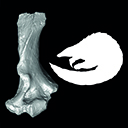
A pangolin (Manidae, Pholidota, Mammalia) from the French Quercy phosphorites (Pech du Fraysse, Saint-Projet, Tarn-et-Garonne, late Oligocene, MP 28)
Published online: 14/09/2015
Keywords:
Oligocene; Pangolin; Pech du Fraysse; Quercy Phosphorites
https://doi.org/10.18563/pv.39.2.e4
Abstract
Pangolins have never shown a high taxic diversity and their fossil record is scarce. We report here the first discovery of a partial humerus from late Oligocene deposits in Pech du Fraysse (MP28, France). The new specimen from Pech du Fraysse is described and compared to various extant and extinct species of pangolins. It shows a suite of morphological features very similar to the humeri discovered in Saint-André (MP 26), Solnhofen (Burdigalien), and Saulcet (Aquitanian), attributed here to Necromanis franconica. The description of the specimen from Pech du Fraysse allowed us to discuss the systematics of Paleogene and Neogene pholidotans. The differences between PFY 4051 and N. franconica on the one side, and N. quercyi on the other side, might be sufficiently important to justify a generic distinction. A comparison with extant species showed that N. franconica was likely terrestrial and fossorial based on its humeral morphology.
PV article infos
Published in Vol.39-2 (2015)
|
PDF
|

|
Avant propos au "Premier catalogue des specimens-types Paléontologiques déposés dans les collections de l'Université de Montpellier II"
Published online: 20/12/1994
Keywords:
Editorial; Type specimens
https://doi.org/10.18563/pv.23.ext.1-2
Abstract
Avant propos au "Premier catalogue des specimens-types Paléontologiques déposés dans les collections de l'Université de Montpellier II".
View editorial
Published in Vol. 23, Ext (1994)
|
PDF
|

|
Cervus elaphus rossii (Mammalia, Artiodactyla), a new endemic sub-species from the Middle Pleistocene of Corsica
Published online: 28/12/2001
Keywords:
Cervus elaphus; Corsica; Endemism; Pleistocene
https://doi.org/10.18563/pv.30.3-4.189-213
Abstract
Several endemic deer remains from the Middle Pleistocene deposits of the Castiglione cave (Oletta, Haute-Corse) are examined here. A morphometric analysis allows to relate them to a new insular subspecies Cervus elaphus rossii. The bones were compared with those of the mainland early Middle Pleistocene subspecies Cervus elaphus acoronatus Beninde and the European species Cervus elaphus Linné (Late Middle Pleistocene and Upper Pleistocene forms (continental and insular)). The Castiglione fossil shows peculiar morphofunctional features in its appendicular skeleton suggesting a morphological convergence with certain Bovidae.
PV article infos
Published in Vol. 30, Fasc. 3-4 (2001)
|
PDF
|
|
Angolabatis nom. nov.,a replacement name for the Cretaceous genus Angolaia Antunes & Cappetta, 2002 (Chondrichthyes: Rajiformes), a preoccupied name.
Published online: 15/10/2006
Keywords:
Angola; Campanian/Maastrichtian; homonymy; Hypsobatidae; nomen novum; Rajiformes
https://doi.org/10.18563/pv.34.e13
Abstract
In 2002, Antunes & Cappetta published several new taxa (genera and species) in a paper on Cretaceous elasmobranch faunas from Angola. One of the new genera was named Angolaia (Rajiformes, Hypsobatidae; type-species: Angolaia benguelaensis Antunes & Cappetta, 2002, Late Campanian/Early Maastrichtian of Angola). Recently, Dr. Christian Kammerer kindly informed us that the genus Angolaia was preoccupied by a cicadellid homoptere (Insecta), published by Linnavuori & Al-Ne'amy, 1983. So, according to mIes of the International Code of Zoological Nomenclature (ICZN 1999, articles 52, 60) this name became unavailable. Consequently, the Rajiformes genus Angolaia is a junior homonym, invalid and must be rejected. In replacement, we propose the new name Angolabatis.
PV article infos
Published in Vol. 34, Fasc. 1-2 (2006)
|
PDF
|
|
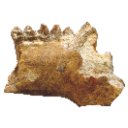
The new Algerian locality of Bir el Ater 3: validity of Libycosaurus algeriensis (Mammalia, Hippopotamoidea) and the age of the Nementcha Formation
Published online: 10/06/2015
Keywords:
Dispersal event; Miocene; North Africa; Tetralophodon
https://doi.org/10.18563/pv.39.2.e1
Abstract
The description of original material of anthracothere and proboscidean in the new locality of Bir el Ater 3 from East Algeria, and a thorough review of early Libycosaurus remains of Bir el Ater 2 allows us validating L. algeriensis as the smallest and earliest species of Libycosaurus and probably the earliest migrant of the genus from Asia. The presence of a Tetralophodon in the Neogene Nementcha formation might represent the earliest occurrence of the genus in Africa. These original fossil remains allow us to discuss the age of the Neogene part of the Nementcha formation close to the Serravalian/Tortonian boundary.
PV article infos
Published in Vol.39-2 (2015)
|
PDF
|

|
Contributions à l'étude du gisement Miocène supérieur de Montredon (Hérault). Les grands mammifères. 10 - Conclusions générales
Published online: 15/11/1988
Keywords:
Mammalia; Montredon; Upper Miocene
https://doi.org/10.18563/pv.18.ext.189-192
Abstract
Le présent volume traite des lagomorphes, carnivores, artiodactyles, périssodactyles et proboscidiens de la faune de Montredon (Hérault). Il clôt la monographie de ce célèbre gisement d'âge miocène supérieur du Languedoc, dont la première partie, relative aux rongeurs, insectivores et chiroptères, fut publiée en 1982.
[...]
PV article infos
Published in Vol. 18, Ext (1988)
|
PDF
|

|
Deux nouveaux primates dans l'Oligocène inférieur de Taqah (Sultanat d'Oman): premiers Adapiformes (?Anchomomyini) de la péninsule arabique?
Published online: 15/11/1993
Keywords:
Adapids; Afro-Arabian plate; Early Oligocene; New taxa; Primates; Trans-Tethyan dispersals
https://doi.org/10.18563/pv.22.4.141-196
Abstract
Two new species, Omanodon minor n. g., n. sp. and Shizarodon dhofarensis n. g., n. sp., known from fifteen isolated teeth, are described here as the first adapiform primates (?Anchomomyini) recognizable to date in the Taqah material (early Oligocene of Sultanate of Oman).
Omanodon minor n. g., n. sp. displays special morphological similarity to the adapid tribe Anchomomyini from the Eocene of Europe, and especially to the Anchomomys lineage. Resemblances with the extant lemurifonn Microcebus are also noticeable and could be regarded as supporting Schwartz & Tattersall (1983) hypothesis of special relationships between the anchomomyine adapids and the cheirogaleid lemuriformes. However, these morphological affmities can be interpreted, altematively, as the results of parallelisms: important differences in upper molars indicate that the resemblances of cheirogaleids and Omanodon minor n. g., n. sp. are indeed probably due to parallelisms. Phyletic relationship of O. minor n. g., n. sp. to Anchomomyini is finally the most likely hypothesis.
Shizarodon dhofarensis n. g., n. sp., although much more poorly known, is closely related to Omanodon minor n. g., n. sp., at least at a familial level. The general morphology of this species suggests
also a close link with adapid Anchomomyini, although precise relationships within this tribe remain obscure. Interesting resemblances of Shizarodon dhofarensis n. g., n. sp. to Djebelemur martinezi lower molars (early Eocene of Tunisia) are also noticeable. These resemblances are even stronger than those betwen Omanodon minor and Djebelemur martinezi. However the very bunodont upper molars referred to D. martinezi are unusual for adapids, and there are moreover some notable differences in their lower molars. Thus resemblances in Djebelemur and Shizarodon are probably due to paralellisms.
Because of the fragmentary nature of the material and of possible parallelisms, the systematic position of Omanodon and Shizarodon within adapiformes cannot however yet be established definitively.
PV article infos
Published in Vol. 22, Fasc. 4 (1993)
|
PDF
|

|
Systematic and evolutionary relationships of the hipparionine horses from Maragheh, Iran (Late Miocene, Turolian age)
Published online: 30/12/1985
Keywords:
evolution; Hipparionine horses; Iran; Systematics; Turolian
https://doi.org/10.18563/pv.15.4.173-269
Abstract
A systematic analysis of an hipparionine horse assemblage from Maragheh, Iran is made. A brief orientation to systematic philosophy and informal superspecific characterizations of some Old World hipparionines is given as a background to this work. A character state analysis of skulls is made, and has revealed five distinct species. A character state and stratigraphic trend analysis of isolated check tooth and postcranial remains, with known provenance, is also made. These two combined analyses reveal that the most resolute discrimination of hipparionine species and their evolutionary relationships occurs when multiple character complexes of associated skulls, maxillary and mandibular dentitions are made. When this is not possible, skulls have provided the best basis for discriminating species and their evolutionary relationships. Traditional characters of isolated cheek teeth and postcranial remains are shown here to offer limited information content for hipparionine phylogenetic systematics. The systematic portion of this study includes a comprehensive description of cranial and postcranial remains, and has further corroborated the distinction of five species which belong to at least three superspecific groups including: «Hipparion» geltyi sp. nov., Group 1; Hipparion prostylum (s. l.), and Hipparion campbelli sp. nov., Group 3; «Hipparíon» aff. moldavicum and «Hipparion» ?matthewi, Group 2. These species stratigraphic ranges and evolutionary relationships are also given here and argued to be important for establishing future hipparionine geochronologic correlations between a number of Eurasian late Miocene provinces.
PV article infos
Published in Vol. 15, Fasc. 4 (1985)
|
PDF
|

|
Rongeurs muroidés du Néogène supérieur d'Afghanistan, évolution, biogéographie, corrélations
Published online: 30/09/1981
Keywords:
Afghanistan; Muroidea; Neogene
https://doi.org/10.18563/pv.11.4.133-179
Abstract
The rodent faunas of five afghan localities found in 1976 and 1977 (Sherullah, Ghazgay, Pul-e Charkhi, Dawrankhel 14 and 15) are studied.
The rodents (Muridae, Cricetidae and Rhizomyidae) represent 8 genera and 10 species. The detailed description of the 2 new genera and 7 species diagnosed in 1979 is given. An other species is created : Pseudomeriones crapouilloti n. sp. These faunas precise the origin and diversification of Muridae and Cricetidae. A phyletic lineage known in Afghanistan is represented in East Africa by a ramus or a collateral lineage. The five localities are dated from Lower Turolian to Ruscinian. They constitute the frame of a chronologie scale for the Upper Continental Neogene of Afghanistan.
The study of afghan material brings new data to the biogeography of Old Word's rodents during the Upper Neogene; from Pakistan to Europe and Africa, a rather warm and damp province would have existed till Upper Miocene; after which (in the mio-pliocene epoch) it would have divided into 3 parts, by aridification of the central area.
PV article infos
Published in Vol. 11, Fasc. 4 (1981)
|
PDF
|

|
Systematic revision of Ctenodactylidae (Mammalia, Rodentia) from theMiocene of Pakistan.
Published online: 18/03/1996
Keywords:
Ctenodactylidae; Miocene; Prosayimys; Rodents; Sayimys; Siwalik
https://doi.org/10.18563/pv.25.1.1-49
Abstract
Extensive sampling of the Siwalik deposits of the Potwar Plateau of northem Pakistan and from the Zinda Pir dome of central Pakistan has produced a fossil record of Miocene ctenodactylids that can be correlated with the paleomagnetic time scale. The early Miocene Prosayimys flynni (n. gen., n. sp.) is recognized as the first ctenodactylid in the Indian subcontinent. Prosayimys is ancestral to Sayimys. From the late early Miocene to the early late Miocene, there is an anagenetic succession of three species of Sayimys: S. cf. S. intermedius, S. sivalensis, and S. chinjiensis (n. sp.). Sayimys chinjiensis gave rise to the late late Miocene S. perplexus. A second lineage is represented by Sayimys minor, S. sp. A, and S. sp. B.
PV article infos
Published in Vol. 25, Fasc. 1 (1996)
|
PDF
|
|
First early Eocene tapiroid from India and its implication for the paleobiogeographic origin of perissodactyls
Published online: 08/09/2015
Keywords:
Ceratomorpha; Helaletidae; Paléogène; Tapiromorpha; Vastan
https://doi.org/10.18563/pv.39.2.e5
Abstract
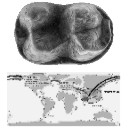
The presence of cambaytheres, the sister group of perissodactyls, in western India near or before the time of collision with Asia suggests that Perissodactyla may have originated on the Indian Plate during its final drift towards Asia. Herein we reinforce this hypothesis by reporting two teeth of the first early Eocene tapiromorph Perissodactyla from the Cambay Shale Formation of Vastan Lignite Mine (c. 54.5 Ma), Gujarat, western India, which we allocate to a new genus and species, Vastanolophus holbrooki. It presents plesiomorphic characters typical of the paraphyletic “Isectolophidae,” such as small size and weak lophodonty. However, the weaker hypoconulid and low paralophid, higher cusps, lower cristid obliqua, and the lingual opening of the talonid are found in Helaletidae, the most primitive tapiroid family. V. holbrooki, gen. et sp. nov., may be the oldest and the most primitive tapiroid, suggesting that at least tapiroid perissodactyls originated on India.
PV article infos
Published in Vol.39-2 (2015)
|
PDF
|

|
The Gliridae (Mammalia) from the oligocene (MP24) of Gröben 3 in the folded molasse of southern Germany
Published online: 28/12/2001
Keywords:
Biostratigraphy; Cyrena Beds; folded molasse; Germany; Gliridae; level MP 24; Mammals; Oligocene; Palaeoecology
https://doi.org/10.18563/pv.30.3-4.151-187
Abstract
This study describes four taxa of Gliridae from the Oligocene mammal locality Gröben 3: Gliravus tenuis BAI-ILO, 1975, Bransatoglis micio (MISONNE, 1957), B. planus (BAHLO, 1975) and B. heissigi n. sp. Gliravus tenuis from Gröben 3 is somewhat more advanced than the type population found in Heimersheim. This confirms previous research suggesting that Gröben 3 should be dated earlier than Heimersheim (MP 24). The first documented occurrence of B. mício around level MP 24 was found in Gröben 3. An abundance of tooth material from B. planus in Gröben 3 makes it possible, for the first time, to observe evolutionary stages within this species from MP 21 until MP 28. B. heissigi n. sp. is restricted to level MP 24. This species is located between B. mísonnei (MP 20 - 23) and Microdyromys praemurinus (MP 25 - 28). Within the lineage Bransatoglis bahloi - B. misonnei - B. heissigi, a decrease in size is noticeable.
PV article infos
Published in Vol. 30, Fasc. 3-4 (2001)
|
PDF
|
|
A new species of hippopotamine (Cetartiodactyla, Hippopotamidae) from the late Miocene Baynunah Formation, Abu Dhabi, United Arab Emirates
Published online: 07/04/2017
Keywords:
Arab Peninsula; Hippopotamidae; Hippopotamine event; Systematics
https://doi.org/10.18563/pv.41.1.e2
Abstract
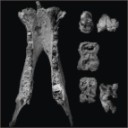
The discovery of new hippopotamid material from the late Miocene Baynunah Formation (Abu Dhabi, United Arab Emirates) has prompted the revision of the existing material of this as yet unnamed fossil taxon. The Baynunah hippopotamid appears to be distinct from all other contemporary and later species in having a relatively more elongate symphysis, a feature similar to the earlier (and more primitive) Kenyapotamus. Yet, the Baynunah hippopotamid presents a dentition typical of the Hippopotaminae. It is therefore a distinct species attributed to the later subfamily, described and named in this contribution. This species provides further evidence for a ca. 8 Ma evolutionary event (termed “Hippopotamine Event”) that initiated the spread and ecological significance of the Hippopotaminae into wet habitats across Africa and Eurasia. The morphological affinities of the new species from Abu Dhabi suggest that the Arabian Peninsula was not a dispersal route from Africa toward southern Asia for the Hippopotamidae at ca. 7.5 Ma to 6.5 Ma.
PV article infos
Published in Vol 41-1 (2018)
|
PDF
S.I. Data
|

|
Osteology of Prolagus sardus, a Quaternary Ochotonid (Mammalia, Lagomorpha).
Published online: 21/06/1969
Keywords:
Lagomorpha; Ochotonidae; Prolagus
https://doi.org/10.18563/pv.2.4.157-190
Abstract
Prolagus sardus is the last representative of the diverse lineages of European endemic ochotonids. It is also the most abundant in the collections. The previous studies made of this species have established rather well its dental morphology, its phylogenetic position, its geographic and temporal distribution, and its intraspecific individual variation. On the other hand, no osteologic study has fully utilized the superb material from Corsica and Sardinia collected by Forsyth Major.
Nearly all of the parts of the skeleton are represented in this material; they are here described and figured. Comparisons are made with Ochotona, the only surviving genus of the family, as well as with the living leporids, in particular Romerolagus, Oryctolagus and Lepus. A brief examination of the dentition reveals some particular characters of the incisors. The osteologic study allows limited interpretations to be advanced concerning the posture, mastication. locomotion and some other adaptive features of P. sardus.
P. sardus appears as an incontestable ochotonid, but it differs from Ochotona by some characters which are found in leporids. Certain of the characters are here judged primitive for lagomorphs. The genus Ochotona therefore can no longer be considered as the image of a primitive lagomorph, because in spite of the lack of cursorial adaptations which differentiate it from leporids, it presents other specializations which are common to it alone.
PV article infos
Published in Vol. 02, Fasc. 4 (1969)
|
PDF
|

|
Diversity among north african dinosaur eggshells.
Published online: 15/12/2003
Keywords:
Cretaceous; Dinosaurs diversity; Eggshells; Maastrichtian; Morocco; North Africa; taxonomy
https://doi.org/10.18563/pv.32.2-4.171-188
Abstract
Until the discovery of dinosaur eggshells locality in the Oukdiksou syncline, (Middle Atlas, Morocco) in 1999 (Garcia et al. this volume) the maastrichtian reptiles faunas were unknown in North Africa. Additional material from Achlouj-2 allows us to describe five oospecies, belonging to four oofamilies. The Megaloolithidae is recorded by Megaloolithus maghrebiellsis Garcia el al. and Pseudomegaloolithus atlasi oogen. novo oospec. nov. Tipoolithus achloujensis Garcia et al. is questionably considered as a Subtiliolithidae. A relatively small Elongatoloolithidae is represented by Rodolphoolithus arioul oogen. nov. oospec. nov. A thin Prismatoolithidae is described as a new oospecies of ? Pseudogeckoolithus Vianey-Liaud & Lopez-Martinez, 1997: P. tirboulensis. The diversity of these oospecies indicates that the dinosaur fauna comprises at least five dinosaur oospecies, with perhaps one sauropod and three theropods.
PV article infos
Published in Vol. 32, Fasc. 2-4 (2003)
|
PDF
|

|
Rongeurs nouveaux de l'Oligocène Moyen d'Espagne.
Published online: 15/09/1969
Keywords:
Cricetidae; Oligocene; Pseudocricetodon; Rodents; Theridomys
https://doi.org/10.18563/pv.2.5.191-207
Abstract
Description of four new rodents from a recently discovered locality at Montalban. Theridomys crusafonti nov. sp. is considered as the ancestry of T. Iembronicus. Theridomys varian: nov. sp. includes «Theridomys» morphotypes and «Blainvilllimys» morphotypes; it could be ancestral to B. blainvillei. Pseudoltinomys nanus nov. sp. represents a new lineage paralleling in evolution that of P. gaillardi (which is equally found at Montalban). Pseudocricetodon montalbanensis nov. gen., nov. sp. designates a lineage of very small Cricetidae accompanying Eucricetodon. With these well defined new species and six others present in the locality, Montalban appears as the best faunal reference point within the biochronologic zone of La Sauvetat.
As an annex, discussion of two rodent specimens from the classic localíty of Tárrega, close in age to that of Montalban.
PV article infos
Published in Vol. 02, Fasc. 5 (1969)
|
PDF
|

|
Fossil snakes from the Palaeocene of Sao José de Itaborai, Brazil, Part II. Boidae
Published online: 28/12/2001
Keywords:
Boidae; Boinae; Brazil; Erycinae; New taxa; Palaeocene; Snakes
https://doi.org/10.18563/pv.30.3-4.111.150
Abstract
The middle Palaeocene of São José de ltaboraí (State of Rio de Janeiro, Brazil) has produced a rich and diverse fauna of boid snakes. It comprises six or seven species: Hechtophis austrinus gen. et sp. nov., Corallus priscus sp. nov., Waincophís pressulus sp. nov., Waincophis cameratus sp. nov.,"Boinae A", and "Boinae B". Moreover, two dentaries might pertain to either H. austrinus or "Boinae B", or even represent a distinct taxon. Hechtophis austrinus is assigned, with reservation, to the Erycinae. All other taxa are referred to the Boinae. The vertebrae of all taxa have paracotylar foramina, which raises the problem of the apomorphic or plesiomorphic nature of this feature. This fauna also raises the question of the presence of extinct erycine boids in South America, but it does not allow this question to be settled.
PV article infos
Published in Vol. 30, Fasc. 3-4 (2001)
|
PDF
|

|
Eggshell microstructure and porosity of the Nicobar scrubfowl (Megapodius Nicobariensis, great Nicobar island, India)
Published online: 16/12/2008
Keywords:
conductance porosity; eggshell microstructure; incubation conditions; Megapodes
https://doi.org/10.18563/pv.36.1-4.75-88
Abstract
The eggshell of Nicobar scrubfowl (Megapodius nicobariensis) is described for the first time. Its egg porosity is calculated and discussed with data from several taxa (another megapode, some extant and fossil reptiles including a titanosaur group) in order to compare incubation types with eggshell structure. Eggshell microstructure reflects first phylogenetic traits and does not seem to have developed major adaptative features due to the incubation conditions, except for the pore canals.
PV article infos
Published in Vol. 36, Fasc. 1-4 (2008)
|
PDF
|

|
Avant-propos
Published online: 16/12/1996
Keywords:
D.E.Russell
https://doi.org/10.18563/pv.25.2-4.61-62
Abstract
Le présent volume est l'aboutissement d'un projet né il y a presque cinq ans. En décembre 1991, l'un d'entre nous (MG) prenait des contacts en vue de proposer un symposium sur les mammifères fossiles, dédié à D.E. Russell, dans le programme du 4e Congrès de la European Society for Evolutionary Biology. Ce congrès, baptisé "Evolution 93", devait se tenir à Montpellier en août 1993. Son Comité d'Organisation, animé par F. Catzeflis, recherchait des organisateurs de symposiums. L'idée fut acceptée avec enthousiasme par le second d'entre nous (PDG), et le titre de notre Symposium fut précisé: " Palaeobiology and Evolution of Early Cenozoic Mammals - A Symposium in Honor of D.E. Russell". Le projet fut formellement accepté par le Comité d'Organisation en avril 1992.
PV article infos
Published in Vol. 25, Fasc. 2-4 (1996)
|
PDF
|