|
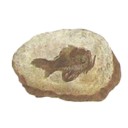
Designating a lectotype for Mesacanthus pusillus (Gnathostomata: Acanthodii)
Published online: 03/03/2021
Keywords:
acanthodians; Chordata; Devonian; Midland Valley; Orcadian Basin
https://doi.org/10.18563/pv.44.1.e2
Abstract
The early gnathostome genus Mesacanthus is well represented in both Lower Old Red Sandstone and Middle Old Red Sandstone assemblages of northern and central Scotland. This ‘acanthodian’ taxon is currently thought to comprise two valid species: M. mitchelli and M. pusillus. Although the whereabouts of the holotype of M. mitchelli (NHMUK PV P560) is known, the syntype material for M. pusillus has long been thought lost. Here we identify at least one specimen that formed part of the original syntype material for M. pusillus, albeit in a slightly different condition than when it was originally figured. This specimen is ROM 25872, which is here designated as the lectotype. A second specimen – ELGNM 1978.191.1 – could represent another of the syntype specimens, but poor preservation quality makes it impossible to be certain.
PV article infos
Published in 44-1 (2021)
|
PDF
S.I. Data
|
|
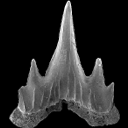
Two new scyliorhinid shark species (Elasmobranchii, Carcharhiniformes, Scyliorhinidae), from the Sülstorf Beds (Chattian, Late Oligocene) of the southeastern North Sea Basin, northern Germany.
Published online: 30/04/2014
Keywords:
Chattian; Elasmobranchii; North Sea Basin; Scyliorhinidae; Scyliorhinus
https://doi.org/10.18563/pv.38.1.e1
Abstract
Based on isolated teeth two new scyliorhinid shark species, Scyliorhinus biformis nov. sp. and Scyliorhinus suelstorfensis nov. sp., are described from the Sülstorf Beds, early-middle Chattian, of Mecklenburg, northeastern Germany. They form part of a speciose assemblage of necto-benthic sharks and batoids which populated the warm-temperate to subtropical upper shelf sea of the south-eastern North Sea Basin.
PV article infos
Published in Vol.38-1 (2014)
|
PDF
|
|
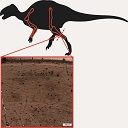
Comparative bone histology of rhabdodontid dinosaurs
Published online: 17/11/2014
Keywords:
bone histology-based ontogeny; Mochlodon; Rhabdodon; skeletal maturation; Zalmoxes
https://doi.org/10.18563/pv.38.2.e1
Abstract
A comparative bone histological study of the three known genera of the endemic European ornithopod dinosaur family, Rhabdodontidae, is presented here in an ontogenetic context. Investigated specimens were assigned to different ontogenetic stages based exclusively on the histological indicators of osteologic maturation during diametrical bone growth; an entirely size-independent method as opposed to most previous studies. Qualitative comparison of bone histology of corresponding ontogenetic stages and elements among the three valid rhabdodontid genera, Mochlodon, Zalmoxes, and Rhabdodon, revealed some consistent patterns. Genus specific histological differences within Rhabdodontidae are most expressed between Rhabdodon and the Mochlodon-Zalmoxes clade. These indicate a prolonged phase of fast growth and a less constrained cyclicity in the growth dynamics of Rhabdodon, as opposed to the slower and more regulated growth strategy reflected in the bones of Mochlodon and Zalmoxes. These genus specific differences are consistent with the phylogenetic interrelation of the genera and are most probably related to the pronounced differences in body size. However, when compared to other ornithopods, most detected histological features in rhabdodontids do not seem to reliably reflect either phylogenetic relations or body size. A notable common feature of all rhabdodontid genera irrespective of body size is the ontogenetically early onset of cyclical growth and secondary remodelling; a pattern that more resembles the condition found in derived ornithopods than that described in more basal taxa which are closer relatives of rhabdodontids. The recognition of taxon-specific histological patterns as well as patterns indicative of ecological and thereby functional traits clearly requires more accurate, preferably quantitative evaluations.
PV article infos
Published in Vol.38-2 (2014)
|
PDF
|
|
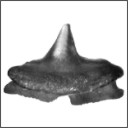
Batoids (Rajiformes, Torpediniformes, Myliobatiformes) from the Sülstorf Beds (Chattian, Late Oligocene) of Mecklenburg, northeastern Germany: a revision and description of three new species
Published online: 24/06/2015
Keywords:
Batoids; Chattian; Elasmobranchii; North Sea Basin; Oligocene
https://doi.org/10.18563/pv.39.2.e2
Abstract
Bulk-sampling of fossil-rich tempestites from the Chattian Sülstorf Beds of
Mecklenburg, north-eastern Germany, yielded a rich selachian fauna in which batoids
predominate by the abundance of teeth but are subordinate by the number of taxa. Thirteen
taxa are identified, among which rajiform batoids are the most diverse (six species). One
genus and three species are newly described: Raja thiedei sp. nov., Oligoraja pristina gen. et
sp. nov., and Torpedo chattica sp. nov. Two species are reallocated: Atlantoraja cecilae
(Steurbaut & Herman, 1978) new comb., and Dipturus casieri (Steurbaut & Herman, 1978)
new comb. Ontogenetic heterodonty is documented for the first time in the dental pattern of
Myliobatis sp. Stratigraphical ranges of batoid taxa in the period from Rupelian to Langhian
are presented and partly discussed in context with the palaeoclimatic evolution and
palaeogeographic situation of the North Sea Basin.
PV article infos
Published in Vol.39-2 (2015)
|
PDF
|

|
Eurodexeinae, eine neue unterfamilie der Artiodactyla (Mammalia) aus dem unter- und mitteleozän europas
Published online: 16/12/1996
Keywords:
Artiodactyls; Eocene; evolution; Germany; Lutetian; new genus; New subfamily
https://doi.org/10.18563/pv.25.2-4.371-390
Abstract
Dichobunoid artiodactyls are described in this paper from the middle Eocene Geiseltal lignite deposits near Halle (Sachsen-Anhalt, Germany). The genera Eurodexis and Parahexacodus are established based on odontologica1 studies. The type-species are E. ceciliensis (FRANZEN & KRUMBIEGEL, 1981) and P. germanicus n. sp. from the "obere Mittelkohle" (see text), MP 13. The genera are referred to the new subfamily Eurodexeinae (Dichobunidae, Artiodactyla, Mammalia), which also contains the monospecific genus Eygalayodon SUDRE & MARANDAT, 1993. These new genera show many features similar to North American homacodontids and antiacodontids. They exemplify a high degree of diversity in European dichobunids. Moreover, the family Dichobunidae includes the Dichobuninae and the Hyperdichobuninae. The connection of the posthypocristid with the postentocristid, the shift of a medial to a lingual position of the hypoconulid on the lower molars and the development of a large, caniniform P1 are regarded as the principal tendencies of the eurodexeines. The entoconid is larger and more mesially situated compared to that of Diacodexis. The hypoconulid has a lingual position on a broad postcingulid. The elongation of the premolars and the presence of diastemata are considered associated with extension of the muzzle. This and the acute tubercles of the molars could indicate a limited degree of insectivory. Protodichobune cf. oweni and Diacodexis cf. varleli, first reported here from the "untere Unterkohle" (MP 11) of the Geiseltal, demonstrate the existence of forms in the basal part of the middle Eocene, that are direct descendants of lower Eocene ones. Eurodexis russelli n. sp. from MP 10 of Premontre is the most primitive representative of Eurodexis. A further part of this lineage could be Messelobunodon sp. from MP 11 of Messel (Germany). Another form from Premontre, referred to Eurodexeinae indet., represents the origin of the lineage to Parahexacodus germanicus n. sp. from the Geiseltal (MP 13). The identification of several lineages in MP 10 is evidence of an adaptive radiation during this time. Unfortunately the history of the earlier species of Diacodexis is not known well enough to exclude earlier diversifications. Our study shows the independent development of artiodactyls at the end of the lower Eocene in Europe, North America (and maybe in Asia) with much convergence. The question of the geographic origin of the genus Diacodexis is still open.
PV article infos
Published in Vol. 25, Fasc. 2-4 (1996)
|
PDF
|

|
Les Pseudosciuridae (Mammalia, Rodentia) de l'Eocène moyen de Bouxwiller, Egerkingen et Lissieu.
Published online: 30/10/1969
Keywords:
Bouxwiller; cranium; Egerkingen; Middle Eocene; Rodents
https://doi.org/10.18563/pv.3.2.27-64
Abstract
The description of new material from three classic middle Eocene localities of western Europe permits the addition of details to the systematics of primitive Pseudosciurids. The cranial anatomy of Protadelomys cartieri (STEHLIN and SCHAUB) from Egerkingen is described here and compared to that of the Adelomyines from the late Eocene, until now the only ones known. The morphologic and biometric study of the dentition of P. cartieri compared to that of P. alsaticus n. sp. from Bouxwiller and P. Iugdunensis n. sp. from Lissieu, forms respectively older and younger than P. cartieri, permits the evolutionary tendencies of the group to be demonstrated and shows that notable differences in age exist between these localities. This ensemble of forms can constitute a valuable guide lineage in the establishment of a fine stratigraphy of the period. Other less well known lineages are present at Egerkingen along with P. cartieri. They can be related to genera that have been noted int he late Eocene. In conclusion, a criticism of recent zonation proposals, made by divers authors, completes this article.
PV article infos
Published in Vol. 03, Fasc. 2 (1969)
|
PDF
|

|
Decouverte d'un nouveau Diacodexis (Artiocactyla, Mammalia) dans l'Eocène inférieur de Silveirinha, Portugal.
Published online: 15/09/1989
Keywords:
Artiodactyla; Eocene; Migration; Portugal; Silveirinha
https://doi.org/10.18563/pv.19.1.29-44
Abstract
A new artiodactyl, Diacodexis antunesi n.sp., is described from the early Eocene of Silveirinha, Portugal. Comparisons are made with Diacodexis gazini GODINOT, 1978, D. varleti SUDRE et al., 1983, D. cf. varleti from Paris Basin sites, D. sp. from Dormaal and from localities in Spain and England, D. secans from North America and D. pakistanensis from Asia; affinities and evolutive tendencies are discussed. The presence of Diacodexis in the locality of Silveirinha confirms the very early Eocene age of the latter. As Diacodexis antunesi appears ta be more primitive than D. gazini from Rians (early Eocene of France), it lends corroboration to the interpretation (essentially based previously on condylarths) of the Silveirinha assemblage as the oldest Eocene fauna known in Europe and supports the hypothesis that early artiodactyls migrated from Europe to North America.
PV article infos
Published in Vol. 19, Fasc. 1 (1989)
|
PDF
|
|
Enamel hypoplasia on rhinocerotoid teeth: Does CT-scan imaging detect the defects better than the naked eye?
Published online: 03/01/2022
Keywords:
fossil teeth; method; micro-CT imaging; Rhinocerotoidea
https://doi.org/10.18563/pv.45.1.e2
Abstract
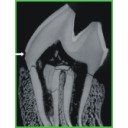
Micro-CT imaging is an increasingly popular method in paleontology giving access to internal structures with a high resolution and without destroying precious specimens. However, its potential for the study of hypoplasia defects has only recently been investigated. Here, we propose a preliminary study to test whether hypoplastic defects can be detected with micro-CT (μCT) scan and we assess the costs and benefits of using this method instead of naked eye. To do so, we studied 13 fossil rhinocerotid teeth bearing hypoplasia from Béon 1 (late early Miocene, Southwestern France) as positive control and 11 teeth of the amynodontid Cadurcotherium (Oligocene, Phosphorites du Quercy, Southwestern France), for which enamel was partly or totally obscured by cement. We showed that all macroscopically-spotted defects were retrieved on 3D reconstructions and selected virtual slices. We also detected additional defects using μCT scan compared to naked eye identification. The number of defects detected using μCT was greater in the Cadurcotherium dataset (paired-sample Wilcoxon test, p-value = 0.02724) but not for our control sample (paired-sample Wilcoxon test, p-value = 0.1171). Moreover, it allowed for measuring width and depth of the defects on virtual slices (sometimes linked to stress duration and severity, respectively), which we could not do macroscopically. As μCT imaging is both expensive and time consuming while not drastically improving the results, we recommend a moderate and thoughtful use of this method for hypoplasia investigations, restricted for instance to teeth for which enamel surface is obscured (presence of cement, uncomplete preparation, or unerupted germs).
PV article infos
Published in 45-1 (2022)
|
PDF
S.I. Data
|

|
Les poissons crétacés et tertiaires du bassin des Iullemmeden (République du Niger)
Published online: 15/09/1972
Keywords:
Actinopterygians; Cenozoic; Cretaceous; Dipnoans; Selachians
https://doi.org/10.18563/pv.5.5.179-251
Abstract
The present work is devoted to the study of the Cretaceous and Tertiary fishes (teeth of Selachians, Actinopterygians and Dipnoans) collected during a recent expedition in Niger. The Maestrichtian localities have yielded a new genus and a new subspecies of Selachian: Igdabatis sigmodon nov. gen., nov. sp. and Lamna biauriculata nigeriana nov. subsp. The locality of Sessao, which has been attributed to the Thanetian by means of the study of the fish, has furnished by screen-washing an interesting fauna wherein six new species are described: Raja Iouisi, Dasyatis sessaoensis, D. sudrei, D. russelli, Hypolophites thaleri and Ceratodus casieri. Comparison of these faunas with contemporary faunas of Africa has brought out a certain endemism in the Iullemmeden Basin during the late Cretaceous and the early Tertiary.
PV article infos
Published in Vol. 05, Fasc. 5 (1972)
|
PDF
|

|
Rythme et modalités de l'évolution chez les rongeurs à la fin de l'Oligocène-leurs relations avec les changements de l'environnement.
Published online: 15/12/2000
Keywords:
Environment; evolution; Oligocene; Rodents; Systematics
https://doi.org/10.18563/pv.29.2-4.83-360
Abstract
The analysis of oxygene isotope variations as well as paleobotanical data suggest that the Oligocene/Miocene boundary corresponds to a transitional period marked by floristical and climatic variations. During this period, the pyreneo-alpine tectonics has contribued to modify the geography and western Europe landscapes. Faunal changes (appearances, extinctions, migrations) are observed in different mammalian groups, notably in the rodents. A study of the evolutionary trends and patterns in paleogene rodents is involved for the period ranging from level MP 28 of the Late Oligocene to the Early Miocene, including the Oligo-Miocene boundary.
The Rodents fauna from the sites of Venelles (Bouches-du-Rhône District, France) and Thezels (Lot, France), previously mentionned in litterature, have been studied. The first description of the Eomyidae of La Milloque (MP 29) has been completed. These faunas are compared to those from various localities dating from the considered period. In La Milloque, a new representative of the Eomys species is described next to a form close to Rhodanomys hugueneyae ENGESSER, 1987. It is the Eomys milloquensis nov. sp., the likely descendant of Eomys quercyi COMTE & VIANEY-LIAUD, 1987. Two new species are also described in Thezels: Eucricetodon thezelensis nov. sp., resulting from a likely and local evolution of Eucricetodon praecursor (SCHAUB, 1925) from La Milloque, which, in the same geographic area, could be at the origin of Eucricetodon hesperius ENGESSER, 1985 from Paulhiac. Plesiosminthus admyarion nov. sp., quite distinct from Plesiosminthus schaubi VIRET, 1926, which announces Plesiosminthus myarion SCHAUB 1930. Venelles 'Plesiosminthus schaubi population is considered as a sub-species, named Plesiosminthus schaubi meridionalis nov. subsp. New phylogenetic patterns are proposed. Among the Eomyidae, a quantification of various features of the M1-2/ crown (hypsodonty, degree of abrasion, occlusal angle, state of development of the I and V anticlines), and a comparison with the occlusal diagram of the other teeth among various other populations allows a more efficient separation of Eomys and Rhodanomys genera. In Western Europe, and within this period, it finally does not seem possible to gradually connect the genus Eomys to the genus Rhodanomys. The evolution of the Eomys quercyi - milloquensis lineage seems to underline a similar evolution to that which may have led from the Eomys to the Rhodanomys form. The latter which appears totally accomplished at level MP 29 of the Oligocene is considered as an immigrant. If we compare the most representative species of the Venelles, Thezels, and Coderet sites, (i.e. Rhodanomys, Eucricetodon, Adelomyarion, Peridyromys, Plesíosminthus), it becomes impossible to confirm their biochronological separation. The noticeable differences between the populations may be interpreted as geographical variations. An explanation to these variations, and to fauna's evolution during the Late Oligocene and Early Miocene can be found in the environmental modifications, supported by isotopic, paleobotanical and sedimentologic analysis. A tentative reconstruction of the environments is attempted by the cenogram method. The analysis of the fluctuations of fauna's diversity shows variations which may be correlated to a drop in temperature at MP 29, during the Late Oligocene, followed by an increase in temperature along with an aridity phenomenom, during the basal Miocene (MN O).The confrontation of various methods give the opportunity of reconstituting and comparing the evolution of the environment of three sequences of sites chosen from different regions. Ecological affinities of various rodents' species are being examined. It is possible to consider that the integration of all the conclusions resulting from this study should lead to an explanation to the evolution of rodents for the period around the Oligocene-Miocene boundary. The site of Coderet- level 3- would be posterior to the latter, at the beginnig of the Miocene, and would mark the level MN 0 of the Aquitanian.
PV article infos
Published in Vol. 29, Fasc. 2-4 (2000)
|
PDF
|

|
Die Ohr-Region der Paulchoffatiidae (Multituberculata, Ober-Jura).
Published online: 15/11/1988
Keywords:
Multituberculata; Ober-Jura; Paulchoffatiidae; Petrosum; Portugal
https://doi.org/10.18563/pv.18.3.155-185
Abstract
The petrosal of the Paulchoffatiidae HAHN, 1969 is described and compared with that of younger multituberculates and of other Mesozoic mammals. The "Morrison petrosal", described by Prothero (1983), is also discussed; it probably belongs to the multituberculates. The reconstruction of the ventral side of the Paulchoffatiinae-skull, given by Hahn in 1987, is completed by addition of the otic and the occipital region.
PV article infos
Published in Vol. 18, Fasc. 3 (1988)
|
PDF
|

|
Contribution à l'étude des Cricétidés oligocènes d'Europe occidentale
Published online: 20/01/1972
Keywords:
Cricetidae; Europe; Oligocene
https://doi.org/10.18563/pv.5.1.1-44
Abstract
Of the ten cricetid species from the Oligocene of Western Europe, attributed until now to the genus Eucricetodon, only four prove to be utilizable - E. atavus, E. huberi, E. praecursor, E. collatum - to which it is possible to add two forms newly described: E. huerzeleri and E. quercyi. The evolullon of the genus Pseudocricetodon is also the subject of new observations. The study of the dental morphology allows us to distinguish in these two genera three lineages beginning in the middle Oligocene:
- Lineage P. montalbenensis-P. thaleri (from Montalban to Goderet), of small size, without
increase in size.
- LineageE. atavus-E. infralactorensis (from Hoogbulsel to Estrepouy), of middle size, with a regular increase in size.
- Lineage E. huerzeleri-E. haslachense (level of Montalban to that of Estrepouy), of large size, with an increase in size.
Two other forms are equally represented in these loealitles: Heterocricetodon aff. helbengi and Melissiodon quercyi. It has been possible to attribute a precise age (zone of "Cournon") to the last species, which has been defined by Schaub (l925) from material in the Old Quercy collections. The genera Pseudocricetodon, Eucricetodon, ? "Cricetodon", Leydimys, Eumys, differentiated at the beginning of the middle Oligocene in Europe, Asia and North America, seem to derive from a common ancestral group. The place of origin of this group could be situated in Asia.
PV article infos
Published in Vol. 05, Fasc. 1 (1972)
|
PDF
|
|
New material of “Eurysternidae” (Thalassochelydia, Pan-Cryptodira) from the Kimmeridgian of the Swiss Jura Mountains
Published online: 25/06/2020
Keywords:
Eurysternidae; Late Jurassic; morphology; Switzerland; Testudines; Thalassochelydia
https://doi.org/10.18563/pv.43.1.e2
Abstract
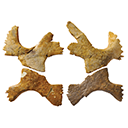
The region of Porrentruy (Swiss Jura Mountains) is known for its rich and diverse assemblage of Late Jurassic coastal marine turtles (Thalassochelydia). Dominated by the “Plesiochelyidae”, this assemblage also includes representatives of the two other thalassochelydian groups, the “Thalassemydidae” and “Eurysternidae.” In this study, we present new shell-based material from Porrentruy referable to eurysternids. One specimen represents a juvenile individual or a relatively small taxon, and is notably characterized by a well fenestrated plastron exhibiting a wider than long central plastral fontanelle. Two other specimens are much larger and possibly represent the largest eurysternids known to date. The fourth specimen is characterized by a unique plastral morphology otherwise only known in very small juveniles. This is the first time this unique plastral morphology is known to persist in an adult or subadult. The new material described herein represents at least three distinct taxa, all of them probably new. However, we refrain from naming new species based on this incomplete material in order to avoid adding confusion to an already complex taxonomical situation. This study provides new insights into the great diversity of eurysternids during the Late Jurassic.
PV article infos
Published in Vol 43-1 (2020)
|
PDF
|
|
A femur of the Late Cretaceous giant bird Gargantuavis from Cruzy (southern France) and its systematic implications
Published online: 27/06/2019
Keywords:
Aves; femur; France; Gargantuavis; Late Cretaceous
https://doi.org/10.18563/pv.42.1.e3
Abstract
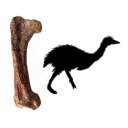
A large avian femur recently discovered at the Late Cretaceous Montplo-Nord locality at Cruzy (Hérault, southern France) is referred to the giant bird Gargantuavis philoinos. The estimated mass of the bird is 57 kg, within the range of living cassowaries. The specimen provides new evidence about the anatomy of G. philoinos, notably showing that the distal end of the femur was similar to that of modern birds in having a condylus lateralis subdivided into two semicondyles. A new diagnosis of Gargantuavis philoinos is provided and the taxon is placed in a new family of basal ornithurines.
PV article infos
Published in Vol 42-1 (2019)
|
PDF
|

|
La poche à phosphate de Ste-Néboule (Lot) et sa faune de vertebres du Ludien supérieur. 9- Primates et Artiodactyles
Published online: 25/09/1978
Keywords:
Eocene; Quercy Phosphorites
https://doi.org/10.18563/pv.8.2-4.269-290
Abstract
La faune d'artiodactyles de Ste-Néboule, qui comprend neuf espèces, présente de nombreux
points communs avec les faunes habituellement rattachées au Ludien supérieur, telles celles de La Débruge ou de Montmartre. A l'inverse de ces localités, on ne connaît pourtant, à Ste-Néboule, ni Oxacronae, ni Anoplotheriinae. Parmi les espèces du gisement se trouve une nouvelle espèce du genre Mouillacitherium (M. schlosseri n. sp.), cette forme devant être interprétée comme le dernier représentant du rameau. Nous faisons connaître par ailleurs la presque totalité de la denture du Dacrytherium saturninii, espèce qui était à ce jour très imparfaitement documentée. Ste-Néboule est, d'autre part, la seule localité où l'on peut signaler l'association probable de deux lignées du genre Amphimeryx. Les primates sont peu diversifiés à Ste-Néboule, puisque le groupe est limité au seul genre Adapis. Les genres Microchoerus et Pseudoloris, que l'on sait pourtant être représentés dans des gisements dâge voisin (Microchoerus ornatus à San Cugat de Gavadons et Mormont-Entreroches, Pseudoloris reguanti à San Cugat de Gavadons, Pseudoloris cf. reguanti à Neustadt ; cf. Louis et Sudre 1975) sont absents dans les faunes du Quercy de cette période.
PV article infos
Published in Vol. 08, Fasc. 2-4 (1978)
|
PDF
|

|
Les Amphibiens et les reptiles du Pliocène supérieur de Balaruc II (Herault, France)
Published online: 15/09/1989
Keywords:
amphibians; Europe; France; Pliocene; Reptiles
https://doi.org/10.18563/pv.19.1.7-28
Abstract
The late Pliocene site (MN 16) of Balaruc II (Hérault, France) has provided remains of the following amphibians and reptiles: Chelotriton pliocenicus nov. sp. and Triturus marmoratus (Salamandridae), cf. Rana (Ranidae), cf. Blanus (Amphisbaenidae), cf. Agama (Agamidae), Gekkonidae indet., Lacerta s.l. (Lacertidae), "Ophisaurus" sp. (Anguidae), Michauxophis occitanus (Aniliidae), Erycinae indet. (Boidae), Elaphe cf. E. longissima and Malpolon sp. (Colubridae), cf. Naja (Elapidae) and Vipera sp. (Viperidae). The salamandrid Chelotriton pliocenicus and the aniliid Michauxophis occitanus constitute, up to now, the only records of these groups in the European Pliocene. The fauna is indicative of a warm, dry
subtropical climate.
PV article infos
Published in Vol. 19, Fasc. 1 (1989)
|
PDF
|

|
The paramyid rodent Ailuravus from the middle and late Eocene of Europe, and its relationships
Published online: 15/05/1976
Keywords:
Ailuravinae; Rodentia
https://doi.org/10.18563/pv.7.1-2.117-149
Abstract
The complex taxonomic history of the paramyid rodent genus Ailuravus is reviewed. It has been described as Hyracotherium, as a creodont carnivore and as a lemuroid primate - errors at the ordínal level that are most unusual for a rodent. The genus is a member of the poorly known subfamily Ailuravinae, probably derived from some European Early Eocene species of Paramys. Aíluravus was a large arboreal paramyid with highly rugose cheek teeth, very well developed hypocone, and a remarkably weak lower incisor. It was tropical to subtropical. Three named species are recognized, A. macrurus from the Lutetian of Messel; the genotype, A. picteti, from Egerkingen, Buchsweiler and the Geiseltal, slightly later in the Lutetian; and A. stehlinschaubi, new name, from the Bartonian of Mormont-Eclépens and Robiac. One or more unnamed species are present in the Ypresian of Cuis. The species are close to a phyletic sequence. No later representatives of the genus are known. The late Eocene to earliest Oligocene North American paramyid Mytonomys, whose relationships have been obscure, is tentatively referred to the Ailuravinae.
PV article infos
Published in Vol. 07, Fasc. 1-2 (1976)
|
PDF
|
|
A new and primitive species of Protophiomys (Rodentia, Hystricognathi) from the late middle Eocene of Djebel el Kébar, Central Tunisia
Published online: 02/06/2014
Keywords:
Adaptive radiation; Bartonian; Dental morphology; North Africa; Paleobiogeography
https://doi.org/10.18563/pv.38.1.e2
Abstract
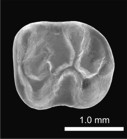
Based on fossil discoveries and phylogenetic studies, an Eocene Asian origin for hystricognathous rodents and anthropoid primates has gained strong support in recent years. The two groups then invaded both Africa and South America, which promoted their evolutionary success. However, the fossil record has so far failed to constrain the nature and precise timing of these pivotal dispersal events. In Africa, given the apparent absence of hystricognaths and anthropoids in early to early middle Eocene localities, it is suggested that these mammal groups dispersed from Asia to Africa sometime during the middle Eocene. In this paper, we report the discovery of several isolated teeth of a rodent from a new vertebrate locality situated in central Tunisia (Djebel el Kébar, KEB-1), dating from the late middle Eocene (Bartonian, ~39.5 Myr). These fossils document a diminutive new species of Protophiomys (P. tunisiensis nov. sp.), a basal genus of hystricognathous rodents which is well known from several North African mammalian-bearing localities of the end of the Eocene. The teeth of P. tunisiensis display a suite of anatomical details comparable with those observed in the other species of the genus, but with a lesser degree of development. Such an apparent primitive evolutionary stage is corroborated by the greater antiquity of this Tunisian species. P. tunisiensis nov. sp. is so far the most ancient representative of hystricognaths in Africa. However, it can be expected that hystricognaths were already present on that landmass given the new data on early caviomorphs recently reported from South America (at ~41 Myr). The arrival of hystricognaths in Africa from South Asia certainly predates the depositional period of the Kébar sediments, but perhaps not by much time.
PV article infos
Published in Vol.38-1 (2014)
|
PDF
|

|
Les gangas (Aves, Columbiformes, Pteroclidae) du Paléocène et du Miocène inférieur de France.
Published online: 11/02/1993
Keywords:
Birds; evolution; Lower Miocene; New taxa; Oligocene; Paleoecology; Paulhiac; Quercy Phosphorites; Saint-Gérand-Ie-Puy; Sandgrouse; Upper Eocene
https://doi.org/10.18563/pv.22.2-3.73-98
Abstract
The two species of Sandgrouse from Quercy, Pterocles validus MILNE-EDWARDS and P. larvatus MILNE-EDWARDS, are ascribed to the genus Archaeoganga MOURER-CHAUVIRÉ which includes a third, very large species, A. pinguis. The Sandgrouse of Saint-Gérand-le-Puy, Pterocles sepultus MILNE-EDWARDS, is ascribed to a new genus, Leptoganga. This form appears in the Upper Oligocene of Quercy, in Pech Desse and Pech du Fraysse localities, and is still present in the Lower Miocene of Saint-Gérand-le-Puy and Paulhiac. Recent Sandgrouse live in semidesert or desert areas. The indications provided by mammal and bird faunas in the localities where sandgrouse were found, confirm that the paleoenvironment was open and arid. The morphological study of these fossils indicates that, in the Upper Eocene, the Pteroclidae were already completely individualized with respect to Charadriiformes.
PV article infos
Published in Vol. 22, Fasc. 2-3 (1993)
|
PDF
|

|
Artiodactyla aus den Eozänen Braunkohlen des Geiseltales bei Halle (DDR)
Published online: 04/12/1989
Keywords:
Artiodactyles; Eocene; Europe; Paleoecology; Stratigraphy; taxonomy
https://doi.org/10.18563/pv.19.3.131-160
Abstract
The present study of Artiodactyla from the Middle Eocene of the Geiseltal lignite beds concems systematics, biostratigraphy, and palaeoecology on the basis of 174 specimens: isolated remains to more complete skeletons. Instead of the formerly known five species of two families are now recognized 14 species of the Diacodexeidae, Dichobunidae, Cebochoeridae, and Haplobunodontidae. New species are Aumelasia maniai, Anthracobunodon neumarkensis, Masillabune franzeni. Four species of the Geiseltalfauna are definitely known from elswere, and five species are closely related to those from other European localities. Evidently the faunal situation of artiodactyls during the Middle Eocene of Europe was largely uniform. The distribution of artiodactyls within the sequence of the Geiseltal strata corroborates the biostratigraphical concept of the land mammal age Geiseltalian (Franzen & Haubold l986b) as well as the mammalian reference levels MP 11-13 (Franzen 1987). Reconstructions of the skulls and skeletons allow conclusions on the functional morphology and palaeoecology of the artiodactyls of the European Middle Eocene
PV article infos
Published in Vol. 19, Fasc. 3 (1989)
|
PDF
|