|
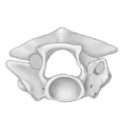
Latest Early-early Middle Eocene deposits of Algeria (Glib Zegdou, HGL50), yield the richest and most diverse fauna of amphibians and squamate reptiles from the Palaeogene of Africa
Published online: 08/02/2021
Keywords:
Africa; Algeria; amphibians; Eocene; squamates
https://doi.org/10.18563/pv.44.1.e1
Abstract
HGL50 is a latest Early-early Middle Eocene vertebrate-bearing locality located in Western Algeria. It has produced the richest and most diverse fauna of amphibians and squamate reptiles reported from the Palaeogene of Africa. Moreover, it is one of the rare faunas including amphibians and squamates known from the period of isolation of Africa. The assemblage comprises 17 to 20 taxa (one gymnophionan, one probable caudate, three to six anurans, seven ‘lizards’, and five snakes). Two new taxa were recovered: the anuran Rocekophryne ornata gen. et sp. nov. and the snake Afrotortrix draaensis gen. et sp. nov. The locality has also yielded the first confirmed anilioid snake, the first Palaeogene gymnophionan, and probably the first caudate from the Palaeogene (and possibly from the Tertiary) of Africa. The presence of a caudate at that time in Africa would be of particular interest; unfortunately, the available material does not permit a definitive identification. The fauna comprises Gondwanan and more specifically West Gondwanan vicariants, probably autochthonous groups and a Eurasian immigrant (assuming that the identification of the caudate is accurate). The fauna from HGL50 is clearly distinguished from the few other Eocene assemblages of Africa. However, if this results largely from differences in geological ages, geographic positions of the localities and mainly differences in environments took a part in the composition of the faunas.
PV article infos
Published in 44-1 (2021)
|
PDF
|
|
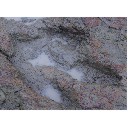
Late Campanian theropod trackways from Porvenir de Jalpa, Coahuila, Mexico
Published online: 29/11/2017
Keywords:
Dinosaur tracks; Late Cretaceous; Mexico.; Tetanura; Theropod
https://doi.org/10.18563/pv.41.2.e1
Abstract
Confident attribution of bipedal tridactyl dinosaur tracks to theropods or ornithopods can be challenging. Here we describe trackways produced by tetanuran dinosaurs, previously attributed to hadrosaurs, from Coahuila State, northeastern Mexico. Multiple trackways headed in the same direction suggest gregarious behaviour in these late Campanian theropods.
PV article infos
Published in Vol 41-2 (2018)
|
PDF
|

|
Field trip guides of the 20th Annual Conference of the European Association of Vertebrate Palaeontologists, 26th June – 1st July 2023, Sabadell (Barcelona), Spain
Published online: 16/06/2023
Keywords:
https://doi.org/10.18563/pv.eavp2023fieldtrip
Abstract
PV article infos
Published in special issue 1-2023 (2023)
|
PDF
|
|
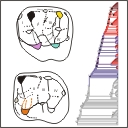
Autopsie d’une radiation adaptative : Phylogénie des Theridomorpha, rongeurs endémiques du Paléogène d’Europe - histoire, dynamique évolutive et intérêt biochronologique
Published online: 15/12/2016
Keywords:
Diversification; Extinction; Paléoenvironnements; Rodentia; Theridomyoidea
https://doi.org/10.18563/pv.40.3.e1
Abstract
Résumé :
L’étude des rongeurs Theridomorpha permet de suivre le déroulement d’une radiation adaptative pendant toute sa durée (Eocène moyen-Oligocène terminal), sur un territoire restreint à l’extrémité ouest de l’Europe Occidentale. Dans ce papier, la phylogénie de ce groupe est établie à partir d’une analyse cladistique reposant sur l’examen de 315 caractères (310 dentaires). Le groupe d’intérêt comprend 110 des 132 espèces (24 genres) de Theridomyoidea et deux genres encore inclus jusqu’ici dans les Reithroparamyinae qui rejoignent les Theridomorpha. Les groupes externes comprennent des Glires basaux, Cocomys, Tanquammys et 16 Ischyromyiformes. Un cadre phylogénétique robuste est produit, qui permet de clarifier la systématique des Theridomorpha. La position des Remyoidea (nov. sup.fam.) au sein des Ischyromyiformes, extérieure aux Theridomorpha, est confortée. Les Protadelomys et Tardenomys sont à la base des Theridomyoidea, avant la séparation en deux clades correspondant aux familles Pseudosciuridae et Theridomyidae. Les sous-familles sont consolidées : Pseudosciurinae et Sciuroidinae pour les Pseudosciuridae ; Issiodoromyinae, Oltinomyinae, Columbomyinae, Theridomyinae, auxquelles s’ajoute au moins une nouvelle sous-famille (Patriotheridomyinae), pour les Theridomyidae. La topologie des chrono-espèces (sensu Simpson), traitées antérieurement comme lignées évolutives, apparaît dans la plupart des cas sous forme de clades successifs dans lesquels les espèces sont le plus souvent arrangées de manière pectinée, émergeant dans l’ordre stratigraphique. L’analyse des caractères aux principaux nœuds permet de consolider les caractères diagnostiques des taxons et les tendances évolutives, ainsi que de discuter des divers parallélismes et convergences dans l’évolution des structures et patrons dentaires (e.g., émail des incisives unisérié chez les Issiodoromyinae et les Patriotheridomyinae, ou pseudo-multisérié chez les Blainvillimys les plus hypsodontes, les Protechimys et Archaeomys ; patrons dentaires téniodontes ; allongement des dents déciduales chez les Patriotheridomyinae, Issiodoromyinae et Theridomyidae ; sélénodontie ou lophodontie). Les dynamiques évolutives traduites par les changements morphologiques sont mises en relation avec les variations environnementales. Enfin, les implications biochronologiques de l’évolution des Theridomyoidea sont discutées.
Abstract:
The adaptive radiation of the rodents Theridomorpha occurred during a limited time window (middle Eocene to late Oligocene), on an area restricted to Western Europe. In this paper, the phylogeny of this group is established via a cladistic assessment of 315 morphological characters (310 dental). The group of interest encompasses 110 upon 132 species (24 genera) of Theridomyoidea, and two genera formerly included within the Reithroparamyinae, and which are included here within the Theridomorpha. The outgroups include basal Glires, Cocomys, Tanquammys and 16 Ischyromyiformes. A robust phylogenetic frame is produced, which allows clarifying the systematics of the Theridomorpha. Within the Ischyromyiformes, the Remyoidea (nov. supfam.) are set apart from the Theridomorpha. Protadelomys and Tardenomys represent the earliest offshoots of the Theridomyoidea, before the dichotomy between Pseudosciuridae and Theridomyidae. It supports the former subfamilies Pseudosciurinae and Sciuroidinae within the Pseudosciuridae; and for the Theridomyidae: the Issiodoromyinae, Oltinomyinae, Columbomyinae, Theridomyinae, with at least one new subfamily (Patriotheridomyinae). The topologies of the chronospecies (sensu Simpson), formerly considered as evolutionary lineages, appear in most cases as successive clades, in which the species are generally pectinately arranged and emerging in the stratigraphic order. The analysis of characters supporting the main nodes allow consolidating the diagnosic characters of the taxa and their evolutionary trends, as well as discussing the various cases of parallelism and convergence in the evolution of structures and dental patterns (e.g., uniserial incisor enamel for Issiodoromyinae and Patriotheridomyinae, or pseudo-multiserial for the most hypsodont Blainvillimys, Protechimys and Archaeomys; taeniodont dental patterns; lengthening of deciduous premolars for Patriotheridomyinae, Issiodoromyinae and Theridomyidae; selenodonty or lophodonty).
Evolutionary dynamics are analysed with respect to environmental changes. Finally, biochronological implications of the evolution of Theridomyoidea are discussed.
PV article infos
Published in Vol 40-3 (2016)
|
PDF
S.I. Data
|

|
Mammals of the Eocene locality Toru Ajgyr (Kyrgyzstan)
Published online: 15/12/2006
Keywords:
Eocene; Kyrgyzstan; Mammalia; Olsenia; Palaeoecology; Stratigraphy; taxonomy
https://doi.org/10.18563/pv.34.e12
Abstract
Morphological descriptions are given of Eocene mammals from the locality Toru Ajgyr (NEKyrgyzstan) that were excavated in 1997 and 1998 in a cooperation between the Martin-Luther-University Halle (Germany), the Zoological Institute in St. Petersburg (Russia) and the Seismological Institute in Bishkek (Kyrgyzstan). The species found belong mostly to perissodactyls, as Lophialetes sp., Teleolophus sp. and brontotheres. The primitive ungulate family Olseniidae is represented by a complete foot skeleton of cf. Olsenia sp. In addition, postcranial materials of Gobiatherium mirificum (Dinocerata) and of artiodactyls have been collected and are described herein. Based on mammals, the locality is part of the Asian Land Mammal Age Arshantan and is stratigraphically equivalent with the Bridgerian Land Mammal Age in North America and with the lower and middle Geiseltalian of the European Middle Eocene.
PV article infos
Published in Vol. 34, Fasc. 3-4 (2006)
|
PDF
|

|
Les traces de pas d'amphibiens, de dinosaures et autres reptiles du Mesozoïque Français : inventaire et interprétations.
Published online: 15/12/2007
Keywords:
Footprints; France; Inventory; Mesozoic; palaeontology; palaeovenvironments; Stratigraphy
https://doi.org/10.18563/pv.35.1-4.1-149
Abstract
Since the 19th century, thousands of footprints were observed in the geological series of the French Mesozoic. All are located in the Triassic and Jurassic. After a promising beginning, in France, it is only a few papers which will be published in the first half 20th century, unlike the USA and of others countries of Western Europe. One ought to wait about 1950 for a revival and now they are nearly 200 papers which were devoted to the ichnofossils. The literature abundance and the renewed interest of the naturalists for the palichnologic studies decided to us to write a synthesis work. This one begins with a stratigraphic inventory in which, localisation, age and paleontological contents of about 180 fossiliferous sites are specified. After having pointed out the followed methods, the footprints paleontological interpretation is then approached in detail and the results obtained are replaced in stratigraphy to deduce the fauna evolution during the Mesozoic. So, it appears that Ichnologic data, more varied and rich in the Triassic and Liassic than those relating to the bones, very rare for the considered periods, are very informative. The middle Triassic (Anisian-Ladinian), thus reveals Cotylosauria, Lepidosauria, Crurotarsi with Rauisuchia, Ornithosuchidae, Crocodylia and Dinosauromorpha more the "Prodinosauria": Dinosamiforme whose skeletons are known in Argentina but only in Ladinian. The rather fast domination of Dinosaurs during Norian is also as well shown. The almost exclusive presence of their footprints, up to fifty cm long, in the Lower Hettangian indicates their supremacy in the environments. Footprints characterise not very deep life places located between inter-supratidal limits and often out of water. Sedimentologic and Palaeontologic studies showed that they were great coastal spaces during Middle Triassic, flood-plain with sebkhas while Upper Triassic, and a large !!coastal marsh!! in Grands-Causses during Liassic in which, mainly, fine stromatolithic layers were deposited. During the same periad, bay beaches spread in Vendée. During the Middle Jurassic, they are also brackish to lacustrine environments and recifallagoons in- the Upper Jurassic. Numerous measurements of the footprints and trackways directions showed that the animaIs moved there in weil defined directions, for long periods. They seem due to the palaeotopography of the life environments relatively stable. Also, the discovery of vegetal radicular networks and small footprints far away from the continental borderlands has suggested that the animals continuously lived in these palaeoenvironnements, belonging to large ecosystems, where the sedimentation rate was weak. This explains that thebadies could not fossilize there but only their footprints through the cyanobacterian action in main cases. From the vertical distribution of different ichnospecies, defined with adapted statistical methods, explained in this work, a palichnostratigraphy was established for the Middle Triassic. Although the footprints are also abundant in Hettango-Sinemurian of "Grands-Causses" and the Vendée, it was not possible, up to now, to establish any zonation in this series; Probably because the palichnofauna is too little diversified there, currently reduced to a majority of Theropods II-IV tridactyl traces.
PV article infos
Published in Vol. 35, Fasc. 1-4 (2007)
|
PDF
|
|
An evening bat (Chiroptera: Vespertilionidae) from the late Early Eocene of France, with comments on the antiquity of modern bats
Published online: 01/08/2016
Keywords:
evolution; palaeobiogeography; Prémontré; Western Europe; Ypresian
https://doi.org/10.18563/pv.40.2.e2
Abstract
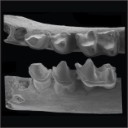
Bats are among the most numerous and widespread mammals today, but their fossil record is comparatively meagre and their early evolution poorly understood. Here we describe a new fossil bat from dental remains recovered from late Early Eocene sediments at Prémontré, northern France. This 50 million-year-old bat exhibits a mosaic of plesiomorphic and apomorphic dental features, including the presence of three lower premolars, a single-rooted p3, short p4 with metaconid, myotodont lower molars and a tall coronoid process of the dentary. This combination of features suggests it is an early member of Vespertilionidae, today’s most speciose and geographically widespread bat family. The Prémontré bat has bearing on hypotheses about the origins of vesper or evening bats (Family Vespertilionidae), as well as crown-group chiropterans.
PV article infos
Published in Vol.40-2 (2016)
|
PDF
|
|
Additions to the elasmobranch assemblage from the Bandah Formation (middle Eocene, Bartonian), Jaisalmer District, Rajasthan, India, and the palaeobiogeographic implications of the fauna
Published online: 23/06/2021
Keywords:
Chondrichthyes; Elasmobranchii; Indian Ocean; Palaeogene; South Asia
https://doi.org/10.18563/pv.44.2.e1
Abstract
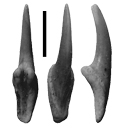
Isolated elasmobranch teeth (sharks and rays) from the middle Eocene (Bartonian) Bandah Formation in the Jaisalmer District of Rajasthan, India are described. The remains improve our knowledge of the environment represented by this lithostratigraphic unit and the ecology preserved therein. Seventeen unequivocal taxa were identified, including Nebrius sp., Striatolamia aff. S. macrota, Brachycarcharias atlasi, B. lerichei, cf. Jaekelotodus sp., Carcharhinus mancinae, Rhizoprionodon sp., Physogaleus sp., Galeocerdo clarkensis, G. eaglesomei, Odontorhytis aff. O. pappenheimi, “Rhinobatos” sp., “Dasyatis” sp., Coupatezia sp., “Aetomylaeus” sp., “Rhinoptera” sp., and Ouledia aff. O. lacuna. Of these, “Aetomylaeus” sp., B. atlasi, C. mancinae, G. clarkensis, G. eaglesomei, cf. Jaekelotodus sp., Nebrius sp., Odontorhytis aff. O. pappenheimi, Ouledia aff. O. lacuna, and “Rhinoptera” sp. are reported from the middle Eocene of India for the first time. The Bandah Formation elasmobranch palaeofauna has close affinities to the Palaeocene-Eocene Tethyan/Paratethyan faunas of Africa, Madagascar, Asia, and Europe, and some taxa indicate a western hemisphere influence from North America. The Bandah Formation palaeofauna indicates that deposition occurred in a moderately shallow marine environment. The Bartonian age is primarily based on foraminifera but is corroborated by the presence of elasmobranch taxa that also occur in contemporaneous deposits elsewhere. The marine regression started during the early Palaeogene, and our study indicates that the sea completely withdrew from the Jaisalmer Basin after the deposition of the Bandah Formation. This event may have been synchronous with the middle Eocene uplift of the Himalayan-Tibetan Plateau.
PV article infos
Published in 44-2 (2021)
|
PDF
|

|
Les rongeurs du site Pliocène à Hominidés de Hadar (Ethiope)
Published online: 15/02/1982
Keywords:
Ethiopia; hominids; Muridae; Pliocene
https://doi.org/10.18563/pv.12.1.1-56
Abstract
The intensive exploration of the Pliocene Hadar Formation, rich in hominid remains, led us to the discovery of several micromammals levels. ln some of them, rodents are very abundant. The stratigraphic repartition of these levels do not cover the whole fossiliferous series of the formation but takes place only in the sedimentary members from Sidi Hakoma and Denen-Dora (rancing from 3.1 - 3.2 MY to 2.8 - 2.9 MY, according to the recent geochronological data). During this gap of time, the species do not show morphological changes, what allowed us to gather, in the same taxa, forms of slighty different ages.
Two striking facts, giving a lot of indications, characterize these small rodents'faunas. First, we notice the domination of the Muridae, as well on a qualitative way (number of species) as on a quantitative one (number of individuals). Then, it appears that, until now, two genera of these murids were known only in the south-western asiatic regions. So, we can suppose continuous biotops between Africa and Indian Subcontinent before 3 MY. In this hypothesis, the hominids had already the possibility to leave their african « cradle ››. Finally, almost all studied genera are still represented at the present time. This fact, previously observed in Laetolil, Omo, Olduvai contributes to remove hope of establishing a biochronological scale based on rodents, in tropical zone. Nethertheless, that allows to try a reconstruction of the palaeoenvironnement, by using the principle of actualism.
PV article infos
Published in Vol. 12, Fasc. 1 (1982)
|
PDF
|
|
Les Paramyidae (Rodentia) de l'Eocène inférieur du bassin de Paris.
Published online: 15/07/1968
Keywords:
Ailuraviinae; Eocene; Paramyinae; Rodents
https://doi.org/10.18563/pv.1.4.135-193
Abstract
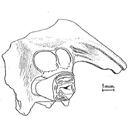
The exploitation of new early Eocene localities in the Paris Basin has resulted in the collecting of numerous mammalian remains, among which are about 300 isolated teeth representing the rodents. They belong, for the most part, to the paramyid group. Only the latest level of the early Eocene has yielded rodents belonging to the pseudosciurid group. The paramyids, the object of this study, are represented by at least 5 genera and 10 species; they are distributed among 4 clearly dilferentiated subfamilies : Paramyinae Simpson 1945, Pseudoparamyinae Michaux 1964, Ailuraviínae n. subf., Microparamyinae Wood1962.
It results from this study that the principal types of rodents in the middle and late Eocene of Europe are clearly related to the forms described here: Plesiarctomys Bravard 1850 is related to Pseudoparamys Michaux 1964, Ailuravus Rütimeyer1891 to Meldimys n. gen., Gliravus hammeli Thaler 1966 to Microparamys nanus (Theilard1927), and some Masillamys Tobien 1954 to Microparamys russelli Michaux 1964 and to M. sp. 1. Gliravus and Masillamys are the oldest representatives of the Gliridae and the Pseudosciurídae, respectively, families which will progressively replace the Paramyidae in the course of the middle and late Eocene.
Two stages can be recognized in the history of te European Paramyidae fauna during the course of the early Eocene: the older is characterized by the Mutigny fauna, the younger by the Cuis fauna.
The Mutigny fauna appears already rather diversified and does not completely correspond, point by point, to the homologous fauna of North America. A geographic differentiation seems to have been manifested rapidly, unless the fauna established in Europe was already a little different from that which established itself in North America.
PV article infos
Published in Vol. 01, Fasc. 4 (1968)
|
PDF
|

|
Le genre Leptolophus (Perissodactyla, Mammalia): morphologie et histologie dentaires, anatomie cranienne, implications fonctionnelles.
Published online: 15/09/1998
Keywords:
dental histology; Eocene; functional anatomy; Palaeotheriidae; skull anatomy; Southern France; Systematics
https://doi.org/10.18563/pv.27.1-2.45-108
Abstract
A strong lophodonty, an extreme heterodonty, some hypsodonty and regular overlayings of coronal cement are prominent features of the genus Leptolophus (Palaeotheriinae = Palaeotheriidae s.s.). The histological pattern of the teeth unusually joins type II enamel prisms, characteristic of advanced ungulates, together with archaic features, such as an almost complete lack of Hunter-Schreger zonation and a weak expanse of peritubular dentine. The skull is narrow and slender, with an elongated ante-orbital facial region, a moderately notched nasal aperture, a rather elongated post-canine diastem, parallel zygornatic arches and a fairly dorsally located squamoso-mandibular joint.The functional analysis brings to light "ectolophodont" masticatory cycles with two phases, in which maximum power was applied, contrary to equíds, on hindmost teeth; likewise, skull accomodations to increasing height of the teeth are quite different. This study leads to the assumption that Leptolophus may have been light mammals, living in rather open surroundings, browsing on herbaceous plants or leaves cropped close to the ground. Moreover, it appears that it could have been some inadequacy of dental structures to the dietary, which leaded to quick wear of the teeth and to many enamel notches, but had been somewhat balanced by the early increase of hypsodonty, not induced in such a case by a biotop deterioration (as it will happen at the end of the Eocene). This ínadaptation might account for the short duration of the genus Leptolophus, whose the 3 species, L. stehlini, L. nouletí and L. magnus n. sp. are indeed confined in the level MP 16. Its geographical spreading (as far as known, South of western Europe) and the morphological pattern of its dentition suggest that this genus would have been related to early upper Eocene endemic spanish forms.
PV article infos
Published in Vol. 27, Fasc. 1-2 (1998)
|
PDF
|

|
Les traces de pas de Dinosaures et autres Archosaures du Lias inférieur des grands Causses, Sud de la France
Published online: 15/12/2002
Keywords:
Dinosauroid footprints; France; Grands-Causses; Hettangian; ichnostratigraphy; paleoenvironments; Sinemurian; statistical results
https://doi.org/10.18563/pv.31.1-4.1-143
Abstract
The Causses" is a near 3400 km2 large plateau located in the south of France. Here the first dinosaur footprints where found in 1935. After this, this area has yielded an ever-increasing number of ichnites now in excess of 500 specimens. These latter, 15 to 50 cm long, tridactyl or tetradactyl footprints of generally biped animals, were discovered at the surface of Hettangian to lower Sinemurian dolomite layers within 4 distinct stratigraphic units. The 35 sites bearing ichnites are located on the plateau margin. For the first time, morphologic characters studied through descriptive statistic methods with the usual parameters and classical Student and Snédecor tests, allowed us, to divide the whole set of biped traces into 6 ichnospecies. Their definitions are further constrained by multivariate statistical results using Principal Component Analysis (PCA), Factor Analysis of correspondances (FAC) and Discriminant Analysis (DA). All have confirmed the morphologic observations. So that now, the following taxa are identified : Grallator variabilis, G. lescurei, G. sauclierensis, G. minusculus, Eubrontes giganteus, Dilophosauripus williamsi, cf. Moraesichnium, Orníthopus fabrei nov ichnosp. The more immediately visible differences relate to the interdigital II-IV divarication and the digit length ratio. To this panel, we must add Batrachopus deweyi and shapes suggesting Trisauropodichnus and/or Anomoepus. Among all ichnite associations described in the lower Liasic, the New England assemblage presents the most affinities with ours. It shows the ichnotaxa Grallator, Dilophosauripus, Eubrontes, Batrachopus without forgetting Ornithopus fabrei nov. ichnosp. which is close to Ornithopus gallinaceus from the Massachusetts and Connecticut basins. On comparing the present early Jurassic ichnofauna of the Causses with the ones of the Middle and Upper Triassic formations of the eastem border of the Massif Central (France), it appears that tridactyl footprints become more and more numerous and large from Triassic to Early Jurassic. In the Causses, these latest are prevalent but in Quercy (France), Poland, Italy, USA, they are also associated with Omithopoda, Thyreophora and Sauropoda ichnites. Footprint areas considered here were generaly under an arid climate. Animals that passed by were heavy and bulky possible Megalosaur trackmakers, and lighter and slender Coelophysids or Ceratosaurs. For all, these areas were pathways as the orientations of the trackways seem point out. The directions followed by these reptiles were without any important variation during the Hettango-Sinemurian stages. These areas were also used from time to time by Crocodilomorpha and may be tetradactyl (I-IV) bipedal avian Theropods. However, the number of such trackways in sites, sometimes substantial, should not lead us to overestimate the trackmakers populations. These last were probably relatively moderately abondant in this inter-supratidal swamp environment. In the Causses, ichnites are connected with former algo-laminated deposits (Algal mats) which were rapidly hardened by means of calcitisation of cyanobacteria. The result has been a moderate depth of footprints; autopodia disturbing only a few cm of the carbonate substrate. Other fossils have been discovered : invertebrates with thin bivalve and gastropod shells, crustaceans tests and plants. These latter suggest the existence of paleomangroves like environments but also continental vegetation periodically overruning the swamp environment during regression/transgression cycles. At these times, wooded parts of it, could become protecting, feeding, resting and nesting places.
PV article infos
Published in Vol. 31, Fasc. 1-4 (2002)
|
PDF
|
|
Small sauropod tracks in the Hettangian of Southern France – A case of ichnite fossilization in an intertidal zone
Published online: 28/06/2022
Keywords:
Intertidal zone; Lower Jurassic; Sauropods; Southern France; Tracks
https://doi.org/10.18563/pv.45.2.e1
Abstract
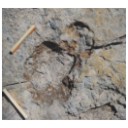
This paper presents the description and the interpretation of recently discovered traces on a Lower Hettangian dolomitic outcrop in the Bédarieux area, Southern France. One trace set immediately attracted the attention by its resemblance to a small sauropod pes-manus couple but no trackway was visible. As the other traces have a variety of shapes with no obvious significance, it took a thorough examination of the 3D and sedimentological data to come to the conclusion that most traces likely were sauropod tracks made under diverse conditions. Sedimentological and ichnological data indicate that the tracks have been made in the intertidal zone of a carbonated tidal flat shortly before an emersion period. It appears that that the variety of trace shapes is due to a variety of water depths: the sauropods were punting when the water level was high. The lack of trackways seems due to the combination of an underprint situation, buoyancy effects and the small size of the track-bearing slab. Several hypotheses can be considered for explaining the very small size of the tracks, such as insular dwarfism or the immaturity of the trackmakers.
PV article infos
Published in 45-2 (2022)
|
PDF
|

|
The late Miocene percrocutas (Carnivora,Mammalia) of Madedonia, Greece.
Published online: 14/06/1995
Keywords:
Biochronology; Carnivora; Comparisons; Dinocrocuta; Greece; Late Miocene; Mammalia
https://doi.org/10.18563/pv.24.1-2.67-84
Abstract
Some new material of percrocutas from the late Miocene of Axios valley (Macedonia, Greece) is studied. They have been found in the locality of "Pentalophos 1" (PNT). The material has been described and compared with the known late Miocene percrocutas of Eurasia. This comparison indicates that it can be identified as Dinocrocuta gigantea (SCHLOSSER, 1903). A maxilla of a percrocuta, named ”Hyaena" salonicae, was found in the same area (Andrews, 1918). "Hyaena" salonicae is smaller than the PNT material. It is also compared with other material from Eurasia while its taxonomic and age problems are discussed. It belongs to Dinocrocuta and shows close relationships with D. robusta and D. senyureki; its age can be considered as late Vallesian-early Turolian. The age of the locality PNT is also discussed and a possible Vallesian age is proposed for it.
PV article infos
Published in Vol. 24, Fasc. 1-2 (1995)
|
PDF
|
|
A new species of bat (Chiroptera: Vespertilionidae) from the early Oligocene global cooling period, Brule Formation, North Dakota, USA
Published online: 09/12/2019
Keywords:
Eocene-Oligocene global cooling; Mammalia; Oligocene; Plecotini; Quinetia
https://doi.org/10.18563/pv.42.2.e2
Abstract
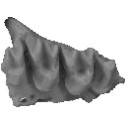
We report the first confirmed fossil bats from North Dakota, including a new species referable to the Vespertilionidae represented by a maxilla with P4-M3 from the Brule Formation, Fitterer Ranch local fauna, early Oligocene, Whitneyan North American Land Mammal Age. Unassociated postcranial fragments of the humerus and femur also represent a vespertilionoid, but appear to reflect a different, unidentified species. The new taxon, Quinetia frigidaria sp. nov., is referred to the genus Quinetia, previously known only from approximately contemporaneous deposits in Europe. The new species is larger than Quinetia misonnei from the early Oligocene of Belgium. It is similar in some morphological characters to Chadronycteris rabenae (Chiroptera incertae sedis) of the late Eocene (Chadronian) of northwestern Nebraska and to Stehlinia species (?Palaeochiropterygidae) from the Eocene and Oligocene of Europe, but differs from each in morphological details of the dentition and maxilla. An unassociated talonid of a lower molar from Fitterer Ranch shows myotodont morphology, unlike the nyctalodont lower molars in Q. misonnei, and thus represents a second chiropteran taxon in the fauna. Quinetia frigidaria is a member of a Paleogene radiation of bats near the low point of the Eocene-early Oligocene decline in global temperatures, increased seasonal aridity, and loss of tropical floras from mid-latitude North America.
PV article infos
Published in Vol 42-2 (2019)
|
PDF
|

|
Contribution à l'étude des genres Gliravus et Microparamys (Rodentia) de l'Eocène d'Europe.
Published online: 15/03/1971
Keywords:
Eocene; Gliravus; Microparamys; Rodentia
https://doi.org/10.18563/pv.4.4.97-135
Abstract
Based on material found in about 15 localities the relationships of the genera Microparamys and Glirarus have been studied. One new genus, two subgenera and three species [Microparamys (Sparnacomys) chandoni n. subgen. and n. sp., Microparamys (Pantrogna) russelli n. subgen., Eoglirarus wildi n. gen. and n. sp., Gliravus meridionalis n. sp.] as well as the publication
of numerous new facts concerning species previously reported, support the phyletic scheme proposed. The latter shows that the origin of the Gliravinae is to be sought among the very small and still rather poorly known Microparamys species of the early Eocene. Gliravus: robiacensis can be considered as the common ancestor to different lineages not only of Glirarus but also of modern genera (Peridyromys, Glirudinus and Microdyromyx), at the origin of which Peridyromys micio, although difficult to interpret, occupies a similar place.
The stratigraphic conclusions permit more detail in the chronologie succession of the localities studied. The paleoecologic and biogeographic aspects lead one to the problem of the oligocene "Grande Coupure" through the study of this group.
PV article infos
Published in Vol. 04, Fasc. 4 (1971)
|
PDF
|
|
The skull of Tetraceratops insignis (Synapsida, Sphenacodontia)
Published online: 09/01/2020
Keywords:
cranium; pelycosaur; Permian; therapsid origins
https://doi.org/10.18563/pv.43.1.e1
Abstract
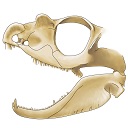
Tetraceratops insignis is known from a single, crushed skull from the Lower Permian of Texas. Its unique proportions and osteological details gained central meaning in the question of the origins of Therapsida since this early synapsid has been determined as the oldest and less derived therapsid. Apart from Tetraceratops, the ‘mammal-like’ Therapsida and their sister, the pelycosaur-grade Sphenacodontidae, are separated by one of the longest ghost lineages in tetrapod fossil record. However, the minor, though well justified critique faced insistent publication regarding the therapsid hypothesis. A carefull re-evaluation of the holotypic skull reveals that therapsid traits cannot be supported, including a rejection of the formerly supposed adductor shelf in the temporal fenestra. Increased understanding of ‘pelycosaur’ character variation underlines a haptodontine-grade or, less likely, sphenacodontid position for Tetraceratops.
PV article infos
Published in Vol 43-1 (2020)
|
PDF
|
|
Eocene Teleostean Otoliths, Including a New Taxon, from the Clinchfield Formation (Bartonian) in Georgia, USA, with Biostratigraphic, Biogeographic,
and Paleoecologic Implications
Published online: 03/01/2022
Keywords:
climate; Congridae; Ophidiidae; Sciaenidae; tectonics
https://doi.org/10.18563/pv.45.1.e1
Abstract
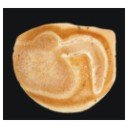
Investigations of the Clinchfield Formation (middle Eocene, upper Bartonian) exposed at the Hardie Mine (Wilkinson County, Georgia, USA), produced 4,768 actinopterygian otoliths representing 14 taxa and increased the number of bony fishes threefold from the site. The somewhat limited richness was characterized by bonefishes, mud eels, conger eels, sea catfishes, cusk-eels, snooks, grunts, drums and croakers, and porgies. The assemblage had a relatively even distribution with Ophidiidae, Congridae, and Sciaenidae most common. Included in the otolith taxa was a new sciaenid genus and species, Eosciaena ebersolei, with unknown relationships to other Sciaenidae. The Clinchfield otoliths were compared to other middle and late Eocene in age otolith assemblages in Alabama, Mississippi, and Louisiana utilizing percentage similarity measurements. Analysis indicated that the Clinchfield otoliths were not greatly similar or greatly unlike the Moodys Branch and Yazoo Clay otolith assemblages. However, the Clinchfield showed little relationship to the slightly older Lisbon Formation in adjacent Alabama and is postulated to be related to global climatic and plate tectonic events. Biostratigraphically, the Clinchfield otolith taxa are essentially the same as the other formations except for the Lisbon, which has at least ten unique species. Abundances of Clinchfield otolith taxa indicate a possible sub-bioprovince in the eastern Gulf Coastal Plain. The Clinchfield otoliths indicate a tropical to perhaps subtropical, soft substrate, mainly normal marine to slightly reduced salinities, inner shelf (0–20 m) paleoenvironment with indications of proximal continental coastlines. This investigation represents an initial step in addressing the immensely understudied Paleogene otolith assemblages in Georgia.
PV article infos
Published in 45-1 (2022)
|
PDF
|
|
The digital endocast of Necrolemur antiquus
Published online: 24/07/2020
Keywords:
brain evolution; Eocene; Omomyiforms; Primates
https://doi.org/10.18563/pv.43.2.e1
Abstract
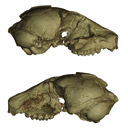
The study of endocasts, or casts of the endocranial space, have played an important role in shaping understanding of mammalian, and particularly primate, brain evolution. Recently, the reconstructions of three-dimensional virtual endocasts from high-resolution computed tomography images have allowed for the visualization and quantification of endocasts in several Paleocene and Eocene primate species. Here we present the virtual endocast of MaPhQ 289 (informally known as the Montauban 9 skull), a specimen of Necrolemur antiquus Filhol 1873, a middle to late Eocene European primate of the family Microchoeridae. The virtual endocast of MaPhQ 289 reveals a lissencephalic surface morphology with expanded temporal poles and minimal overlap of the cerebellum or olfactory bulb by the cerebrum, which closely resembles the morphology of the endocast of its contemporary relative, Microchoerus erinaceus (Primates, Microchoeridae). MaPhQ 289 yields an endocranial volume (ECV) of 2.36 cm3, about 60% smaller than the volume of the most commonly cited ECV of N. antiquus. Thus, the size of the brain of N. antiquus relative to its body size is likely to be smaller than has been reported in previous literature, highlighting the importance of corroborating older ECV estimates with new evidence using 3-D imaging techniques.
PV article infos
Published in 43-2 (2020)
|
PDF
|

|
Contribution à la classification des Pistes de Vertébrés du Trias : les types du Stormberg d'Afrique du Sud (2 ème Partie: le Stormberg supérieur - 1. Le biome de la zone B/1 ou niveau de Moyeni: ses biocénoses).
Published online: 01/12/1974
Keywords:
biocenosis; Footprints; South Africa; Stormberg; Trias
https://doi.org/10.18563/pv.6.ext
Abstract
Les Pistes de Vertébrés du Stormberg Supérieur ("Trias terminal à Rhétien"), ou Quthingien
Si les zones du Stormberg inférieur se sont révélées contenir de nombreuses traces, surtout dans les faciès dits "Molteno moyen et supérieur", représentant apparemment la base du Keuper, il est frappant de voir pratiquement l'ensemble de cette grosse faune "Molteno" disparaître avec la fin de cette période, que nous avons appelée le "Maphutsengien".
Dès les premières zones du Stormberg supérieur, que nous nommons le"Quthingien" la zoocénose et la phytocénose, en même temps que les données d'ensemble manifestées par l'environnement, sont modifiées. Nous ne verrons plus guère de dépôts marécageux à flore riche et variée, parfois même luxuriante. Les fougères elles-mêmes ont disparu. Elles sont remplacées par de maigres plantes, aux feuilles très souvent filiformes qui paraissent témoigner d'un climat continental. Le sol est devenu de plus en plus rouge, avec des variations latérales beaucoup plus accusées. Les fleuves amenant des galets des monts du "Grand Sud" ont tari. La faune va en subir les conséquences. Certaines des espèces se révèleront sautillantes ou coureuses, pour un grand nombre plus légères et pour la quasi-totalité d'apparence carnivore ou entomophages, les phytophages devant se contenter d'un régime ingrat,difficile ou à tout le moins irrégulier,les dépôts le montrent.
C'est dans ces conditions que s'inaugure notre Etage nouveau,quelque peu discordant sur les zones A/5, A/6 ou A/7 du Stormberg inférieur (Maphutsengien). Le Stormberg supérieur (ou Quthingien) commence avec le paléopaysage remarquable dit de Moyeni, que nous allons maintenant étudier, typologiquement, avec ses homologues du même âge. Quelques 38 types d'animaux tous nouveaux vont défiler à nos yeux lors de la zone de base de cet Etage, ou zone B/1.
L'on nous avait proposé d'intituler ce Ile Tome de la série : "La grande Dalle de Moyeni et ses homologues. Paléo-spectacles, scènes et paysages animaux au Lesotho à l'approche du Trias finissant". Nous avons préféré garder le sous-titre plus haut, peut-être plus prosaïque.
Un llle Tome est en préparation : "Les développements ultérieurs et terminaux de la faune du Gondwana".
PV article infos
Published in Vol. 6, Ext (1974)
|
PDF
|