|
Avant-propos
Published online: 16/12/1996
Keywords:
D.E.Russell
https://doi.org/10.18563/pv.25.2-4.61-62
Abstract
Le présent volume est l'aboutissement d'un projet né il y a presque cinq ans. En décembre 1991, l'un d'entre nous (MG) prenait des contacts en vue de proposer un symposium sur les mammifères fossiles, dédié à D.E. Russell, dans le programme du 4e Congrès de la European Society for Evolutionary Biology. Ce congrès, baptisé "Evolution 93", devait se tenir à Montpellier en août 1993. Son Comité d'Organisation, animé par F. Catzeflis, recherchait des organisateurs de symposiums. L'idée fut acceptée avec enthousiasme par le second d'entre nous (PDG), et le titre de notre Symposium fut précisé: " Palaeobiology and Evolution of Early Cenozoic Mammals - A Symposium in Honor of D.E. Russell". Le projet fut formellement accepté par le Comité d'Organisation en avril 1992.
PV article infos
Published in Vol. 25, Fasc. 2-4 (1996)
|
PDF
|

|
Contribution à la classification des pistes de vertébrés du Trias: Les types du Stormberg d'Afrique du Sud (1).
Published online: 16/10/1972
Keywords:
Footprints; South Africa; Stormberg; Trias
https://doi.org/10.18563/pv.5.ext
Abstract
Cet article explore les pistes fossiles de vertébrés du Stormberg (Trias, Afrique du Sud), révélant une diversité ichnologique inédite avec 64 ichnotypes classés en tridactyles, tétradactyles et pentadactyles. Les découvertes incluent des reptiles bipèdes comme Qemetrisauropus et Prototrisauropus, dont les empreintes suggèrent des adaptations évolutives vers la bipédie, ainsi que des pentadactyles géants comme Pentasauropus, annonçant les futurs sauropodes. L’étude combine ichnologie et restes osseux pour reconstituer des écosystèmes triasiques riches, où flore (fougères, conifères) et faune témoignent d’une transition écologique majeure avant l’essor des dinosaures.
PV article infos
Published in Vol. 5, Ext (1972)
|
PDF
|
|
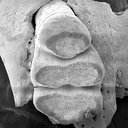
A new Desmodillus (Gerbillinae, Rodentia) species from the early Pliocene site of Langebaanweg (South-western Cape, South Africa)
Published online: 20/01/2017
Keywords:
Lower Pliocene; Muridae; Rodentia; RSA
https://doi.org/10.18563/pv.41.1.e1
Abstract
Situated in the Cape region of the Republic of South Africa (RSA), the paleontological site of Langebaanweg is dated to 5.1 Myr and is famous for having yielded an abundant vertebrate assemblage, including numerous rodent species from the Mio-Pliocene transition. Based on molar morphology and skull anatomy, the single Gerbillinae taxon identified at Langebaanweg and described in this paper is allocated to Desmodillus, which is a modern monotypic South African endemic genus. It is significant in being the oldest representative of the genus in Africa. We describe here a new species of this genus which is larger than the modern D. auricularis, but nevertheless retains some of its main characteristics, namely the shape of the maxilla and mandible, the presence of poorly fused alternating cusps, and no longitudinal crest. This taxon differs from modern South African Gerbilliscus representatives in some mandibular and maxillary characters, in the m1 prelobe cusp, and in having less fused cusps. Two fossil Gerbillinae discovered in the Upper Miocene of Africa and Asia, Abudhabia and Protatera, have been compared with the new species. We discuss their relationships with modern and Plio-pleistocene Gerbillinae and conclude that Abudhabia could be the sister taxon of Desmodillus and that around 6-5 Myr a vicariance event allowed Gerbillinae to diversify into modern Desmodillus in South Africa, and Gerbilliscus in East Africa. The murine/gerbilline ratio, which is a good indicator of rainfall, supports other proxies which suggest that at 5.1 Myr the climate in the Langebaanweg region was more humid than today.
PV article infos
Published in Vol 41-1 (2018)
|
PDF
S.I. Data
|

|
Un gisement à mammifères dans la formation lacustre d'âge Miocène moyen du Collet Redon près de St-Cannat (Bouches-du-Rhone). Implications stratigaphiques
Published online: 10/04/1979
Keywords:
France; Neogene; Rodentia
https://doi.org/10.18563/pv.8.5.327-341
Abstract
The new fauna of Collet Redon (Bouches-du-Rhône, France) is dated by three rodents: Megacricetodon aff. bavaricus, Democricetodon affinis mutilus and Peridyromys cf. hamadryas. They correlate this locality with Oggenhof and Ohningen in Bavaria (Western Germany). As the radiometric age of Ohningen is estimated between 14 and 13 M.Y., these three localities are of Serravallian age. This datation brings a complete readjusment of the stratigraphy of the section of Collet Redon formerly described by Collot and Combaluzier. The marine deposits with underly the continental formation with the mammal fauna, are Burdigalian. The angular unconformity between the marine and the continental deposits gives evidence of an episode of emersion on the margin of a sedimentary basin, with deformation and erosion. Owing to the newly discovered fauna, this geodynamical event is clearly settled within the regional geographical and chronological context. Lacustrine and continental deposits of such an age were up to now unsuspected in this area.
PV article infos
Published in Vol. 08, Fasc. 5 (1979)
|
PDF
|

|
Functional aspects of the evolution of rodent molars
Published online: 01/10/1980
Keywords:
Chewing; Muridae; Rodents; Wear facets
https://doi.org/10.18563/pv.9.ext.249-262
Abstract
The wear facets of primitive rodents can be homologized with those of primitive primates and ungulates. As in primates, the jaw movement was ectental, with an increased anterior component in the lingual phase (phase ll). The buccal phase (phase I) in rodents approaches the horizontal and it tends to be reduced in importance in comparison with the lingual phase. ln more advanced rodents the efficiency of grinding is increased by the development of additional cutting edges of enamel (e.g. enlargement of hypocone, development of mesoloph and lingual sinus). The buccal phase movement becomes lined up with the lingual phase movement to form a single oblique chewing stroke,resulting in planation of the crown. As the stroke becomes more longitudinal (propalinal) the enamel edges become more transverse. In Muridae propalinal chewing evolved before the loss of cusps, facets were reorientated and additional cusps developed.
PV article infos
Published in Vol. 9, Ext (1980)
|
PDF
|

|
Nouvelles données sur les mammifères du Thanétien et de l'Yprésien du bassin d'Ouarzazate (Maroc) et leur contexte stratigraphique.
Published online: 15/12/1998
Keywords:
early Paleogene; magnetostratigraphy; Mammals; Morocco; North Africa; Ouarzazatz basin; Systematics
https://doi.org/10.18563/pv.27.3-4.155-202
Abstract
New faunal and stratigraphical data on the vertebrates localities from the early Paleogene of the Ouarzazate Basin (Adrar Mgorn 1, Adrar Mgorn 1 bis et N'Tagourt 2), Morocco, are presented. A magnetostratigraphical study, the first for such early Paleogene Arabo-African mammal localities, and the discovery of probable remains of the nannofossil Discoaster support the Thanetian age of the Adrar Mgorn 1 site. The magnetostratigraphy suggests a slightly later age than was thought for the Paleogene formations of the local series of Tinerhir and for the vertebrate localities: late or latest Thanetian for Adrar Mgorn 1 and Adrar Mgorn 1 bis, middle Ypresian for N'Tagourt 2. It also indicates a lower position of the KT boundary in the series. Two tons of matrix recovered in the vertebrate sites have vielded new data on the micromammals. A damaged lower molar from N'Tagourt 2 is referable to Khamsaconus bulbosus and supports the proboscidean affinities of this species and especially possible relationships with bunolophodont taxa such as elephantiforms. A lower molar from Adrar Mgorn 1 bis belongs to a new form which can be identified as a plesiadapiform or an euprimate close to Altiatlasius koulchii though significantly larger. A new material from Adrar Mgorn 1 illustrates a new dilambdodont adapisoriculid species which is referable to Garatherium : ?Garatherium todrae n. sp. Another species referred to Garatherium is known in the locality (?Garatherium n. sp.). Garatherium is a new lineage from the Ouarzazate basin which crosses the Paleocene-Eocene boundary together with Palaeoryctes, Didelphodontinae gen. and sp. 2, Todralestes, and Afrodon, and it is the first Paleocene-Eocene lineage identified outside of this basin (Garatheríum is based on a species from El Kohol, Algeria). Among the Paleocene-Eocene lineages from the Ouarzazate basin, it should be also mentioned a new possible carnassial form (carnivoran or creodont; Adrar Mgorn 1), and an upper molar of Cimolestes cf. incisus (Adrar Mgorn 1 bis). The upper molar THR 168 previously reported as from an indeterminate didelphodontine is here identified as the M1/ of Afrodon chleuhi. The micromammal faunas from the Ouarzazate basin are positioned in the global chronological framework of the mammal localities from the Paleogene of the Arabo-African domain.
PV article infos
Published in Vol. 27, Fasc. 3-4 (1998)
|
PDF
|

|
Evolution et extinction des reptiles marins au cours du Mésozoïque.
Published online: 02/10/1995
Keywords:
Crocodiles; evolution; Extinctions; faunal assemblages; Helveticosaurs; Hupehsuchians; Ichthyoaurs; lizards; Marine Reptiles; Mesozoic; Nothosaurs; Pachypleurosaurs; Placodonts; Plesiosaurs; Snakes; Thalattosaurs; Turnovers; Turtles
https://doi.org/10.18563/pv.24.3-4.177-283
Abstract
An interpretation of the marine reptile fossil record, based on the existing litterature and complemented by the review of ancient collections and the study of new material, permits a better understanding of Mesozoic marine ecosystems. An inventory of the marine reptiles known from the Lower Triassic to the Paleocene is presented: 46 families, about 200 genera and 400 species have been recorded. This data base includes commentaries about systematics, stratigraphical ranges and geographical distribution of taxa. Marine reptiles include a mosaic of not necessarily closely related groups: ichthyosaurs, thalattosaurs, hupehsuchians, pachypleurosaurs, placodonts, nothosaurs, plesiosaurs, pliosaurs but also crocodiles, lizards, snakes, turtles. The diversity studies reveal that the fossil record of marine reptiles has been punctuated by two mass extinctions, during the Middle-Upper Triassic transition and at the Cretaceous-Tertiary boundary. The Jurassic-Cretaceous and Cenomanian-Turonian boundaries (the latter marked by the disappearance of ichthyosaurs) are potential crisis periods, but current data are not sufficient to reach conclusions. The Ladinian-Carnian transition is characterized by the disappearance of 64 % of families and affects essentially coastal forms. This extinction coincides with an important regressive phase. During the Upper Triassic, a faunal reorganisation within marine reptiles leads to the progressive disappearance of near-shore forms and to the development of pelagic groups. During the Maastrichtian-Danian crisis, 36% of families died out. Large-sized pelagic forms such as mosasaurs and elasmosaurs were the most affected and their extinction seems to have been rather sudden. On the other hand, pliosaurs and protostegid turtles became extinct, but were already declining. The survivors were near-shore forms such as crocodiles, snakes and some turtles and they may have taken refuge in freshwater environments. A break in the food chain based on phytoplankton is proposed as an extinction scenario for pelagic forms.
PV article infos
Published in Vol. 24, Fasc. 3-4 (1995)
|
PDF
|

|
Leptacodon nascimentoi n,sp., un nouveau Nyctitheriidae (Mammalia,Lipotyphla) de l'Eocène inférieur de Silveirinha (Baixo Mondego, Portugal)
Published online: 16/12/1996
Keywords:
Eocene; Leptacodon; Lipotyphla; Mammals; Nyctitheriidae; Portugal; Silveirinha
https://doi.org/10.18563/pv.25.2-4.275-286
Abstract
In this article is described a new species of Nyctitheriidae with primitive characters: Leptacodon nascimentoi n. sp. from the early Eocene of Silveirinha (Portugal).
PV article infos
Published in Vol. 25, Fasc. 2-4 (1996)
|
PDF
|

|
Contribution à l'étude des Cricétidés oligocènes d'Europe occidentale
Published online: 20/01/1972
Keywords:
Cricetidae; Europe; Oligocene
https://doi.org/10.18563/pv.5.1.1-44
Abstract
Of the ten cricetid species from the Oligocene of Western Europe, attributed until now to the genus Eucricetodon, only four prove to be utilizable - E. atavus, E. huberi, E. praecursor, E. collatum - to which it is possible to add two forms newly described: E. huerzeleri and E. quercyi. The evolullon of the genus Pseudocricetodon is also the subject of new observations. The study of the dental morphology allows us to distinguish in these two genera three lineages beginning in the middle Oligocene:
- Lineage P. montalbenensis-P. thaleri (from Montalban to Goderet), of small size, without
increase in size.
- LineageE. atavus-E. infralactorensis (from Hoogbulsel to Estrepouy), of middle size, with a regular increase in size.
- Lineage E. huerzeleri-E. haslachense (level of Montalban to that of Estrepouy), of large size, with an increase in size.
Two other forms are equally represented in these loealitles: Heterocricetodon aff. helbengi and Melissiodon quercyi. It has been possible to attribute a precise age (zone of "Cournon") to the last species, which has been defined by Schaub (l925) from material in the Old Quercy collections. The genera Pseudocricetodon, Eucricetodon, ? "Cricetodon", Leydimys, Eumys, differentiated at the beginning of the middle Oligocene in Europe, Asia and North America, seem to derive from a common ancestral group. The place of origin of this group could be situated in Asia.
PV article infos
Published in Vol. 05, Fasc. 1 (1972)
|
PDF
|

|
Premier signalement du Monachinae (Phocidae, Mammalia) dans le Sahélien (Miocène supérieur) d'Oran (Algérie)
Published online: 15/10/1981
Keywords:
Algeria; Late Miocene; Phocidae
https://doi.org/10.18563/pv.11.5.181-194
Abstract
Messiphoca mauretanica nov. gen., nov. sp. représente le premier Phocidae fossile recensé en Afrique du Nord. Provenant du gisement sahélien (Miocène supérieur) de Raz-el-Aïn (Algérie), il est connu par quelques os du membre antérieur (humérus, radius, ulna), quelques vertèbres dorsales et un crâne très fragmentaire. La description de cette forme nouvelle amène à considérer Messiphoca mauretanica comme un Monachinae archaïque proche de l'origine du groupe Pliophoca - Monachus. L'incidence de cette interprétation d'un Phocidae «pré-Messinien ›› sur la crise de salinité du Messinien est aussi envisagée.
PV article infos
Published in Vol. 11, Fasc. 5 (1981)
|
PDF
|

|
Les mammifères de Rians (Eocène inférieur, Provence)
Published online: 01/02/1981
Keywords:
Eocene; Mammals; Provence; Rians
https://doi.org/10.18563/pv.10.2.43-126
Abstract
The fossil mammals discovered in the quarry of Rians (Sparnacian, Provence) are described. Among these forms, Hyracotherium is interesting because of the little molarization of the lower premolars and its small size, and Diacodexis by its small size and very primitive astragalus ; they may be the most primitive representatives of their respective orders. Also, Proviverra eisenmanni n. sp. is the smallest and most primitive hyaenodontid yet described. Hyopsodus itinerans is the first species of this genus described France. Among other rare fossils is a new species of bat, a small palaeoryctid, and other forms not yet identified. Marsupials are varied. Several new species are present among the rodents. The fauna is well-balanced and rich in small hyopsodontid condylarths. It is stratigraphically situated at the
Dormaal reference-level, at the base of the early Eocene, and is considered equivalent to the late Clarkforkian of North America. The hypothesis is presented that new forms appearing at the beginning of the Wasatchian in North America migrated, in fact, at that time from Europe.
PV article infos
Published in Vol. 10, Fasc. 2 (1981)
|
PDF
|
|
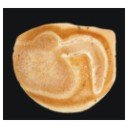
Eocene Teleostean Otoliths, Including a New Taxon, from the Clinchfield Formation (Bartonian) in Georgia, USA, with Biostratigraphic, Biogeographic,
and Paleoecologic Implications
Published online: 03/01/2022
Keywords:
climate; Congridae; Ophidiidae; Sciaenidae; tectonics
https://doi.org/10.18563/pv.45.1.e1
Abstract
Investigations of the Clinchfield Formation (middle Eocene, upper Bartonian) exposed at the Hardie Mine (Wilkinson County, Georgia, USA), produced 4,768 actinopterygian otoliths representing 14 taxa and increased the number of bony fishes threefold from the site. The somewhat limited richness was characterized by bonefishes, mud eels, conger eels, sea catfishes, cusk-eels, snooks, grunts, drums and croakers, and porgies. The assemblage had a relatively even distribution with Ophidiidae, Congridae, and Sciaenidae most common. Included in the otolith taxa was a new sciaenid genus and species, Eosciaena ebersolei, with unknown relationships to other Sciaenidae. The Clinchfield otoliths were compared to other middle and late Eocene in age otolith assemblages in Alabama, Mississippi, and Louisiana utilizing percentage similarity measurements. Analysis indicated that the Clinchfield otoliths were not greatly similar or greatly unlike the Moodys Branch and Yazoo Clay otolith assemblages. However, the Clinchfield showed little relationship to the slightly older Lisbon Formation in adjacent Alabama and is postulated to be related to global climatic and plate tectonic events. Biostratigraphically, the Clinchfield otolith taxa are essentially the same as the other formations except for the Lisbon, which has at least ten unique species. Abundances of Clinchfield otolith taxa indicate a possible sub-bioprovince in the eastern Gulf Coastal Plain. The Clinchfield otoliths indicate a tropical to perhaps subtropical, soft substrate, mainly normal marine to slightly reduced salinities, inner shelf (0–20 m) paleoenvironment with indications of proximal continental coastlines. This investigation represents an initial step in addressing the immensely understudied Paleogene otolith assemblages in Georgia.
PV article infos
Published in 45-1 (2022)
|
PDF
|
|
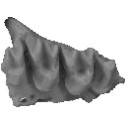
A new species of bat (Chiroptera: Vespertilionidae) from the early Oligocene global cooling period, Brule Formation, North Dakota, USA
Published online: 09/12/2019
Keywords:
Eocene-Oligocene global cooling; Mammalia; Oligocene; Plecotini; Quinetia
https://doi.org/10.18563/pv.42.2.e2
Abstract
We report the first confirmed fossil bats from North Dakota, including a new species referable to the Vespertilionidae represented by a maxilla with P4-M3 from the Brule Formation, Fitterer Ranch local fauna, early Oligocene, Whitneyan North American Land Mammal Age. Unassociated postcranial fragments of the humerus and femur also represent a vespertilionoid, but appear to reflect a different, unidentified species. The new taxon, Quinetia frigidaria sp. nov., is referred to the genus Quinetia, previously known only from approximately contemporaneous deposits in Europe. The new species is larger than Quinetia misonnei from the early Oligocene of Belgium. It is similar in some morphological characters to Chadronycteris rabenae (Chiroptera incertae sedis) of the late Eocene (Chadronian) of northwestern Nebraska and to Stehlinia species (?Palaeochiropterygidae) from the Eocene and Oligocene of Europe, but differs from each in morphological details of the dentition and maxilla. An unassociated talonid of a lower molar from Fitterer Ranch shows myotodont morphology, unlike the nyctalodont lower molars in Q. misonnei, and thus represents a second chiropteran taxon in the fauna. Quinetia frigidaria is a member of a Paleogene radiation of bats near the low point of the Eocene-early Oligocene decline in global temperatures, increased seasonal aridity, and loss of tropical floras from mid-latitude North America.
PV article infos
Published in Vol 42-2 (2019)
|
PDF
|

|
Sur les empreintes de pas des gros mammifères de l'Eocène supérieur de Garrigues-ste-Eulalie (Gard)
Published online: 01/10/1980
Keywords:
Eocene; Euzet; Footprints; Ichnofauna
https://doi.org/10.18563/pv.9.ext.37-78
Abstract
Is hereby described an impressive lchnoiauna belonging to the Lower to Middle Ludian of the Gard (S. France). The slab, already cleaned over a length of 18 m, is located near the top of the Potamides aporoschema lacustrine limestone (Lower Ludian, Euzet zone). It is therefore older than the Célas sandstone deposit, and still more than the Melanoides albigensis and M. acutus marly limestone corresponding to the Upper Levels of the Ludian stage. Although biostratigraphically older than the La Débruge and Montmartre zone, the biotope shows already a sampling of very tall Artiodactyles, Perissodactyles and Carnivorous. One of the most « majestic ›› Artiodactyles, Anopolotheriipus lavocati, nov., points out a huge size type. To mention also among the Ichnotypes described, 10, the big Perissodactyle Palaeotheriipus similimedius, nov., and the big Carnivorous Hyaenodontipus praedator, nov.
PV article infos
Published in Vol. 9, Ext (1980)
|
PDF
|

|
Contributions à l'étude du gisement miocène supérieur de Montredon (Hérault). Les grands mammifères. Avant propos.
Published online: 15/11/1988
Keywords:
Editorial; Mammalia; Montredon; Upper Miocene
https://doi.org/10.18563/pv.18.ext.1-2
Abstract
Le Mémoire Extraordinaire 1988 de PALAEOVERTEBRATA regroupe dix articles consacrés au gisement à mammifères du Miocène supérieur de Montredon (Hérault), connu et classique depuis la fin du siècle dernier, et auquel est lié le nom du savant paléontologue lyonnais Charles Depéret.
Cette monographie vient normalement à la suite de celle parue en 1982 dans PALAEOVERTEBRATA, dont les différents articles traitaient de la stratigraphie du gisement, et faisaient l'étude des différents groupes de micromammifères représentés dans la faune (insectivores, chiroptères, rongeurs).
View editorial
Published in Vol. 18, Ext (1988)
|
PDF
|

|
Fossil snakes from the Palaeocene of Sao José de Itaborai, Brazil.Part 1 Madtsoiidae, Aniliidae.
Published online: 15/12/1998
Keywords:
Aniliidae s.l.; Brazil; Coniophis; Hoffstetterella; Madtsoia; Madtsoiidae; middle Palaeocene; New taxa; Snakes
https://doi.org/10.18563/pv.27.3-4.109-144
Abstract
The middle Palaeocene of São José de Itaboraí (State of Rio de Janeiro, Brazil) has yielded a very rich and diverse snake fauna which includes Madtsoiidae, Aniliidae s.l., Boidae, Tropidophiidae s.l., Booidea incertae sedis, and Russellophiidae. The present article (part I) deals with Madtsoiidae and Aniliidae s.l. Madtsoiidae are represented by many vertebrae and a few skull bones. They comprise one new species assigned to the genus Madtsoia (M. camposi sp. nov.). However, the definition of the genus Madtsoia is unsatisfactory and the generic allocation might be provisional. A few elements, vertebrae only, belong to the Aniliidae s. l. Two taxa are referred to this latter group: Coniophis cf. C. precedens and Hoffstetterella brasiliensis gen. et sp. nov. The forthcoming part II will deal with Boidae.
PV article infos
Published in Vol. 27, Fasc. 3-4 (1998)
|
PDF
|

|
The fossil rabbit from Valdemino cave (Borgio Verezzi,Savona) in the context of western Europe Oryctolagini of Quaternary.
Published online: 15/12/1997
Keywords:
Lagomorpha; Mammals; North-western Italy; Oryctolagus; Plio-Pleistocene; Savona
https://doi.org/10.18563/pv.26.1-4.167-187
Abstract
The present research deals with the remains of a lagomorph found at Valdemino cave and comes to the conclusion that it is a rabbit with peculiar characteristics in comparison with the other known species Oryctolagus laynensis, O. lacosti and 0. cuniculus. We studied other fossil remains of rabbit populations from Villafranchían and middle Pleistocene deposits and compared them with data from the literature and with recent material. The analysis leads us to maintain two phylogenetic hypotheses about the history of Oryctolagini. The ñrst one, already formulated by Lopez Martinez, suggests that 0. cuniculus derives from O. laynensis,while the origin of O. lacostí is unknown; according to the second hypothesis 0. laynensis would be the common ancestor of two phyletic lineages, 0. lacosti and 0. cuniculus. In both cases the lagomorph from Valdemino would be the form derived from 0. lacosti, from which however it differs in peculiar characteristics. Since the rabbit from Valdemino survives until the beginning of Postgalerian, its disappearance may coincide with the retreat of 0. cuniculus from western Europe in Spain and, perhaps, in south-western France, before the last glaciation. O. cuniculus survived in Spain, from where it spread once again over western Europe as a result of man.
PV article infos
Published in Vol. 26, Fasc. 1-4 (1997)
|
PDF
|

|
La morphologie dentaire des Thalattosuchia (Crocodylia, Mesosuchia).
Published online: 15/12/1997
Keywords:
Dental morphology; Dental types; feeding habits.; Jurassic; Metriorhynchidae; Systematics; Teleosauridae; Thalattosuchia
https://doi.org/10.18563/pv.26.1-4.35-59
Abstract
The tooth morphology of the Thalattosuchia (marine crocodilians from the Jurassic and the Early Cretaceous) is analysed. The Callovian from Poitou and the Kimmeridgian from Quercy have yielded many remains of Metriorhynchus, Steneosaurus and Machimosaurus. These remains allow us to study the variations of tooth morphology during ontogenic growth, tooth replacement and the location of the teeth. We have defined different tooth types for these genera. In Metriorhynchus, the two tooth types defined do not coincide with the two groups recognized in the Callovian (broad-skulled and narrow-skulled metriorhynchids) but reflect the prey preferences of these forms. In Steneosaurus and Machimosaurus the five tooth types deñned are in agreement with the main taxa known from the Bathonian to the Early Cretaceous. This study allows to precise the function and the prey preference of the Thalattosuchia during the Jurassic and the Early Cretaceous.
PV article infos
Published in Vol. 26, Fasc. 1-4 (1997)
|
PDF
|

|
Un Haplobunodontidae nouveau Hallebune krumbegeli nov.gen. nov.sp. (Artiodactyla, Mammalia) dans l'Eocène moyen du Geiseltal près Halle (Sachsen-Anhalt, Allemagne)
Published online: 14/06/1995
Keywords:
Artiodactyla; Geiseltal; Germany; Mammal; Middle Eocene; new gen.; new sp.
https://doi.org/10.18563/pv.24.1-2.85-99
Abstract
A new genus and species of haplobunodontid artiodactyl, Hallebune krumbiegeli nov. gen. nov. sp., is described from the middle Eocene Geiseltal Fauna (Saxon-Anhalt, Germany). Its stratigraphic range is restricted to the MP 13 ("obere Mittelkohle") of the Geiseltalian. The material consists of seven fragments, representing both upper and lower jaws. It is indicated, that H. krumbiegeli was a small bunodont herbivore. The size and primitive character of the teeth suggest that the genus possibly is directly derived from Diacodexeidae.The new material forms the basis for reinterpreting the haplobunodontid phylogeny.
PV article infos
Published in Vol. 24, Fasc. 1-2 (1995)
|
PDF
|

|
Rythme et modalités de l'évolution chez les rongeurs à la fin de l'Oligocène-leurs relations avec les changements de l'environnement.
Published online: 15/12/2000
Keywords:
Environment; evolution; Oligocene; Rodents; Systematics
https://doi.org/10.18563/pv.29.2-4.83-360
Abstract
The analysis of oxygene isotope variations as well as paleobotanical data suggest that the Oligocene/Miocene boundary corresponds to a transitional period marked by floristical and climatic variations. During this period, the pyreneo-alpine tectonics has contribued to modify the geography and western Europe landscapes. Faunal changes (appearances, extinctions, migrations) are observed in different mammalian groups, notably in the rodents. A study of the evolutionary trends and patterns in paleogene rodents is involved for the period ranging from level MP 28 of the Late Oligocene to the Early Miocene, including the Oligo-Miocene boundary.
The Rodents fauna from the sites of Venelles (Bouches-du-Rhône District, France) and Thezels (Lot, France), previously mentionned in litterature, have been studied. The first description of the Eomyidae of La Milloque (MP 29) has been completed. These faunas are compared to those from various localities dating from the considered period. In La Milloque, a new representative of the Eomys species is described next to a form close to Rhodanomys hugueneyae ENGESSER, 1987. It is the Eomys milloquensis nov. sp., the likely descendant of Eomys quercyi COMTE & VIANEY-LIAUD, 1987. Two new species are also described in Thezels: Eucricetodon thezelensis nov. sp., resulting from a likely and local evolution of Eucricetodon praecursor (SCHAUB, 1925) from La Milloque, which, in the same geographic area, could be at the origin of Eucricetodon hesperius ENGESSER, 1985 from Paulhiac. Plesiosminthus admyarion nov. sp., quite distinct from Plesiosminthus schaubi VIRET, 1926, which announces Plesiosminthus myarion SCHAUB 1930. Venelles 'Plesiosminthus schaubi population is considered as a sub-species, named Plesiosminthus schaubi meridionalis nov. subsp. New phylogenetic patterns are proposed. Among the Eomyidae, a quantification of various features of the M1-2/ crown (hypsodonty, degree of abrasion, occlusal angle, state of development of the I and V anticlines), and a comparison with the occlusal diagram of the other teeth among various other populations allows a more efficient separation of Eomys and Rhodanomys genera. In Western Europe, and within this period, it finally does not seem possible to gradually connect the genus Eomys to the genus Rhodanomys. The evolution of the Eomys quercyi - milloquensis lineage seems to underline a similar evolution to that which may have led from the Eomys to the Rhodanomys form. The latter which appears totally accomplished at level MP 29 of the Oligocene is considered as an immigrant. If we compare the most representative species of the Venelles, Thezels, and Coderet sites, (i.e. Rhodanomys, Eucricetodon, Adelomyarion, Peridyromys, Plesíosminthus), it becomes impossible to confirm their biochronological separation. The noticeable differences between the populations may be interpreted as geographical variations. An explanation to these variations, and to fauna's evolution during the Late Oligocene and Early Miocene can be found in the environmental modifications, supported by isotopic, paleobotanical and sedimentologic analysis. A tentative reconstruction of the environments is attempted by the cenogram method. The analysis of the fluctuations of fauna's diversity shows variations which may be correlated to a drop in temperature at MP 29, during the Late Oligocene, followed by an increase in temperature along with an aridity phenomenom, during the basal Miocene (MN O).The confrontation of various methods give the opportunity of reconstituting and comparing the evolution of the environment of three sequences of sites chosen from different regions. Ecological affinities of various rodents' species are being examined. It is possible to consider that the integration of all the conclusions resulting from this study should lead to an explanation to the evolution of rodents for the period around the Oligocene-Miocene boundary. The site of Coderet- level 3- would be posterior to the latter, at the beginnig of the Miocene, and would mark the level MN 0 of the Aquitanian.
PV article infos
Published in Vol. 29, Fasc. 2-4 (2000)
|
PDF
|