
Miocene Bovidae (Mammalia) of the Siwaliks: Hypsodontinae and Bovinae
Pterosaurs from Coahuila
Paléoenvironnement des mammifères des Gour Lazib
Les sélaciens du Miocène de la région de Montpellier
Contribution à l'étude des genres Gliravus et Microparamys.
Muridae du Pliocène supérieur d'Espagne et du midi de la France.
Eocene (57) , Quercy Phosphorites (38) , Systematics (32) , Rodents (29) , Mammalia (27) , Rodentia (25) , Miocene (25)
|
Les rongeurs de Chéry-Chartreuve et Rocourt-Saint-Martin (est du bassin de Paris; Aisne, France). Leur place parmi les faunes de l'Eocène Moyen d'EuropeBernard Comte, Maurice Sabatier and Monique Vianey-Liaud
Published online: 15/12/2012 |
|
|
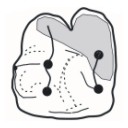
A late Eocene palaeoamasiine embrithopod (Mammalia, Afrotheria) from the Adriatic realm (Island of Rab, Croatia)Fabrice Lihoreau
Published online: 14/12/2023 |
|

|
Premier catalogue des specimens-types Paléontologiques déposés dans les collections de l'Université de Montpellier II (Sciences et Techniques du Languedoc)Bernard MarandatPublished online: 20/12/1994Keywords: Collections; Inventory; Type specimens; University Montpelllier II https://doi.org/10.18563/pv.23.ext.3-113 Abstract More than 400 paleontological type-specimens housed in the Montpellier University collections have been inventoried in this catalogue which includes charophytes, Paleozoic plants, brachiopodes, molluscs, arthropodes and vertebrates (selachians, amphibians, reptiles, birds and mammals). The vertebrates have been treated exhaustively in the catalogue and one can consider that it includes most of the type specimens deposited in the Montpelier II collections. PV article infos Published in Vol. 23, Ext (1994) |
|

|
First record of dinosaur eggshells and teeth from the north-west african Maastrichtian (Morocco).Géraldine Garcia
Published online: 15/12/2003 |
|

|
Additions to the elasmobranch fauna from the upper Cretaceous of New Jersey (middle Maastrichtian, Navesink Formation)Gerard R. Case and Henri Cappetta
Published online: 15/12/2004 |
|

|
Revision der Equoidea aus den Eozänen Braunkohlen des Geiseltales bel Halle (DDR).Jens L. Franzen and Hartmut HauboldPublished online: 15/04/1986Keywords: Eocene; Europe; Mammalia; Perissodactyla; Stratigraphy; taxonomy https://doi.org/10.18563/pv.16.1.1-34 Abstract The dentitions as well as one complete and several partial skeletons of Equoids from the Eocene lignite beds of the Geiseltal locality are revised. Instead of 13 species distinguished up to now 3 chronoclines with 5 species and 3 separate species are recognized (text. fig. 1). Propalaeotherium hassiacum HAUPT, 1925 is evolving into Propalaeotherium isselanum (CUVIER, 1824) between the levels of the « obere Unterkohle ›› and the « untere Mittelkohle ›› of the Geiseltal section. Propalaeotherium argentonicum GERVAIS, 1849 is shown to be present in the « untere Unterkohle ››, whereas Lophiotherium pygmaeum (DEPERET,1901) occurs in the « obere Mittelkohle ›› and in the « oberes Hauptmittel ››. Plagiolophus cartieri STEHLIN, 1904 appears during the transition from the « Mittelkohle ›› into the « Oberkohle ›› as the earliest true Palaeothere. Therefore the « Oberkohle ›› is already regarded as Upper Eocene. This is corroborated by the occurrence of a phyletic descendant of Propalaeatherium parvulum (Propalaeotherium n.sp.) in the middle and upper "Oberkohle " because this species appears otherwise for the first time at the mammal level of Lissieu. On the other hand Propachynolophus gaudryz (LEMOINE, 1878) described by Matthes (1977) from the « untere Unterkohle ›› turns out te be in fact a Phenacodont. Thus the decisive argument for classifying the « untere Unterkohle ›› as Lower Eocene has to be dropped. Biostratigraphically the « Unterkohle ›› and the «Basishauptrnittel ›› correspond with the lower Middle Eocene (mammal level of Messel), whereas the «unteres Hauptmittel ›› and the « untere Mittelkohle ›› are equivalent to the middle part of the middle Eocene (mammal level of lssel), and the « obere Mittelkohle ›› together with the « oberes Hauptmittel ›› coincide with the upper Middle Eocene (mammal level of Bouxwiller). PV article infos Published in Vol. 16, Fasc. 1 (1986) |
|

|
Origins of avian reproduction: answers and questionsfrom dinosaurs.David J. Varricchio
Published online: 15/12/2003 |
|

|
Les rongeurs de l'Eocène inférieur et moyen d'Europe Occidentale; Systématique, phylogénie, biochronologie et paléobiogéographie des niveaux-repères MP 7 à MP 14.Gilles Escarguel
Published online: 15/12/1999 |
|

|
The skull of Arsinoitherium (Mammalia, Embrithopoda) and the higher order interrelationships of ungulatesNicholas CourtPublished online: 17/12/1992Keywords: Arsinoitherium; PHYLOGENY; Skull; Ungulate https://doi.org/10.18563/pv.22.1.1-43 Abstract Detailed anatomical description of arsinoithere cranial remains from the Lower Oligocene, Fayum Depression, Egypt, provides the basic data for a systematic investigation. All cranial and some postcranial features are assessed from a phylogenetic standpoint. Several soft tissue characters are then added to a cladistic analysis based on 54 derived ungulate morphological characters. The resulting phylogenetic hypothesis implies that perissodactyls, sirenians, proboscideans and arsinoitheres constitute a monophyletic unit (5 synapomorphies). However, increasing the tree length by 3 steps reveals a closer association between hyraxes and perissodactyls. Nevertheless, 13 synapomorphies link proboscideans, sirenians and arsinoitheres to the exclusion of all other ungulates. Form of the sphenopalatine and ethmoid foramina, recurved posttympanic process, absence of a fenestra rotundum in the petrosal, vestigial paroccipital process of the exoccipital and the highly unusual absence of a hypoglossal foramen in the skull, imply a robust sister-group relationship between arsinoitheres and proboscideans. In this analysis artiodactyls share only one derived character with all other ungulates studied. Monophyly of Ungulata, including Artiodactyla, is therefore only weakly supported. It is argued that pedal anatomy of hyraxes is non-homologous with that of Tethytheria. Arsinoitherium should now be classified within Tethytheria, sharing a sister-group relationship with Proboscidea. Hyraxes are excluded, thus refuting the concept of Paenungulata. However, monophyly of the wider concept, Pantomesaxonia, containing hyraxes, perissodactyls, sirenians, proboscideans and now, arsinoitheres, is supported by this study. PV article infos Published in Vol. 22, Fasc. 1 (1992) |
|

|
Etude paléoneurologique comparative de Parabos Cordieri (De Christol), un bovidae (Mammalia, Artiodactyla) du Pliocène d'Europe Occidentale.Catherine GromolardPublished online: 31/03/1982Keywords: Bovidae; endocranial cast; Europe; Pliocene https://doi.org/10.18563/pv.12.2.57-74 Abstract A skull of Parabos cordieri, undamaged by fossilisation, allows us to make an endocranial cast, which is compared to those of Bos taurus, Boselaphus tragocamelus and Hippotragus equinus. These are studied by general form (shape, volume, « rolling-up›› and inclination), and by detailed morphology (gyri and sulci patterns, rete mirabile, importance of rhinencephalon and cerebellum). PV article infos Published in Vol. 12, Fasc. 2 (1982) |
|
|
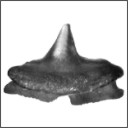
Batoids (Rajiformes, Torpediniformes, Myliobatiformes) from the Sülstorf Beds (Chattian, Late Oligocene) of Mecklenburg, northeastern Germany: a revision and description of three new speciesThomas ReineckePublished online: 24/06/2015Keywords: Batoids; Chattian; Elasmobranchii; North Sea Basin; Oligocene https://doi.org/10.18563/pv.39.2.e2 Abstract Bulk-sampling of fossil-rich tempestites from the Chattian Sülstorf Beds of PV article infos Published in Vol.39-2 (2015) |
|
|
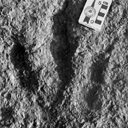
Nouvelles données sur les Ichnites de dinosaures d'El Bayadh (Crétacé Inférieur, Algérie)Mostefa Bessedik
Published online: 16/12/2008 |
|

|
Problems of classification as applied to the RodentiaAlbert E. WoodPublished online: 01/10/1980Keywords: https://doi.org/10.18563/pv.9.ext.263-272 Abstract A classification should be both usable and useful,not too complex either in the amount of splitting or in the number of hierarchies involved, and not so simple as to give a false assurance of knowledge of relationships. Classifications are only possible because we do not have complete knowledge of the evolution of the organisms concerned because gaps in the record are necessary to allow the separation of the various taxa. Rodent classification is complicated by the large number of organisms involved and by the geat amount of parallelism that has taken place in the evolution of any and all features. If several independent features are characteristic of a certain taxon, should an effort be made to define the group on the basis of all the features, or should only one be selected as the determinant ? Unless the evolution of the several features was closely linked, the former solution will sooner or later lead to insurmountable problems. PV article infos Published in Vol. 9, Ext (1980) |
|

|
Les crocodiliens paléogenes du Tilemsi (Mali): un aperçu systématiqueEric Buffetaut
Published online: 01/10/1980 |
|

|
Book of Abstracts of the 20th Annual Conference of the European Association of Vertebrate Palaeontologists, 26th June – 1st July 2023, Sabadell (Barcelona), SpainDavid M. Alba
Published online: 15/06/2023 |
|

|
La poche à phosphate de Ste-Néboule (Lot) et sa faune de vertebres du Ludien supérieur. 9- Primates et ArtiodactylesJean SudrePublished online: 25/09/1978Keywords: Eocene; Quercy Phosphorites https://doi.org/10.18563/pv.8.2-4.269-290 Abstract La faune d'artiodactyles de Ste-Néboule, qui comprend neuf espèces, présente de nombreux PV article infos Published in Vol. 08, Fasc. 2-4 (1978) |
|

|
Les rongeurs du Miocène moyen et supérieur du MaghrebJean-Jacques Jaeger
Published online: 15/05/1977 |
|

|
The Quaternary avifauna of Crete, Greece.Peter D. WeesiePublished online: 01/09/1988Keywords: Avifauna; Crete; Quaternary; Systematics https://doi.org/10.18563/pv.18.1.1-94 Abstract Pleistocene bird fossils have been studied from nine localities on Crete. Part of this material was described earlier by the author (Weesie, 1982) and will not be treated here in extenso, the results will be incorporated. More than one third of the over 10,000 fossil bird bones available could be identified ; they were found to represent at least 65 bird species. The following species of the Pleistocene Cretan avifauna are new to the fauna of Crete : Branta ruficollis, Haliaeetus albicilla, Gyps melitensis, Aquila chrysaetos simurgh n. ssp., Ketupa zeylomensis, Aegolius funereus, Dendrocopos leucotos, Zoothera dauma, Turdus iliacus and Pyrrhula pyrrhula. The Pleistocene Cretan avifauna differs less from comparable mainland avifaunas than (fossil) avifaunas from oceanic islands do. Still, the Pleistocene Cretan avifauna has two qualities that are characteristic of island avifaunas : the almost complete absence of a group of birds (the Galliformes) and the presence of two endemic (sub)species : the giant eagle Aquila chrysaetos simurgh n. ssp. and the long-legged owl Athene cretensis (Weesie, 1982). The new subspecies is described in the present study. PV article infos Published in Vol. 18, Fasc. 1 (1988) |
|

|
Pronycticebus neglectus - an almost complete adapid primate specimen from the Geiseltal (GDR)Urs Thalmann, Hartmut Haubold and Robert D. MartinPublished online: 04/12/1989Keywords: Adapiformes; Eocene; Paleoecology; PHYLOGENY; Pronycticebus neglectus https://doi.org/10.18563/pv.19.3.115-130 Abstract In the course of the current revision of adapid primates from the Eocene Geiseltal, an almost complete specimen was found in the Geiseltal Museum collections. The fossil, the most complete adapid specimen so far discovered in Europe, has been determined as Pronycticebus neglectus n. sp. PV article infos Published in Vol. 19, Fasc. 3 (1989) |
|

|
Contributions à l'étude du gisement Miocène supérieur de Montredon (Hérault). Les grands mammifères. 4 - Les artiodactyles Suidae.Léonard GinsburgPublished online: 15/11/1988Keywords: Artiodactyla; France; Mammalia; Montredon; Upper Miocene https://doi.org/10.18563/pv.18.ext.57-64 Abstract There is only one suid known in the Upper Miocene of Montredon (Hérault): Microstonyx (Limnostonyx nov. subgen.) antiquus (KAUP). It is differenciated from Microstonyx major by the presence of upper and lower canines which are considerably longer and biger. Its presence at Montredon corroborates the palustrine habitat for the species. PV article infos Published in Vol. 18, Ext (1988) |
|
