|
Contribution à la classification des pistes de vertébrés du Trias: Les types du Stormberg d'Afrique du Sud (1).
Published online: 16/10/1972
Keywords:
Footprints; South Africa; Stormberg; Trias
https://doi.org/10.18563/pv.5.ext
Abstract
Cet article explore les pistes fossiles de vertébrés du Stormberg (Trias, Afrique du Sud), révélant une diversité ichnologique inédite avec 64 ichnotypes classés en tridactyles, tétradactyles et pentadactyles. Les découvertes incluent des reptiles bipèdes comme Qemetrisauropus et Prototrisauropus, dont les empreintes suggèrent des adaptations évolutives vers la bipédie, ainsi que des pentadactyles géants comme Pentasauropus, annonçant les futurs sauropodes. L’étude combine ichnologie et restes osseux pour reconstituer des écosystèmes triasiques riches, où flore (fougères, conifères) et faune témoignent d’une transition écologique majeure avant l’essor des dinosaures.
PV article infos
Published in Vol. 5, Ext (1972)
|
PDF
|
|
Angolabatis nom. nov.,a replacement name for the Cretaceous genus Angolaia Antunes & Cappetta, 2002 (Chondrichthyes: Rajiformes), a preoccupied name.
Published online: 15/10/2006
Keywords:
Angola; Campanian/Maastrichtian; homonymy; Hypsobatidae; nomen novum; Rajiformes
https://doi.org/10.18563/pv.34.e13
Abstract
In 2002, Antunes & Cappetta published several new taxa (genera and species) in a paper on Cretaceous elasmobranch faunas from Angola. One of the new genera was named Angolaia (Rajiformes, Hypsobatidae; type-species: Angolaia benguelaensis Antunes & Cappetta, 2002, Late Campanian/Early Maastrichtian of Angola). Recently, Dr. Christian Kammerer kindly informed us that the genus Angolaia was preoccupied by a cicadellid homoptere (Insecta), published by Linnavuori & Al-Ne'amy, 1983. So, according to mIes of the International Code of Zoological Nomenclature (ICZN 1999, articles 52, 60) this name became unavailable. Consequently, the Rajiformes genus Angolaia is a junior homonym, invalid and must be rejected. In replacement, we propose the new name Angolabatis.
PV article infos
Published in Vol. 34, Fasc. 1-2 (2006)
|
PDF
|
|
Old world hemiones and new world slender species (Mammalia, Equidae)
Published online: 16/12/2008
Keywords:
Amerhippus; biometry; Equus; Holocene; New World; Old World; Osteology; Pleistocene; Pliocene
https://doi.org/10.18563/pv.36.1-4.159-233
Abstract
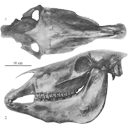
Morphological and biometrical description of skulls, teeth, and limb bones of extant and fossil Old World herniones (including E. hydruntinus) and of New World 'stilt-Iegged' and other slender species from Blancan to Holocene. An Appendix presents ways in which the approximate size of some missing bones or dimensions may be deduced from available ones.
The discussed and/or illustrated fossils were found in Bolivia (Tarija), Canada (Yukon), China (Choukoutien, Gulongshan, Jiling, Loufangzi), Ecuador (Oil Fields), Ethiopia (Melka Kunturé), France (Lunel-Viel), Germany (Süssenborn), Greece (Agios Georgios, Petralona), Hungary (Dorog), Italy (Romanelli), Mexico (Cedazo, San Josecito), Mongolia (Sjara-osso-gol), Spain (Venta Micena), ex-Soviet Union (Akhalkalaki, Binagady, Chokurcha, Chukochya, Kabazi, Kolyma, Krestovka, Kurtak, Staroselie, Tologoj), USA (Alaska, Arkalon, Cedar Meadow, Channing, Conkling, Dry Mountains, Hay Springs, Leisey Shell Pit A, Lissie Formation, Natural Trap, Pool Branch, Powers Ranch, Rock Creek, San Diego, Santo Domingo, Seymour Formation, Shelter, Slaton, Trinity River). Numerous raw or statistically elaborated data are given in Tables.
There is no evidence for the existence of Old World hemiones in the New World nor of 'stilt-Iegged' equids in the Old World. The first 'stilt-Iegged' equid was found at Santo Domingo, New Mexico, and is believed to be Late Blancan. It was probably at the origin of E. calobatus (Arkalon, Rock Creek) and of the smaller E. semiplicatus (Channing, Rock Creek). Slender, but not 'stilt-Iegged', equids found at Natural Trap, Wyoming, ca. 12 ky ago belong to Amerhippus. AlI these species share with Oid World Sussemiones (and some hemiones) peculiar patterns on the lower cheek teeth.
The slender Equus sp. B of Leisey Pit A, Florida, ca. 1.2 Ma, as weIl as Amerhippus francisci and E. tau (probably a senior synonym of E. quinni) share conventional lower cheek teeth patterns. The skulls of A. francisci and E. tau, however, are quite different.
Paleontological data suggest a common origin of Amerhippus, Sussemiones, and 'stilt-Iegged' equids during the late Blancan. Old World hemiones seem to have differentiated later.
PV article infos
Published in Vol. 36, Fasc. 1-4 (2008)
|
PDF
|
|
Fossil snakes from the Palaeocene of São José de Itaboraí, Brazil Part III. Ungaliophiinae, Booids incertae sedis, and Caenophidia. Summary, update and discussion of the snake fauna from the locality
Published online: 16/12/2008
Keywords:
booid-grade incertae sedis; Brazil; Caenophidia; New taxa; Palaeocene; Russellophiidae; Snakes; tropidophiids; Ungaliophiinae
https://doi.org/10.18563/pv.36.1-4.37-73
Abstract
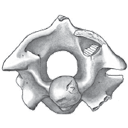
Aside from Madtsoiidae, anilioids, and Boidae that were studied previously, the middle Palaeocene of ltaborai (BraziI) has produced Ungaliophiinae ("tropidophiids"), booid-grade snakes incertae sedis, and a possible Russellophiidae (Caenophidia) that are described in the present article. This article is the third and final report on the snakes from the locality. The Ungaliophiinae (Paraungaliophis pricei gen. et sp. nov.) are rare whereas the booid-grade snakes incertae sedis (ltaboraiophis depressus gen. et sp. nov., Paulacoutophis perplexus gen. et sp. nov.) are more frequent. A single vertebra is referred to the Russellophiidae (Caenophidia) with reservation. An update of the whole fauna of snakes from ltaborai is provided. Hechtophis austrinus that was tentatively referred to the erycine Boidae is now regarded as a Boidae incertae sedis. Most snakes from Itaborai are known only from the locality. Astonishingly, only the ailioids Coniophis cf. C. precedens gives possible evidence of interchanges between South and North America. The fauna of snakes from Itaborai, as well as the other Palaeocene faunas of snakes from South America are distinct from those of the Cretaceous and the Eocene of South America; they appear to be more different from the Cretaceous faunas than from those of the Eocene. The fauna from Itaborai is the richest and most diverse assemblage of snakes from the Palaeocene worldwide; it shares only a few taxa with other Palaeocene localities.
PV article infos
Published in Vol. 36, Fasc. 1-4 (2008)
|
PDF
|
|
Miocene Bovidae (Mammalia) of the Siwaliks Part 2: Antilopinae
Published online: 01/01/1970
Keywords:
Bovidae; Miocene; Siwaliks; horn cores
https://doi.org/10.18563/pv.49.2.e1
Abstract
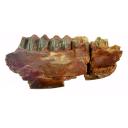
The fluvial sediments of the Siwaliks in northern Pakistan contain a geologic and paleontological record encompassing the Miocene and Pliocene. The sediments, which are thousands of meters thick, have abundant vertebrate and invertebrate fossils from multiple horizons. Fossils were initially discovered in the Siwalik Hills of India in 1832 and there are collections of Siwalik fossils not only in the Museum of the Geological Survey of India, but also in various European, British, and American museums. Renewed collecting in northern Pakistan in collaboration with the Geological Survey of Pakistan has now added over 10,000 bovid fossils to a new collection in Islamabad. The fossils include many isolated horn cores and occasional skulls, as well as teeth and postcranials. Here we discuss material belonging to the Antilopinae, recognizing fifteen species belonging to at least three tribes. Five of the fifteen have previously been named, while an additional two have cranial material suitable for defining a new species. The remaining eight are known from cranial material that allows us to distinguish them from other Siwalik bovids, but in most instances they are of doubtful generic identity and we think may belong to previously recognized taxa from other geographic regions. One (?Protragelaphus sp.) probably belongs to an unnamed species, but because the available material is inadequate for defining a new species, we do not name it at this time. The Antilopini predominate in the fossil collections, both in terms of number of species and number of specimens.
PV article infos
Article state: in_press
|
PDF
S.I. Data
|

|
Les Issiodoromyinae (Rodentia, Theridomyidae) de l'Eocène supérieur à l'Oligocène supérieur en Europe occidentale
Published online: 15/05/1976
Keywords:
climate; Faunal turnover; Paléogène
https://doi.org/10.18563/pv.7.1-2.1-115
Abstract
Based on material from 30 localities, morphologic dental, cranial and biometric analyses have permitted the characterization of two parallel Issiodoromyine lineages, and also the definition of diverse species representing several evolutive stages. Thus it is that new lineages complete the contribution made by the Theridomyinae and Cricetidae and permit, for the Quercy in particular, additional precision in the biochronologic succession of the localities. One of the lineages is limited to the genus Pseudoltinomys LAVOCAT; the other evolves from the genus Elfomys HARTENBERGER to the genus Issiodoromys BRAVARD in GERVAIS. The latter is affected by profound anatomical changes due to a functional modification of the mastication apparatus. These changes seem to be able to be put in relation with the aridification and cooling of the climate at the end of the Eocene. At the end of the middle Oligocene, a new chewing structure is achieved. It is found in diverse living rodents that inhabit a rather arid steppe environment (Cavia, Pedetes, Ctenodactylus). To these supposed nearby ecologic conditions, these rodents have responded in a convergent fashion. It is possible to attribute to the extreme specialization of Issiodoromys its incapacity to adapt to the new climatic crisis of the end of the Oligocene. The arrival of immigrants may be considered as another cause of its disappearance at this time, complementary or not with the first.
PV article infos
Published in Vol. 07, Fasc. 1-2 (1976)
|
PDF
|

|
Sur les Condylarthres Cernaysiens Tricuspiodon et Landenodon (Paléocène supérieur de France)
Published online: 01/10/1980
Keywords:
Arctocyonidae; Condylarths; Late Paleocene; Tricuspiodontidae
https://doi.org/10.18563/pv.9.ext.127-166
Abstract
The numerical importance of the Condylarths in the Cernaysian fauna is discussed. The Condylarth family, Tricuspiodontidae, is reviewed in the light of new material and its close relationships to the Phenacodontidae is suggested ; one new species is recognized : Tricuspiodon sobrinus. European Arctocyonidae are reviewed and the recentclassification of Van Valen is briefly commented on. Also, the arctocyonine Landenodon is described for the first time in Thanetian (Late Paleocene) sediments ; two new species are proposed : T. lavocati and T. phelizoni.
PV article infos
Published in Vol. 9, Ext (1980)
|
PDF
|

|
Une faune du niveau d'Egerkinger (MP 14; Bartonien inférieur) dans les phosphorites du Quercy (Sud de la France)
Published online: 18/12/1990
Keywords:
Biochronology; Early Bartonian; Eocene; evolution; Mammals; New taxa; Quercy
https://doi.org/10.18563/pv.20.1.1-32
Abstract
The Laprade fauna is chronologically situated between those from Egerkingen and Lissieu and consequently, is close to the MP 14 reference-level of the European mammalian biochronological scale (Symposium of Mainz, 1987).
This new fauna is presently the oldest known in the Quercy phosphorites, formerly the Le Bretou fauna (MP 16) was considered as the oldest one. The Laprade fauna includes 21 species which belong in 7 mammalian orders (Marsupialia: Amphiperatherium bastbergense, Amphiperatherium goethei; Apatotheria: Heterohyus (Gervaisyus) pygmaeus nov. subgen., nov. sp.; Lipotyphla: Saturninia cf. mamertensis, Saturninia cf. intermedia; Chiroptera: Vespertiliavus lapradei nov. sp.; Rodentia: Protadelomys cf. lugdunensis, Elfomys nov. sp.; Primates: Nannopithex cf. filholi, cf. Pseudoloris or Pivetonia; Perissodactyla: ?Palaeotherium ?castrense, small-sized Palaeotherium sp., Plagiolophus sp., Anchilophus sp.; Artiodactyla: Dichobune cf. robertiana, Mouillacitherium cartieri, Tapirulus cf. depereti, Mixtotherium priscum, Pseudamphimeryx schlosseri, and Artiodactyla indet). Sixteen of these species are mentioned for the first time from the Quercy faunas.
The recognition of a new apatemyid, Heterohyus (Gervaisyus) pygmaeus nov. subgen., nov. sp., attests to an early origin of a lineage known in the Late Eocene. The emballonurid bat Vespertiliavus lapradei nov. sp. is presently the earliest record of this genus and family. This Auversian fauna leads to discuss the age of taxa showing archaic features. These taxa were defined on specimens collected in the Quercy during the last century and have never been found in the Quercy localities recently investigated. This fauna bears also evidence of a karstic filling episode older than those previously dated by fossils in the Quercy Jurassic.
PV article infos
Published in Vol. 20, Fasc. 1 (1990)
|
PDF
|

|
Schmelzmikrostruktur in den inzisiven alt-und neuweltlicher histricognather nagetiere
Published online: 15/12/1992
Keywords:
Africa; Caviomorpha; Ctenodactyloidea; Deseadan; Enamel microstructure; Hunter-Schreger bands; Hystricognathi; Incisors; Ischyromyoidea; multiserial; Paleobiogeography; pauciserial; Phiomorpha; Rodentia; South America
https://doi.org/10.18563/pv.21.ext.1-168
Abstract
Enamel microstructure in the incisors of Old- and New World hystricognath rodents:
The incisor enamel microstructure in more than 100 genera of fossil and Recent hystricognath and sciurognath rodents was studied. A multiserial schmelzmuster is present in the Hystricognathi, the Ctenodactylidae, advanced Chapattimyidae, and in Pedetes. A redefinition of pauciserial and multiserial HSB is given that makes the two enamel types unambiguously distinguishable which apparently represent well defined evolutionary levels. In the pauciserial Schmelzmuster the IPM is thicker than in the multiserial one. In pauciserial HSB the IPM always surrounds each prism, and the crystallites of the IPM run parallel to prism direction; transition zones between HSB are lacking; the inclination of the HSB is normally very low and the prism cross sections are not flattened but somewhat irregular. The number of prisms per HSB is no good distinctive character for pauciserial and multiserial HSB, since there exists a wide overlap. The pauciserial schmelzmuster is primitive, the multiseiial derived because: 1. the pauciseiial schmelzmuster appears earlier in the fossil record in the most primitive rodents (Paramyids s.l. and Ctenodactyloids); 2. the Eocene Ctenodactyloidea show pauciserial HSB but the Oligocene and younger ones are characterized by multiserial HSB; 3. in the outgroup comparison, the Eurymylidae (Mixodontia) show pauciserial HSB; 4. biomechanically, multiserial HSB strenghten the enamel better than pauciserial HSB, since their IPM runs nearly always in an angle of 45° or more to the prisms.
In multiseríal HSB three subtypes can be distinguished which are differentiated by the IPM orientation. Primitive is a (rarely strict) parallel or acute angular, anastomozing IPM, and derived is an interrow sheet-like ("plattenartige") IPM. This evolutionary polarity is indicated by enamel evolution in the Ctenodactylidae which show an acute angular IPM in the Oligocene and a rectangular interrow sheet-like IPM since the Miocene. Among the Caviomorpha a rectangular interrow sheet-like IPM is restricted to the Octodontoidea; therefore they must be considered derived in terms of their enamel structure. The first multiserial HSB in rodent incisors appear in phiomyids or chapatrimyids from the Upper Eocene of Algeria. The IPM is acute angular and anastomozing. The worldwide next younger multiserial HSB are found in Lower Oligocene phiomyids of Fayum, Egypt There already a rectangular interrow sheet like IPM is present (in Metaphiomys) besides the acute angular anastomozing IPM.
The first Caviomorpha from the Deseadan (Oligocene-Miocene) likewise show already acute angular anastomozing IPM (e.g. Scozamys) and rectangular interrow sheet-like IPM (Platypittamys). Therefore the first Caviomorpha cannot be positioned close to a transition from pauciserial to multiserial HSB. In none of the potential caviomorph ancestors from southern North America multiserial HSB or transitional stage between pauciserial and multiserial HSB could be found. The similarities between the enamel types of the Fayum rodents and the rodents from the Deseadan of South America make a derivation of the Caviomorpha from Paleogene North African phiomorph rodents or their direct ancestors most probable. This supports at the same time a descent of the platyrrhine Primates from North African anthropoids.
PV article infos
Published in Vol. 21, Ext (1992)
|
PDF
|

|
Paleogene faunal assemblage fron Antofagasta de la Sierra (Catamarca Province, Argentina).
Published online: 15/12/1997
Keywords:
Argentina; Faunal assemblage; Mammalia; Middle Eocene; Reptilia
https://doi.org/10.18563/pv.26.1-4.61-81
Abstract
The Paleogene faunal assemblage from Antofagasta de la Sierra (Catamarca, Argentina), is here presented, both in its geological and systematic aspects. The fossil bearing levels are referred to the Geste Formation (Pastos Grandes "Group"). The described specimens belong to the Classes Reptilia (Orders Crocodylia, Serpentes and Chelonii) and Mammalia (three taxa from the Superorder Marsupialia, representatives of the Orders Edentata, Condylarthra, Pyrotheria and Astrapotheria, and six families of the Order Notoungulata). This fauna is referred to the Mustersan Age, which in Patagonia represents the Middle Eocene. Such chronologic assignment is based on the presence of characteristic taxa, their evolutionary stage and on stratigraphic evidence. Finally, a brief comparison with other faunal assemblages from the Early Tertiary of Argentina and Chile, is presented.
PV article infos
Published in Vol. 26, Fasc. 1-4 (1997)
|
PDF
|

|
La palichnofaune de vertébrés tétrapodes du permien supérieur du Bassin de Lodève (Languedoc-France).
Published online: 15/09/2000
Keywords:
Footprints; France; Languedoc; Lodève basin; new ichnotypus; Saxonian; Upper Permian
https://doi.org/10.18563/pv.29.1.1-82
Abstract
Near "la Lieude", in the Lodève basin, more than a thousand of footprints are distributed in a twenty of trackways which amounts to 220 m length. They have been found on calcareous siltstone level in the B site named also "Réserve Naturelle Volontaire". This last is located in the Saxonian summit dated Upper Permian. "La Lieude" tracks are described by using statistical methods then they are compared with others from the world Permian. What allows to distinguish 4 following ichnotaxa: Lunaepes ollierorum nov.ichnosp., Merifontichnus thalerius nov. ichnogen. and nov. ichnosp., Planipes brachydactylus nov.ichnosp. and Brontopus circagiganteus nov. ichnosp. All these traces are attributed with possibility or probability to Therapsida or to Therosauria, except Brontopus circagiganteus nov. ichnosp. that could be due to Caseamorpha. All these animals whose sizes have been estimated between l and 5 m lived probably in a playa environment.The biological and sedimentological data from "la Lieude" footprints levels compared with informations provided by the tracks orientations, suggest the following scenario. Animals coming from the North have crossed a sandy channel bank with plants zones by directing to the South for the majority. Maybe, they were going to the lacustrine part of the playa, close to "la Lieude" footprints that they have just trampled on.
PV article infos
Published in Vol. 29, Fasc. 1 (2000)
|
PDF
|

|
The evolution of the molar pattern of the Erethizontidae (Rodentia,Hystricognathi) and the validity of Parasteiromys Ameghino, 1904.
Published online: 15/06/1999
Keywords:
Argentina; Erethizontidae; Hystricognathi; Miocene; Molar evolution; Porcupines; Rodentia; Systematics
https://doi.org/10.18563/pv.28.1.53-73
Abstract
The genus Parasteiromys AMEGHINO, 1904 is revalidated, and P. friantae sp. nov. (Hystricognathi, Erethizontidae) from Colhuehuapian (early Miocene) sediments of the southern cliff of Colhue-Huapi Lake (Province of Chubut, Argentina), is described. The molar morphology of these taxa and of living porcupines adds new elements to understand the dental evolution of the Erethizontidae, and to propose the hypothetical ancestral molar pattern for this family. This pattern does not correspond to any of the morphologies traditionally proposed as ancestral for South American hystricognathous rodents. The proposed pattern is characterized by a metaloph disconnected from the posteroloph and oriented towards the hypocone, and the third loph incompletely developed with the lingual portion homologous to the mesolophule of Baluchimyinae (Chapattimyidae) from the Miocene of Pakistan. The inferred steps of the molar evolution of erethizontids towards the pentalophodont condition, considered derived for the family, are illustrated. This study strengthens the hypothesis placing erethizontids in a basal position among rodents of the suborder Hystricognathi.
PV article infos
Published in Vol. 28, Fasc. 1 (1999)
|
PDF
|
|
New remains of the very small cuckoo, Chambicuculus pusillus (Aves, Cuculiformes, Cuculidae) from the late Early/early Middle Eocene of Djebel Chambi, Tunisia
Published online: 15/02/2016
Keywords:
Cuckoos; Eocene; Fossil bird
https://doi.org/10.18563/pv.40.1.e2
Abstract
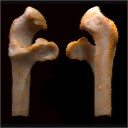
Abstract: A very tiny cuckoo, Chambicuculus pusillus, was recently described after a few fragments of tarsometatarsi from the late Early/early Middle Eocene of Djebel Chambi, Tunisia. New remains, notably a coracoid, confirm the attribution of this genus to the recent family Cuculidae. This coracoid shows a very elongate and strap-like processus procoracoideus. This morphological feature is otherwise only known in the family Cuculidae. The characteristics of the coracoid and tarsometatarsi show that Chambicuculus is morphologically more advanced over the other stem cuculids described in Europe and North America. Chambicuculus is the oldest Cuculidae known so far.
PV article infos
Published in Vol.40-1 (2016)
|
PDF
|

|
La poche à phosphate de Sainte-Néboule (Lot) et sa faune de vertébrés du Ludien supérieur. 13-Rongeurs
Published online: 25/09/1978
Keywords:
Eocene; Quercy Phosphorites
https://doi.org/10.18563/pv.8.2-4.313-318
Abstract
Sainte-Néboule has yielded only 4 species of Rodents. But the Theridomyids (Blainvillimys rotundidens and Patriotheridomys altus) are very significative of the age of the locality: Ste-Néboule is lower than the marker level of Escamps
PV article infos
Published in Vol. 08, Fasc. 2-4 (1978)
|
PDF
|

|
Pairomys et Ectropomys : la fin d'une ambiguïté ; mise au point sur les Oltinomyinae et Remyinae (Rodenia, Theridomyidae).
Published online: 20/05/1994
Keywords:
PHYLOGENY; taxonomy; Theridomyidae; Upper Eocene
https://doi.org/10.18563/pv.23.1-4.119-152
Abstract
The description of new material of the Upper Eoœne of France, Southem Germany and Spain together with the restudy of the material described by Thaler (1966b) as Pairomys allows to confirm the validity of the genus Ectropomys up to know controversally discussed. As a consequence the subfamily Remyinae and Oltinomyinae can be defined precisely. The study of the dental characters shows that the Remyinae in fact belong to the Theridomyidae and represent a derived evolutionary unit within this family. The Oltinomyinae together with the Theridomyinae and Issiodoromyinae very probably form a monophyletic unit.
PV article infos
Published in Vol. 23, Fasc. 1-4 (1994)
|
PDF
|

|
Palaecarcharodon orientalis (Sinzow) (Neoselachii : Cretoxyrhinidae), from the Paleocene of maryland, USA.
Published online: 15/09/1989
Keywords:
Maryland; Palaeocarcharodon; Paleocene; Selachian; Systematics; U.S.A.
https://doi.org/10.18563/pv.19.1.1-6
Abstract
Recent collecting of fossil vertebrate remains from the lowermost member of the Aquia Formation (Paleocene), has enabled me to report here for the very fIrst time, the earliest occurrence for the teeth of Palaeocarcharodon in the fossil record of the New World.
This report represents only one species of neoselachian from this locality, the remaining fauna of which will subsequently be described.
PV article infos
Published in Vol. 19, Fasc. 1 (1989)
|
PDF
|

|
Otolithes de poissons du Pliocène inférieur de Papiol, près de Barcelone.
Published online: 15/09/1998
Keywords:
Catalonia; otoliths; Pliocene; Spain; teleosts
https://doi.org/10.18563/pv.27.1-2.1-17
Abstract
The Zanclian marls from Papiol provided otoliths belonging to 53 teleost taxa; nine of those are new for the Mediterranean Pliocene. The association reflects a bathymetry between 150 and 350 m, but it is likely that such depths only existed at the initial stage of flooding of the Llobregat bay. A compilation of the available data for the whole Mediterranean realm at Zanclian time provided a list of 163 taxa, of which 105 could be identified at species level. This last group provides the most useful data for evaluating the composition and affinities of the Mediterranean Zanclian fauna, which appears to be significantly different from the Recent Mediterranean fauna. The Zanclian fauna counts 68 % of Recent species: 12,5 % were already represented in the Mediterranean Miocene, 37 % appeared there at the Zanclian, and 18 % are extra-Mediterranean today. This last group is essentially composed by oceanic fishes, living in the warm parts of the Atlantic and Indo-Pacific Oceans. It is evident that a non neglectable number of Recent species only penetrated very recently in the Mediterranean, which stresses the differences between the more oceanic Zanclian Mediterranean fauna and the present one.
PV article infos
Published in Vol. 27, Fasc. 1-2 (1998)
|
PDF
|

|
First record of the genus Megaderma Geoffroy (Microchiroptera: Megadermatidae) from Australia.
Published online: 14/06/1995
Keywords:
Australia; Chiroptera; Megaderma; Megadermatidae; Pliocene; Rackham's Roost Site; Riversleigh
https://doi.org/10.18563/pv.24.1-2.47-66
Abstract
A new Tertiary megadermatid is described from Rackham's Roost Site, a Pliocene limestone cave deposit on Riversleigh Station, northwestern Queensland, Australia. It appears to represent the first Australian record of Megaderma GEOFFROY, 1810, a genus otherwise known from Tertiary African and European taxa and the living Asian species M. spasma (LINNAEUS, 1758) and M. (Lyroderma) lyra PETERS, 1872. Megademza richardsi n. sp. is one of the smallest megademiatids known. It exhibits a mixture of plesiomorphic and autapomorphic features, the latter appearing to exclude it from being ancestral to any living megadermatid. The new species is one of eight megadermatids identified from the Australian fossil record, most of which are referable to Macroderma MILLER, 1906.
PV article infos
Published in Vol. 24, Fasc. 1-2 (1995)
|
PDF
|

|
Sur le remplissage des "poches à phosphorite" d'Aubrelong (commune de Bach, Lot)
Published online: 15/11/1974
Keywords:
Aubrelong; Quercy Phosphorites
https://doi.org/10.18563/pv.6.1-2.21-25
Abstract
L’article analyse les poches à phosphorite d’Aubrelong (Quercy), comparant les fouilles de 1937 (Éocène supérieur) et celles des années 1967-1970 (Oligocène inférieur), révélant une stratification contrastée : argiles brunes pauvres en fossiles en surface, et argiles rouges riches en phosphates et faune en profondeur. Les analyses géochimiques confirment une origine latéritique sous climat tropical humide, avec des remplissages tantôt stratifiés, tantôt chaotiques, remettant en cause l’hypothèse d’une progression chronologique uniforme des dépôts
PV article infos
Published in Vol. 06, Fasc. 1-2 (1974)
|
PDF
|

|
Les pantolestidés (Mammalia, Pantolesta) de l'Eocène inférieur de Prémontré (Aisne, France).
Published online: 30/07/2001
Keywords:
France; Mammals; Pantolestids; Ypresian
https://doi.org/10.18563/pv.30.1-2.11-35
Abstract
Study of pantolestid mammals from the late Ypresian locality of Prémontré (reference level MP 10) allows the recognition of three genera: Palaeosinopa. Pantolestes and Premontrelestes n. gen. Pantolestes, up to now only recorded from North America, is represented by P. sabatieri n. sp. Premontrelestes n. gen., represented by the type species P. duchaussoisi n. sp., is compared with Pantolestes and Buxolestes. The latter, known from middle Eocene sites in Europe, has not been recognized at Prémontré. Two other taxa, the first of which is close to Pantolestes and the second of Premontrelestes n. gen. are left in open nomenclature.
PV article infos
Published in Vol. 30, Fasc. 1-2 (2001)
|
PDF
|