|
The Ctenodactylidae (Rodentia) from the Oligocene of Ulantatal (inner Mongolia, China)
Published online: 15/12/2006
Keywords:
Adaptive radiation; Ctenodactylidae; Mongolia; Oligocene; Rodents
https://doi.org/10.18563/pv.34.e11
Abstract
This paper proposes a systematic revision of the Oligocene Mongolian Ctenodactylidae, on the basis of abundant material obtained by screen/washing operations in stratified localities of the Ulantatal area (Inner Mongolia) (UTL1, 2, 3, 4, 5, 7, 6 & 8). A Chinese-German team has collected several thousands of isolated rodent teeth, and a number of fragmentary jaws. A new genus is identified (Alashania nov. gen. tengkoliensis nov. sp.), and eight former species are reevaluated, Karakoromys decessus, Tataromys sigmodon, T. minor, T. plicidens, Yindirtemys ulantatalensis, Y. bohlini, Y. deflexus, with several synonymies. A new Yindirtemys species is described: Y. shevyrevae nov. sp. and another one close to that: Y. aff. shevyrevae nov. sp. Four new species, which are rare in the localities, remain in open nomenclature because they are not well-represented. Yindirtemys differs from the other genera by the permanence of crescentic structures, while the other genera show a general reduction of the trigonoid area (= anterior valley). We define a range of size variation for each well documented population. Although the dental morphology shows a wide range of variation, given that transitional morphologies occur in a single locality, it is possible to provide a clear definition for most species. We show that dental patterns of the different genera can be derived from the pattern of Karakoromys. As a number of Tataromyinae have been determined in several localities from China, Kazakhstan and Mongolia, usually on the basis of scarce material, or surface collections, the present study would be used to re-evaluate their attribution inasmuch as the taxa are now placed in the Oligocene stratigraphy. The diversity of sizes and forms reflects the adaptive radiation of the family during the Oligocene, within a forested environment where the vegetation was probably abundant.
PV article infos
Published in Vol. 34, Fasc. 3-4 (2006)
|
PDF
|
|
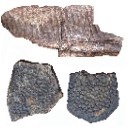
Terrestrial vertebrate paleocommunities from the Cerro del Pueblo Formation (Late Cretaceous; Late Campanian) at Las Aguilas, Coahuila, Mexico
Published online: 16/07/2019
Keywords:
Campanian; Coahuila; dinosaurs; Mexico.; Vertebrates
https://doi.org/10.18563/pv.42.2.e1
Abstract
The Las Águilas site near Porvenir de Jalpa, Coahuila, Mexico, is extremely rich in tetrapod remains comprising both bones and trackways of several dinosaur taxa of late Campanian age. Within a 50 m thick section we identified at least nine layers with dinosaur bone assemblages. In one of these the dinosaur bones are associated with remnants of eusuchian crocodilians, turtles, plesiosaurs, pterosaurs, tyrannosaurids, dromaeosaurids, parksosaurid, hadrosaurids, ceratopsids, and ankylosaurs. This layer is also rich in coprolites of turtles, crocodilians and likely theropods, thus providing evidence for the wealth of Late Cretaceous vertebrate life in the area.
PV article infos
Published in Vol 42-2 (2019)
|
PDF
|

|
Preliminary evolution of paleosols and implications for interpreting vertebrate fossil assemblages, Kuldana formation, Northern Pakistan
Published online: 16/12/1996
Keywords:
Eocene; Kuldana Formation; Pakistan; Paleosols; Pedogenic Carbonate; taphonomy; Time Averaging; Vertebrate Fossils
https://doi.org/10.18563/pv.25.2-4.261-277
Abstract
Paleosols and the taphonomy of vertebrate fossils in the Eocene Kuldana Formation of northern Pakistan provide important information on the preservation and time-averaging of fossil assemblages. Morphologic, mineralogic, and chemical data as well as comparisons with Quaternary soils suggest that Kuldana paleosols formed under generally dry and oxidizing conditions over time intervals of less than 100 000 years and perhaps as short as 1000 years. The distribution of carbonate in Kuldana paleosols further indicates that the upper half of the profiles were acidic whereas the lower halves were alkaline. Vertebrate fossils are rare in Kuldana paleosols and occur primarily in well-cemented sandstones and conglomerates with abundant micritic and iron-stained nodules that were reworked from floodplain soils. The scarcity of vertebrate remains in Kuldana paleosols probably reflects a combination of acidic, dry, and oxidizing conditions in the upper half of the profiles and rapid floodplain sedimentation. Comparisons between the taphonomic characteristics of Kuldana channel fossil assemblages and bone accumulations in modem rivers provide a basis for estimating the length of time represented by Kuldana fossils from several important localities. Vertebrate fossil assemblages from Barbora Banda are characterized by a low-diversity paleofauna, partially articulated skeletons, and bones that are sorted by size and shape. Comparison with bone accumulations in modern rivers suggests that the fossils from Barbora Banda accumulated in 1 to 10 years. Vertebrate fossils from the Lower Kuldana in the Kala Chitta Hills region, typified by locality H-GSP 62, are characterized by a high-diversity paleofauna and generally random and unsorted fossil bone distributions, which suggest that the fossils from these localities represent longer time intervals than the Barbora Banda fossils. Based on the time estimates for Kuldana paleosol development, fossil assemblages in Kuldana channel deposits in the Kala Chitta Hills region probably represent time intervals of about 1000 years.
PV article infos
Published in Vol. 25, Fasc. 2-4 (1996)
|
PDF
|

|
La région des phosphorites du Quercy
Published online: 15/11/1974
Keywords:
Quercy Phosphorites
https://doi.org/10.18563/pv.6.1-2.5-19
Abstract
L'exploitation des phosphates s'est produite surtout de 1890 à 1914 de Saint-Antonin à Cajarc, sur le Causse de Limogne, dont l'histoire géologique et morphologique peut expliquer les conditions de gisement du minerai, et aussi la découverte des nombreux, variés et beaux fossiles qu'on a extrait des poches en même temps que la phosphorite. Le Causse de Limogne est le nom donné par les géographes au plateau calcaire, faisant partie des Causses du Quercy, et compris entre la vallée du Lot au Nord et celle de "Aveyron au Sud". En fait, le nom de "causse" désigne localement un terroir, un paysage, à sous-sol de calcaire, à sol peu épais, qui s'oppose aux sols argileux des « terreforts » et aux sols légers et profonds des "boulbènes". Chaque communauté agricole distinguait ainsi son causse, par exemple le causse de Caylus, le causse de Limogne ou le causse de Cajarc. C'est par extension que l'appellation Causse de Limogne désigne tout un petit pays. La présence des poches à phosphate déborde un peu vers le Nord la vallée du Lot, et vers l'Est le Causse de Limogne proprement dit (Causse de Villeneuve).
PV article infos
Published in Vol. 06, Fasc. 1-2 (1974)
|
PDF
|

|
Les oiseaux aquatiques (Gaviiformes à Anseriformes) du gisement Aquitanien de Saint-Gerand-le-Puy (Allier, France): Révision systématique.
Published online: 01/11/1984
Keywords:
Aves; Early Miocene; Osteology; Palaeoecology; Systematics
https://doi.org/10.18563/pv.14.2.33-115
Abstract
Six orders of birds adapted to aquatic life are represented among the numerous avifauna of "Saint-Gérand-le-Puy": Gaviiformes, Procellariiformes, Pelecaniformes, Ciconiiformes, Phoenicopteriformes, and Anseriformes. The present study of this avifauna proposes several changes in systematics:- Procellariiformes: Puffinus arvernensis does not belong in Procellariidae but in Diomodeidae, and it is transferred to the fossil genus Plotornis previously described in the Middle Miocene of France. - Pelecaniformes: Phalacrocorax littoralis remains in Phalacrocoracidae; P. míocaenus is different from the modern species, and is transferred to the new genus Nectornis. Empheresula arvernensis, described in the Oligocene deposits of Gannat, seems to be present in Saint-Gérand-le-Puy too. Pelecanus gracilis shows many differences from the modern species, and belongs to the new genus Miopelecanus, - Ciconiiformes: Ardea formosa nom. oblit. is a synonym of Proardeola walkeri. - Anseriformes: a new species closely related to swans is described, and belongs to the fossil genus Cygnopterus, of the Middle Oligocene of Europe; this species is called C. alphonsi. The ecology of each species is suggested by comparison with that of its nearest living relatives, and by study of osteological adaptations.
PV article infos
Published in Vol. 14, Fasc. 2 (1984)
|
PDF
|

|
Stratigraphy and Oligocene-Miocene mammalian biochronology of the Aktau Moutains, Dzhungarian Alatau Range, Kazakhstan
Published online: 16/12/1996
Keywords:
Dzhungarian Alatau; Kazakhstan; Lithologic correlation; Mammalian biochronology; Miocene; Oligocene; Stratigraphy
https://doi.org/10.18563/pv.25.2-4.141-174
Abstract
Stratigraphic studies in the Aktau Mountains bordering the Dzhungarian Alatau Range in southeastern Kazakhstan have included mapping of Tertiary lithostratigraphic units, documentation of fossiliferous deposits, correlation of sections, etc. These investigations have led in turn to revised interpretation of the Tertiary geology of the area. The Tertiary sequence in the Aktau Mountains is represented by three lithostratigraphic units (in ascending order): (1) the middle Eocene Akbulak Formation; (2) the Oligocene Aktau Formation with a lower member including white quartz sands that contain fossil mammals, and an upper member including red-colored clays and sandstones, brick red clays, an anhydrite and gypsum clayey horizon, and bright brown-red clays; and (3) the upper Oligocene-Miocene Chul'adyr Formation with a lower member of greenish and yellowish conglomerates and gritstones, a middle member including grayish and yellowish sands and gritstones, and an upper member including brown and red clays and carbonate- and anhydrite-rich clays. The Aktau and Chul”adyr Formations represent separate cycles of sedimentation. Mammalian biostratigraphy and biochronology of the three vertebrate faunas in Aktau Mountains are reviewed. The mammalian fauna from white sands of the lower Aktau Formation is small but includes Ardynia and is thought to be early Oligocene in age. The mammalian fauna from conglomerates and gritstones of the lower member of the Chul”adyr Formation is also small but includes Paraceratherium and is thought to be late Oligocene in age. The mammalian fauna from sands of the middle member of the Chul'adyr Formation is extensive, with micro- and macrofauna attributed to Neogene mammal zones MN4 to MN 6, indicating a latest early Miocene to earliest middle Miocene age (Orleanian-Astaracian). Most genera of middle Chul”adyr mammals are known from the middle Miocene Shanwang faunas of China and from the Castelnau-d”Arbieu faunal assemblage (MN4-MN6) of southwestern France.
PV article infos
Published in Vol. 25, Fasc. 2-4 (1996)
|
PDF
|

|
Agriotherium intermedium (Stach 1957) from a Pliocene fissure filling of Xiaoxian County (Anhuei Province, China) and the phylogenetic position of the genus.
Published online: 30/09/1983
Keywords:
Carnivora; China; PHYLOGENY; Pliocene; skull anatomy; Ursidae
https://doi.org/10.18563/pv.13.3.65-81
Abstract
A fragmentary mandible and maxilla of a small sized Agriotherium of a young individual discovered from a Pliocene fissure filling in Xiaoxian county (Anhuei Province, China) are described. Judging from the morphology of the dentition and its dimensions the new material can be identified as Agriotherium inlermedium (STACH l957). Hendey's proposition (1980) that the Agriotherium species are derived from Indarctos is reconsídered on the basis of the new documents. As a result of a more general phylogenetic discussion it can be stated, that: 1. the supposed size increase as well as other trends, leading from Indarctos to Agriotherium are untenable ; 2. there are no positive indications to assume a phylogenetic transition of these two genera. 3. there are no real arguments in favor of an adaptational reversal in the evolution of Agriotherium. Hence, many features of that genus supposed by Hendey to be derived are plesiomorphic ; 4. regardless of the previous points it is methodologícally impossible to establish direct ancestor - descendant relationships between Indarctos and Agriotherium species, as Hendey did. Based on the data available and especially on the characters of the new material from China it is more likely that Agriotherium and Indarctos are two genera which developed independently. While advanced Agriotherium species, e.g. A. africanum, resemble in some respects Indarctos by adaptational analogies, more primitive species, e.g. Agriotherium intermedium, are quite dissimilar to lndarctos. While Indarctos might be derived from an Ursavus like forerunner, Agriotherium has its roots more likely somewhere in between Ursavus and the Hemicyon-group.
PV article infos
Published in Vol. 13, Fasc. 3 (1983)
|
PDF
|
|
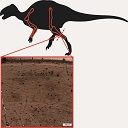
Comparative bone histology of rhabdodontid dinosaurs
Published online: 17/11/2014
Keywords:
bone histology-based ontogeny; Mochlodon; Rhabdodon; skeletal maturation; Zalmoxes
https://doi.org/10.18563/pv.38.2.e1
Abstract
A comparative bone histological study of the three known genera of the endemic European ornithopod dinosaur family, Rhabdodontidae, is presented here in an ontogenetic context. Investigated specimens were assigned to different ontogenetic stages based exclusively on the histological indicators of osteologic maturation during diametrical bone growth; an entirely size-independent method as opposed to most previous studies. Qualitative comparison of bone histology of corresponding ontogenetic stages and elements among the three valid rhabdodontid genera, Mochlodon, Zalmoxes, and Rhabdodon, revealed some consistent patterns. Genus specific histological differences within Rhabdodontidae are most expressed between Rhabdodon and the Mochlodon-Zalmoxes clade. These indicate a prolonged phase of fast growth and a less constrained cyclicity in the growth dynamics of Rhabdodon, as opposed to the slower and more regulated growth strategy reflected in the bones of Mochlodon and Zalmoxes. These genus specific differences are consistent with the phylogenetic interrelation of the genera and are most probably related to the pronounced differences in body size. However, when compared to other ornithopods, most detected histological features in rhabdodontids do not seem to reliably reflect either phylogenetic relations or body size. A notable common feature of all rhabdodontid genera irrespective of body size is the ontogenetically early onset of cyclical growth and secondary remodelling; a pattern that more resembles the condition found in derived ornithopods than that described in more basal taxa which are closer relatives of rhabdodontids. The recognition of taxon-specific histological patterns as well as patterns indicative of ecological and thereby functional traits clearly requires more accurate, preferably quantitative evaluations.
PV article infos
Published in Vol.38-2 (2014)
|
PDF
|

|
Morphotypes dentaires actuels et fossiles des chiroptères vespertilionines. 2ème partie: implications systématique et phylogéniques.
Published online: 15/11/1987
Keywords:
Chiroptera; PHYLOGENY; Systematics; Vespertilionine
https://doi.org/10.18563/pv.17.3.77-150
Abstract
The first part of this study was devoted to a descriptive analysis of teeth morphologies among the vespertilionine bats. This leads now to a tentative synthesis, providing views on the systematics of the group. The results could be seen according to three distinct but closely related purposes : 1 - the sorting of the genera contents in order to conform the genera units to homogeneous taxa that could represent natural issues of evolutionary lineages ; 2 - the investigation of relationships between extant genera in order to infer the possibilities of common origin ; 3 - according to the preceeding items and to the observed evolutionary trends, a tentative phylogeny, modest and cautious. The contents of many genera are sorted : Leuconoe is removed from subgeneric to generic position, whereas Myotis becomes a subgenus of it ; the myotodont species are cleared away from the Pipistrellus genus ; Glischropus and Scotozous are synonymized within Pipistrellus ; Hypsugo is raised to the generic level ; some species previously ranged within Pipistrellus will form provisionally a collective group, Attalepharca nov. ; the Eptesicus genus is broken up, the excluded species being grouped within Nycterikaupius gen. nov. ; the Nycticeini tribe is defined again after exclusion of Otonycteris , Scotoecus, Scotophilus , and addition of Hesperoptenus ; the species la io and Pipistrellus tasmaniensis are removed to Eptesicus (n.s.) and Pipistrellus dormeri to Scotoecus. Groupings of genera are stated according to the main evolutionary trends of I1/. The relevance of these is often warranted by close morphologic similarities of other teeth. This leads to a recognition of the major evolutionary radiations which occurred in the group. The filiations schematized at the end of the work show the dental relationships observed between the extant genera, and could represent a phylogenic framework. Two major facts are to be underlined : 1- the early divergence of leuconoids ; 2 - the successives crossings to myotodonty from the nyctaloid flow. Fossil data from the literature are punctually and tentatively incorporated within phylogenic sketches.
PV article infos
Published in Vol. 17, Fasc. 3 (1987)
|
PDF
|

|
Les Amphibiens et les reptiles du Pliocène supérieur de Balaruc II (Herault, France)
Published online: 15/09/1989
Keywords:
amphibians; Europe; France; Pliocene; Reptiles
https://doi.org/10.18563/pv.19.1.7-28
Abstract
The late Pliocene site (MN 16) of Balaruc II (Hérault, France) has provided remains of the following amphibians and reptiles: Chelotriton pliocenicus nov. sp. and Triturus marmoratus (Salamandridae), cf. Rana (Ranidae), cf. Blanus (Amphisbaenidae), cf. Agama (Agamidae), Gekkonidae indet., Lacerta s.l. (Lacertidae), "Ophisaurus" sp. (Anguidae), Michauxophis occitanus (Aniliidae), Erycinae indet. (Boidae), Elaphe cf. E. longissima and Malpolon sp. (Colubridae), cf. Naja (Elapidae) and Vipera sp. (Viperidae). The salamandrid Chelotriton pliocenicus and the aniliid Michauxophis occitanus constitute, up to now, the only records of these groups in the European Pliocene. The fauna is indicative of a warm, dry
subtropical climate.
PV article infos
Published in Vol. 19, Fasc. 1 (1989)
|
PDF
|

|
Strange Eocene rodents from Spain
Published online: 16/12/1996
Keywords:
Biogeography; Eocene; PHYLOGENY; Rodents; Spain; Zamoramys extraneus n. gen. n. sp.
https://doi.org/10.18563/pv.25.2-4.323-338
Abstract
A new European rodent from the middle Eocene of Spain, Zamoramys extraneus n. gen., n. sp., appears to be closely related to the middle Eocene chapattimyid rodents of Indo-Pakistan. This contradicts the generally accepted paleobiogeographic hypothesis of a Tethyian barrier between Europe and Asia isolating Europe during the middle Eocene. Because of this barrier, some authors have proposed that European and Asian rodents were not closely related, their similarity being the result of morphological convergence. Here monophyly has been tested, using the parsimony criterion, based on an analysis of dental characters (including discussing of homology and the validity of some characteristics). Our results indicate a phylogenetic relationship among the Asiatic Ctenodactyloidea, Zamoramys from Spain, and the European endemic Theridomyoidea. We also conclude from our analysis that theridomyoids and European ischyromyoids are probably not closely related phylogenetically.
PV article infos
Published in Vol. 25, Fasc. 2-4 (1996)
|
PDF
|

|
Diversity among north african dinosaur eggshells.
Published online: 15/12/2003
Keywords:
Cretaceous; Dinosaurs diversity; Eggshells; Maastrichtian; Morocco; North Africa; taxonomy
https://doi.org/10.18563/pv.32.2-4.171-188
Abstract
Until the discovery of dinosaur eggshells locality in the Oukdiksou syncline, (Middle Atlas, Morocco) in 1999 (Garcia et al. this volume) the maastrichtian reptiles faunas were unknown in North Africa. Additional material from Achlouj-2 allows us to describe five oospecies, belonging to four oofamilies. The Megaloolithidae is recorded by Megaloolithus maghrebiellsis Garcia el al. and Pseudomegaloolithus atlasi oogen. novo oospec. nov. Tipoolithus achloujensis Garcia et al. is questionably considered as a Subtiliolithidae. A relatively small Elongatoloolithidae is represented by Rodolphoolithus arioul oogen. nov. oospec. nov. A thin Prismatoolithidae is described as a new oospecies of ? Pseudogeckoolithus Vianey-Liaud & Lopez-Martinez, 1997: P. tirboulensis. The diversity of these oospecies indicates that the dinosaur fauna comprises at least five dinosaur oospecies, with perhaps one sauropod and three theropods.
PV article infos
Published in Vol. 32, Fasc. 2-4 (2003)
|
PDF
|

|
Les Otolithes de téléostéens du Miocène de Montpeyroux (Herault),France).
Published online: 15/12/1980
Keywords:
Miocene; Montpeyroux; Otolithes; teleostean fish
https://doi.org/10.18563/pv.10.1.1-28
Abstract
Sieving and washing of about 700 kg of sediment from the miocene site at Montpeyroux produced otoliths of 34 teleost species, of which four still occur in the present day fauna or are near to extant species. Among the fossil species, eight are new : Ilisha lerichei, «genus Clupeidarum ›› orbiculatus, Dipulus mediterraneus, Morone cornuta, Chanda nelsoni, Pomadasys steurbauti, «genus Sciaenidarum ›› barthassadensis and Paraplagusia roseni. The fauna found is typical for a tropical or subtropical very littoral, probably even estuarine environment; it was living in a period near the boundary between Lower and Middle Miocene, perhaps somewhat earlier.
PV article infos
Published in Vol. 10, Fasc. 1 (1980)
|
PDF
|
|
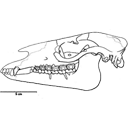
Révision systématique des Anchilophini (Palaeotheriidae, Perissodactyla, Mammalia).
Published online: 15/10/2012
Keywords:
Anchilophus; Eocene; new genus; new species; Palaeotheriidae; Paranchilophus; Perissodactyla; Systematics
https://doi.org/10.18563/pv.37.1-3.1-165
Abstract
The knowledge of the Anchilophini has been lately renewed by the discovery of a rather large amount of new material still largely unpublished. This new material offers the opportunity of a systematic revision of this tribe gathering those of European Eocene Equoidea which bear no mesostyle on upper check teeth and display a heavy trend to the molarization of premolars.
A cladistic analysis has made out two genera, Anchilophus (Paranchilophus included as a subgenus), characterized by a marked lophodonty and the transverse narrowness of the cheek teeth, a rather high hypsodonty, the frequent occurrence of "crochets" and "anticrochets" on the superior ones, and a rather weak molarization of the premolars, opposite to Metanchilophus n. gen. whose cheek teeth are more transversally elongated, less high, less lophodont, with cusps better distinct, enamel thicker and premolars more molarized on the whole.
Three species of Anchilophus are recognized, A. desmaresti, type species of the genus, A. (Paranchilophus) remyi and A. (Paranchilophus) jeanteli n. sp.
The genus Metanchilophus is more diversified with the species dumasi, radegondensis, gaudini (whose a new sub-species M. g. fontensis is defined), depereli, castrensis n. sp. and chaubeti n. sp.
The skull anatomy has been moreover described with several taxa; it brings to light (for all that one can generalize) that Anchilophini were light animals with a slender and elongated snout, a thin zygomatic arch, a rather developed encephalon with an advanced gyrencephaly.
The structure of the nasal opening together with the occurrence of epitympanic sinuses and the molarizing process of the premolars corroborate the attribution of this tribe to the family PalaeotheIiidae.
PV article infos
Published in Vol. 37, Fasc. 1-3 (2012)
|
PDF
|

|
Contributions à l'étude du gisement Miocène supérieur de Montredon (Hérault). Les grands mammifères. 2 - les carnivores
Published online: 15/11/1988
Keywords:
anatomy; Carnivora; France; Montredon; Systematics; Upper Miocene
https://doi.org/10.18563/pv.18.ext.15-42
Abstract
The locality of Montredon has provided 8 species of camivores, often little documented, that are discribed and depicted. All the remains are fragmentary and generally badly preserved which lowers very much the possible precision of the taxonomic study; this one has however allowed the creation of a new subspecies. The most richlypdocumented forms are an ursid (Indarctos) and a felid (Machairodus). Issuing often from a westem Europe evolution, the carnivores are well inserted between those of the better known faunas of the "Classical Pontian" and of the lower Vallesian and this situation fits also well with their stratigraphic level, that cannot however be more accurately defined with them alone.
PV article infos
Published in Vol. 18, Ext (1988)
|
PDF
|

|
Les artiodactyles du gisement yprésien terminal de Premontre (Aisne, France)
Published online: 16/12/1996
Keywords:
Artiodactyls; France; Mammals; new species; Ypresian
https://doi.org/10.18563/pv.25.2-4.391-414
Abstract
The artiodactyls (Mammalia) from the latest Ypresian locality of Prémontré from the Paris Basin (niveau repère MP 10 in the lower Eocene of the Paris Basin) are described in this paper. Three species have been identified: 1) Diacodexis cf. varleti SUDRE et al., 1983; 2) a new species of Eurodexis ERFURT & SUDRE (E. russelli nov. sp.) defined after the revision of the species Messelobunodon? ceciliensis from the Lutetian beds of Geiseltal (Germany); and 3) Eurodexeinae indet., a probable ancestor of another form from the Geiseltal which was previously recorded as Homacodon? sp. (Erfurt 1993) and now named Parahexacodus germanicus. The two later forms are referred to the new subfamily Eurodexeinae (Erfurt & Sudre 1996). The analysis of these forms as weIl as comparative studies have led us to reconsider our previous conclusions regarding the content of the species Protodichobune oweni LEMOINE 1878 and some aspects of Ypresian diacodexid evolution. One can postulate that the divergence of E. russelli nov. sp. occurred during the first radiation of these primitive artiodactyls. Some other stem form with bunodont teeth such as Protodichobune and Aumelasia have also differentiated from Diacodexis. Like Eurodexis, these two genera persist during the middle Eocene. The absence of Protodichobune and Aumelasia at Prémontré is probably due to particular ecological conditions.
PV article infos
Published in Vol. 25, Fasc. 2-4 (1996)
|
PDF
|

|
Lower Paleogene crocodilians from Silveirinha, Portugal.
Published online: 15/10/2003
Keywords:
?Upper Paleocene / Lowermost Eocene; Crocodilians; Ecology; Portugal
https://doi.org/10.18563/pv.32.1.1-26
Abstract
The presence at Silveirinha of one of the earliest, ? Late Paleocene or Lowermost Eocene, european representatives of the genus Diplocynodon is based mostly on isolated bones and teeth (often from juveniles). This small-sized form is the only crocodilian so far recognized in this site. The longevity of Diplocynodon in Portugal becomes much extended; the genus survived there until the Middle Miocene at least. A discussion on the possible affinities with other eocene Díplocynodon and especially those from Cubillos-Valdegallina (Zamora, Spain) is presented. On the other hand, differences have been detected in comparison with: Díplocynodon tormis, from the middle Eocene of the Douro basin in Spain, which may belong to another phyletic line; and the aff. Diplocynodon from Dormaal (Belgium) and Le Quesnoy (France), nearly contemporaneous of Silveirinha. The Silveirinha Diplocynodon and many other data strongly suggest moist, subtropical, quite limited in space environments related to an alluvial plain crossed by small, meandering channels.
PV article infos
Published in Vol. 32, Fasc. 1 (2003)
|
PDF
|

|
First evidence of an early Miocene marine teleostean fish fauna (otoliths) from la Paillade.(Montpellier,France)
Published online: 15/06/1999
Keywords:
Aquitanian; Biostratigraphy; La Paillade; marine deposits; Miocene; otoliths; Palaeoecology; Palaeogeography; Southern France; Teleostei
https://doi.org/10.18563/pv.28.1.1-46
Abstract
A fossil fish fauna, based on 5533 otoliths, from the La Paillade locality at Montpellier is described and figured. The otolith-bearing marls correlate to mammal zone MN l (Aguilar, 1982), and thus represent the earliest Miocene. The fish fauna consists of 30 taxa belonging to 20 families. Two species are new: Dussumieria sittigi and Liza gaudanti. The predominant faunal element is the Lesueurigobius vicínalis-species complex, composing 73% of all investigated otoliths. The palaeoecological analysis reveals a marine to euryhaline fish fauna living under tropical to subtropical conditions in the transition zone littoral - sublittoral. Water depth probably was more than 10 m. The scarcity of pelagic físhes suggests that the habitat was either a sheltered bay and/or far away from the open sea. Furthermore, some genera represented in the La Paillade fish fauna presently live exclusively in the Indopacific realm. Their presence strongly supports a broad connection between the Indian Ocean, the Mediterranean, and the Paratethys Seas during the Early Miocene (Aquitanian). From a palaeobiogeographical point of view, faunal relationships were found between the La Paillade fish fauna and both the Paratethys fish fauna and the fish fauna from the deposits in the Upper Rhinegraben and the Mayence and Hanau Basins (Germany).
PV article infos
Published in Vol. 28, Fasc. 1 (1999)
|
PDF
|

|
Physogaleus hemmooriensis (Carcharhinidae, Elasmobranchii), a new shark species from the early to middle Miocene of the north sea basin.
Published online: 15/10/2006
Keywords:
Carcharhinidae; Early Miocene; Elasmobranchii; Hemmoorian; new species; North Sea Basin; Physogaleus
https://doi.org/10.18563/pv.34.e14
Abstract
A new carcharhinid shark species, Physogaleus hemmooriensis sp. nov., is described from the Lower Hemmoorian (Behrendorfian, late Burdigalian, early Miocene) of Werder, Lower Saxony, Germany. P. hemmooriensis also occurs in the Edegem and Antwerpen Sands Members of the Berchem Formation, Belgium, and in the Miste Bed, Aalten Member of the Breda Formation, The Netherlands, which have an early to middle Miocene age. In the Western Atlantic region, the taxon is present in the early Miocene Calvert Formation of Delaware, U.S.A, which is largely contemporaneous with the Hemmoorian.
PV article infos
Published in Vol. 34, Fasc. 1-2 (2006)
|
PDF
|

|
Les poissons crétacés et tertiaires du bassin des Iullemmeden (République du Niger)
Published online: 15/09/1972
Keywords:
Actinopterygians; Cenozoic; Cretaceous; Dipnoans; Selachians
https://doi.org/10.18563/pv.5.5.179-251
Abstract
The present work is devoted to the study of the Cretaceous and Tertiary fishes (teeth of Selachians, Actinopterygians and Dipnoans) collected during a recent expedition in Niger. The Maestrichtian localities have yielded a new genus and a new subspecies of Selachian: Igdabatis sigmodon nov. gen., nov. sp. and Lamna biauriculata nigeriana nov. subsp. The locality of Sessao, which has been attributed to the Thanetian by means of the study of the fish, has furnished by screen-washing an interesting fauna wherein six new species are described: Raja Iouisi, Dasyatis sessaoensis, D. sudrei, D. russelli, Hypolophites thaleri and Ceratodus casieri. Comparison of these faunas with contemporary faunas of Africa has brought out a certain endemism in the Iullemmeden Basin during the late Cretaceous and the early Tertiary.
PV article infos
Published in Vol. 05, Fasc. 5 (1972)
|
PDF
|